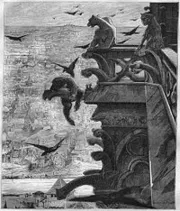
Set in fifteenth-century Paris, Victor Hugo's Notre-Dame de Paris (1831) tells the tragic tale of Quasimodo, the deformed bell-ringer of Notre Dame Cathedral, and his devoted love for the beautiful gypsy dancer Esmeralda. The archdeacon Claude Frollo, consumed by obsessive desire for Esmeralda, orchestrates her downfall after she rejects him. Falsely accused of murder, Esmeralda is sentenced to death, and Quasimodo grants her sanctuary within the cathedral walls. Despite his protection, her fate remains sealed. Through themes of fate, hypocrisy, and the contrast between inner beauty and outward appearance, Hugo delivers a powerful indictment of social injustice and intolerance.