science fiction books
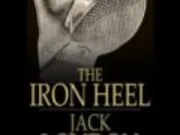
📄The Iron Heel (1908) is a dystopian novel by American writer Jack London. Narrated through the memoir of Avis Everhard, wife of socialist revolutionary Ernest Everhard, the novel envisions the rise of a brutal capitalist oligarchy—the "Iron Heel"—that crushes the American working class and violently suppresses socialist movements. Set in the early twentieth century, it depicts class warfare, rigged markets, treachery, and massacre as the ruling elite consolidates absolute power. Though the revolutionaries are ultimately defeated, scholarly footnotes reveal their cause triumphs centuries later. Regarded as a precursor to modern dystopian fiction, the novel powerfully critiques capitalism and warns against tyranny.
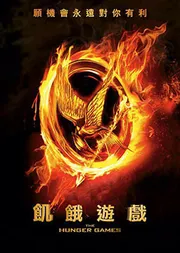
📄In the dystopian nation of Panem, the oppressive Capitol forces each of its twelve districts to send two teenage tributes to participate in the annual Hunger Games—a brutal televised battle where only one survivor may live. When sixteen-year-old Katniss Everdeen bravely volunteers to take her younger sister's place, she faces deadly challenges, both physical and moral. Alongside fellow tribute Peeta Mellark, she must outwit, outrun, and outlast her opponents while navigating the Capitol's cruel spectacle of entertainment and control. Katniss's unexpected defiance of the rules sparks hope and ignites the flames of rebellion against tyranny.
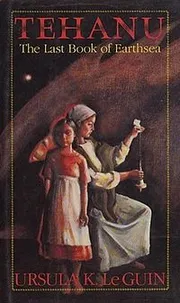
📄Tehanu, the fourth book of Ursula K. Le Guin's Earthsea cycle, follows Tenar, once the priestess Arha of the Tombs of Atuan, now a widowed farmer on the island of Gont. She rescues Therru, a young girl brutally burned and abused, while caring for Ged, the once-great Archmage left powerless after the events of The Farthest Shore. Through their quiet lives, Le Guin reexamines Earthsea from a woman's perspective, exploring themes of gender, violence, healing, and power. As dark forces close in, Therru's mysterious true nature reveals secrets that will reshape the destiny of Earthsea.
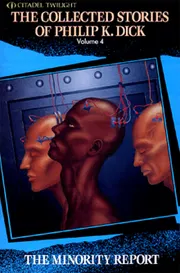
📄"The Minority Report" is a science fiction short story by Philip K. Dick, published in 1956. Set in a futuristic society, it explores the Precrime system, which uses three mutant "precogs" with psychic abilities to predict murders before they occur, enabling police to arrest would-be killers preemptively. The story centers on John Anderton, head of Precrime, who discovers his own name on a list of future criminals, predicted to murder a man he has never met. As he flees, Anderton learns of the "minority report"—a dissenting prophecy from one precog revealing an alternative future—raising profound questions about free will, determinism, and justice.
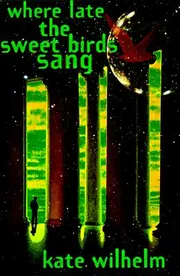
📄Where Late the Sweet Birds Sang by Kate Wilhelm is a Hugo Award-winning science fiction novel set in a post-apocalyptic future. As environmental catastrophe and widespread plagues render humanity nearly sterile, the Sumner family turns to cloning to survive. The resulting clone society flourishes but becomes a collective that sacrifices individuality, creativity, and emotional depth. When some members rediscover sexual reproduction and independent thought, conflict erupts between hive-minded clones and the new individuals who prize uniqueness. A haunting meditation on identity, memory, and survival, the novel asks whether humanity can endure when it loses the very qualities that make it human.
📄Tarzan of the Apes, written by Edgar Rice Burroughs in 1912, tells the story of John Clayton, an infant abandoned in the African jungle after his aristocratic English parents die. Adopted by the she-ape Kala, the boy grows up among the Mangani apes, learning their ways and eventually becoming their mightiest protector, known as Tarzan. When he discovers his parents' cabin, he teaches himself to read and gradually uncovers his human identity. His world transforms when Jane Porter, an American woman, arrives in his jungle. This adventure classic explores themes of nature versus nurture, identity, and the meaning of civilization.
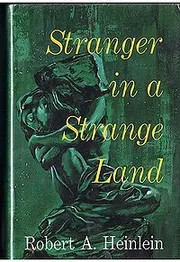
📄"Stranger in a Strange Land" by Robert A. Heinlein follows Valentine Michael Smith, a human raised by Martians who returns to Earth as a young man. Possessing extraordinary abilities, including telekinesis and the profound Martian concept of "grokking"—understanding something completely by becoming one with it—Michael struggles to comprehend human culture and morality. Guided by nurse Jill Boardman and lawyer Jubal Harshaw, he explores human society and eventually founds a church that challenges conventional views on religion, sexuality, and death. Winner of the 1961 Hugo Award, this landmark science fiction novel explores love, freedom, and what it truly means to be human.
📄"Halo: The Flood" by William C. Dietz is a novelization of the first Halo video game. When the UNSC ship Pillar of Autumn crash-lands on the mysterious ringworld Halo, Master Chief Petty Officer John-117 must battle overwhelming Covenant forces while protecting humanity's darkest secrets. A far deadlier threat soon emerges: the Flood, an ancient parasitic species capable of consuming all sentient life. As the parasite devours human and Covenant forces alike, the Master Chief, aided by his AI companion Cortana and a squad of surviving Marines, races to prevent Halo's activation before it unleashes galactic devastation upon all living things.
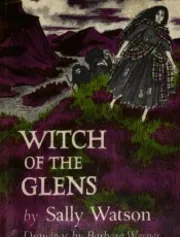
📄In the mist-shrouded Highlands of seventeenth-century Scotland, Moira MacAllister hides a dangerous gift: she can speak to the spirits that dwell in the glens. When plague strikes her village, the frightened townsfolk turn against her, branding her a witch. Forced to flee into the wild mountains, Moira discovers an ancient coven that offers sanctuary—but at a terrible price. As witch hunters close in and a forbidden love complicates everything, she must choose between embracing her dark heritage or abandoning her power forever. A sweeping tale of magic, persecution, and one woman's fight to reclaim her destiny.
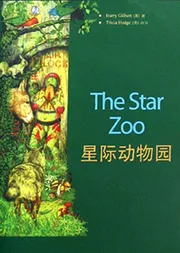
📄In The Star Zoo by Harry Harrison, humans live in a distant future where all the animals of Earth are extinct. People depend entirely on machines and have never seen a living creature. Sixteen-year-old Hummingbird's life changes forever when she and her husband Jim discover the Star Zoo—a wandering spaceship carrying the last surviving animals from old Earth. Terrified by these "monsters" from ancient legends, society wants them destroyed. But Hummy gradually realizes the animals are gentle creatures that need human care. In the end, people must overcome their deep fear and prejudice, welcoming animals back and rediscovering love, wonder, and their lost bond with nature.
📄"Round the Moon" (1870) by Jules Verne is the sequel to "From the Earth to the Moon." The story follows Impey Barbicane, Captain Nicholl, and Michel Ardan aboard the projectile launched from Florida toward the Moon. During their voyage, the three men conduct scientific experiments, observe Earth's shrinking form, and study the lunar surface as they pass overhead. A passing asteroid disrupts their course, altering their trajectory. Unable to land, they loop around the Moon, glimpsing its mysterious far side, before gravity pulls them back toward Earth. The adventure ends with their dramatic splashdown in the Pacific Ocean, where they are finally rescued.
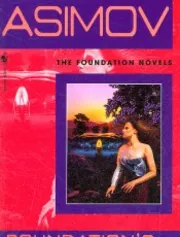
📄Foundation's Edge, Isaac Asimov's 1982 sequel to his original Foundation trilogy, follows young Councilman Golan Trevize, who is exiled from Terminus after openly questioning whether the Seldon Plan remains on course. Believing a hidden force is manipulating history, Trevize and historian Janov Pelorat journey into space in search of Earth, humanity's legendary birthplace. Meanwhile, in the Second Foundation, young Speaker Stor Gendibal uncovers evidence of an unknown power secretly steering galactic events. Their separate quests converge on Gaia, a mysterious planet-wide collective consciousness, forcing Trevize to make a choice that will determine humanity's ultimate future. The novel won the Hugo Award for Best Novel.
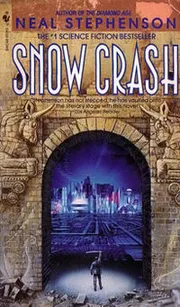
📄Snow Crash, Neal Stephenson's landmark 1992 cyberpunk novel, follows Hiro Protagonist, a hacker and pizza delivery driver for the Mafia, and Y.T., a teenage skateboard courier. In a fractured future America where government has collapsed and corporations rule, a mysterious virus called Snow Crash begins infecting both computers and human minds. Racing through the Metaverse—a sprawling virtual reality—and gritty real-world streets, Hiro and Y.T. uncover a conspiracy rooted in ancient Sumerian mythology and linguistic programming. Blending satire, action, and visionary technology, the novel pioneered the concept of the metaverse and profoundly influenced generations of technologists and writers.
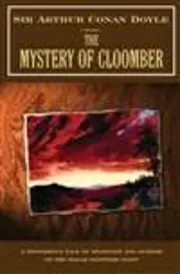
📄"The Mystery of Cloomber" is an early novel by Sir Arthur Conan Doyle, published in 1889. When John Fothergill West and his family move into Cloomber Hall, a secluded mansion on the Scottish coast, they discover that its former occupant, General Heatherstone, is a reclusive man tormented by inexplicable terrors. As eerie events unfold—including the appearance of mysterious Eastern strangers and a strange glow over the moor—the General's dread of impending doom becomes palpable. The story gradually reveals a dark secret from his military past in India, where his crimes during the Mutiny brought a solemn curse upon him, pursued by relentless avengers seeking justice.
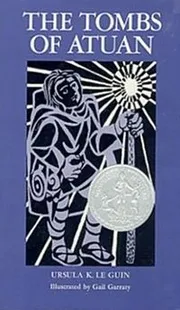
📄The Tombs of Atuan, the second book in Ursula K. Le Guin's Earthsea cycle, follows Tenar, a girl taken as a child to serve as high priestess of the Nameless Ones in the ancient labyrinth beneath the Tombs of Atuan. Renamed Arha, "the Eaten One," she lives in darkness and ritual among the priestesses. Her world changes when the wizard Ged arrives, seeking the lost half of the Ring of Erreth-Akbe hidden in the treasure vaults. After trapping him in the labyrinth, Tenar gradually questions her dark masters. Ultimately, she helps Ged escape, reclaiming her true name, her freedom, and her own destiny.
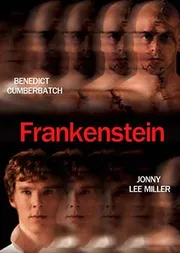
📄Frankenstein, written by Mary Shelley in 1818, is a Gothic novel that tells the story of Victor Frankenstein, a young Swiss scientist obsessed with discovering the secret of life. He creates a living creature from assembled body parts, but horrified by its grotesque appearance, abandons it. The rejected monster, initially gentle and intelligent, turns vengeful after suffering loneliness and cruelty. Seeking revenge, it destroys everyone Victor loves, including his brother, best friend, and bride. The novel explores profound themes such as the dangers of unchecked scientific ambition, the consequences of playing God, alienation, and what truly defines humanity and monstrosity.
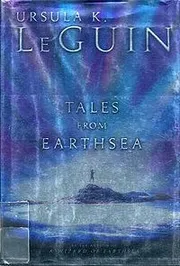
📄Tales from Earthsea by Ursula K. Le Guin is a collection of five short stories set in the magical archipelago of Earthsea. Spanning the world's long history, the stories range from the founding of the great school of magic on Roke to tales of dragons, healers, and ordinary people touched by wonder. Through narratives like "The Finder" and "Dragonfly," Le Guin deepens the mythology of her beloved fantasy world, exploring themes of power, balance, gender, and mortality. Rich in wisdom and quiet beauty, this collection illuminates the hidden corners of Earthsea and reveals the true nature of magic in all its forms.
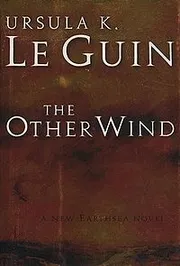
📄"The Other Wind," the sixth book in Ursula K. Le Guin's Earthsea cycle, follows Alder, a village sorcerer tormented by dreams in which the dead call to him from beyond the low stone wall separating the Dry Land from the world of the living. Seeking help, he draws Ged, Tenar, Tehanu, and King Lebannen into a quest that reveals a broken ancient covenant between dragons and humans, and a death that was never meant to be. Blending mythic storytelling with meditations on mortality, freedom, and healing, the novel resolves Earthsea's long-held mysteries while restoring balance to a wounded world.
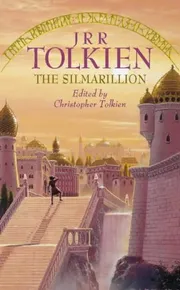
📄The Silmarillion, by J.R.R. Tolkien, is a sweeping mythological epic chronicling the ancient history of Middle-earth long before the events of The Hobbit and The Lord of the Rings. It begins with the Ainulindalë, the creation of the world through divine music, and follows the Valar—godlike beings—who shape Arda. The narrative centers on the Silmarils, three radiant jewels crafted by the elf Fëanor, which contain the light of the Two Trees of Valinor. When the dark lord Morgoth steals the jewels, they ignite ages of war, heroism, and tragedy among Elves and Men. Published posthumously and edited by Christopher Tolkien, it stands as the mythological foundation of Tolkien's entire legendarium.
📄Robur the Conqueror, published in 1886 by Jules Verne, follows the mysterious engineer Robur, who disrupts a meeting of the Weldon Institute, a Philadelphia club of balloon enthusiasts devoted to lighter-than-air flight. Declaring that the future belongs to heavier-than-air machines, Robur kidnaps the institute's president, Uncle Prudent, and his secretary Phil Evans, carrying them aboard his remarkable flying craft, the Albatross—a multi-rotored vessel driven by powerful electric engines. As the captives journey across oceans and continents aboard this extraordinary machine, Verne explores themes of technological progress, human skepticism, and the conflict between visionary invention and conservative resistance.