other books
📄"The Death of the Moth and Other Essays" is a posthumous collection by Virginia Woolf, published in 1942, a year after her death. The title essay offers a poignant meditation on mortality, as Woolf observes a moth struggling against death on her windowsill, transforming a fleeting moment into a profound reflection on life's fragility. The collection spans diverse subjects—literary criticism, biographical portraits, and personal observations—including essays on Jane Austen, along with pieces such as "Evening over Sussex" and "The Moment: Summer's Night." Written in Woolf's lyrical, impressionistic prose, these essays reveal her extraordinary capacity to find beauty and meaning in ordinary experiences while illuminating the transient nature of existence.
📄In an age when gods walked among mortals and destiny was written by divine hands, the world trembled at the will of Olympus. From Zeus's thunderous throne to the shadowy depths of the Underworld, this sweeping saga reimagizes the timeless tales of Greek mythology. Follow the wrath of Achilles, the cunning of Odysseus, the tragic love of Orpheus and Eurydice, and Prometheus's defiant gift of fire to mankind. Weaving together heroism, betrayal, passion, and fate, this novel breathes new life into ancient legends—revealing that the struggles of gods and heroes mirror humanity's eternal quest for glory, love, and meaning.
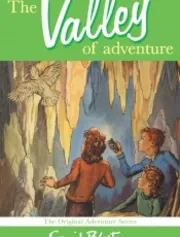
📄Written by Enid Blyton, The Valley of Adventure is the third installment of the popular Adventure series. When Philip, Dinah, Jack, and Lucy-Ann board the wrong aeroplane, they are carried deep into a remote mountain valley ringed by towering peaks. There they discover a gang of ruthless criminals hiding stolen treasure, and the children become their prisoners. With cleverness, courage, and help from Kiki the talkative parrot, the four friends outwit their captors and search desperately for a way of escape. Packed with secret caves, hidden passages, and perilous chases, this thrilling tale celebrates friendship, resourcefulness, and bravery.
📄In the shadow of Mount Sinai, young priest Elior is tasked with transcribing the sacred laws that will govern a fragile nation. But as he records commandments of sacrifice and purity, he harbors a secret that could defile everything he writes. Centuries later, scholar Sarah Brenner discovers Elior's hidden marginalia within an ancient scroll—words that challenge the very foundation of ritual law. As her research threatens both her career and her faith, she must decide whether truth is worth breaking sacred silence. Leviticus weaves together two timelines in a haunting meditation on law, mercy, and the price of holiness.
📄In first-century Corinth, a city where wealth and idolatry collide with a fragile new faith, three lives intertwine: Elias, a merchant torn between commerce and conscience; Kalliope, a temple slave dreaming of freedom; and Paul of Tarsus, whose letters will echo through eternity. As the fledgling Christian community fractures over rivalries, scandal, and doubt, each must decide what salvation truly costs. Set against marble temples, bustling harbor markets, and the roar of the Isthmian Games, Corinthians is a sweeping tale of grace, betrayal, and the birth of a church in a city that worships everything but God.
📄When failed salesman Daniel Chen stumbles upon a dusty self-help book promising instant likability, his life transforms overnight. Strangers warm to him, colleagues adore him, and every door swings open. But as Daniel masters the art of charm, a haunting question emerges: do people like him—or the mask he wears? Everything changes when he meets Lily, the one person immune to his techniques. Torn between genuine connection and the comfortable performance that made him successful, Daniel must decide who he really is. A sharp, witty exploration of authenticity in an age of curated selves, this novel asks: what is the true cost of being liked by everyone?
📄On a summer night in 1949, seven-year-old Henry Day wanders into the woods and vanishes. He has been taken by a hidden band of changelings, ageless beings who dwell in the forests of rural Pennsylvania. One of them, weary of centuries of wandering, steals Henry's identity and returns to his family as their son. Years later, the impostor—now a gifted pianist—is haunted by memories that do not belong to him, while the real Henry struggles to recall who he once was. A haunting tale of identity, loss, and belonging, The Stolen Child blurs the line between myth and reality.
📄Daniel never believed his quiet life in the coastal town of Marlowe would amount to anything more than routine—until the morning he discovered a letter hidden inside his late father's worn leather journal. The letter reveals a secret that shatters everything he thought he knew about his family and himself. As Daniel follows the trail across forgotten cities and buried memories, he encounters strangers who seem to know more about his past than he does. Haunted by questions and pursued by those who want the truth buried forever, Daniel must decide how far he is willing to go to uncover who he really is.
📄The Varieties of Religious Experience, first delivered as Gifford Lectures in 1901–1902, is William James's landmark study of religion through the lens of psychology. Drawing on countless personal accounts of conversion, mysticism, saintliness, and despair, James explores how intense religious experiences transform individuals' lives, setting aside institutional theology and ritual to focus on raw, firsthand feeling. He argues that such experiences, whatever their metaphysical status, produce real effects—"saintliness"—and should be judged by their fruits rather than their origins. Blending empirical rigor with lyrical prose, the book remains foundational to the psychology of religion, pragmatism, and modern spiritual thought.
📄Timothy is a poignant coming-of-age novel that follows Timothy Hartwell, a shy clockmaker's apprentice in a small English village. When his father mysteriously disappears, leaving behind an unfinished pocket watch, Timothy discovers a hidden letter revealing family secrets spanning three generations. As he pieces together the truth, he embarks on a journey across England, encountering strangers who each hold a fragment of his past. Along the way, Timothy learns that time heals wounds but also conceals them. A moving story of loss, identity, and forgiveness, Timothy reminds us that every life is a clock still ticking toward understanding.
📄A Simple Soul is the poignant story of Félicité, a humble servant woman in nineteenth-century Normandy who dedicates her entire life to others. Abandoned by her first love, she enters the service of Madame Aubain, where she pours her boundless capacity for love into the family's children, her nephew Victor, and finally a parrot named Loulou. One by one, death claims everyone she cherishes, yet her gentle faith endures. In old age and deafness, her world narrows to her beloved parrot, whom she comes to associate with the Holy Spirit. Flaubert's masterpiece quietly celebrates a simple heart's extraordinary devotion and grace.
📄In the fractured realm of Eldoria, seven kingdoms teeter on the brink of war. When the ancient king dies without an heir, Crown Prince Aldric—a scholar with no thirst for power—must navigate a treacherous court of scheming nobles and ambitious siblings. As rebellion brews in the borderlands and an old prophecy whispers of a true king's return, Aldric discovers the throne he inherited is built upon a buried sin. Torn between justice and duty, he must decide: will he become the tyrant history demands, or the king his people deserve? Kings is an epic tale of power, sacrifice, and sovereignty.
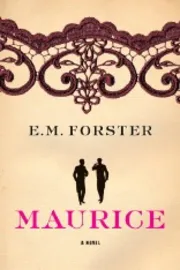
📄Maurice by E.M. Forster tells the story of Maurice Hall, a young Edwardian Englishman who gradually comes to terms with his homosexuality. At Cambridge, he falls in love with his friend Clive Durham, but their chaste relationship ends when Clive chooses conventional marriage. Devastated, Maurice struggles with shame and even seeks a "cure" through hypnosis. His life transforms when he falls in love with Alec Scudder, a gamekeeper on Clive's estate. Defying the tragic conventions of the era, Forster insisted on a hopeful ending: Maurice and Alec abandon society's expectations and find freedom in their love. Published posthumously in 1971, the novel remains a landmark of gay literature.
📄Mary Queen of Scots by Tim Vicary tells the dramatic true story of Mary Stuart, Queen of Scotland. The narrative begins on the night before Mary's execution, as she writes a final letter to her son James, recounting her tragic life. Returning to Scotland from France as a young widow, Mary faces political intrigue, unhappy marriages, betrayal by trusted nobles, and imprisonment. Her Catholic faith and claim to the English throne make her a dangerous threat to Queen Elizabeth I, who ultimately signs her death warrant. This engaging retelling explores themes of power, loyalty, religion, and fate in sixteenth-century Britain.
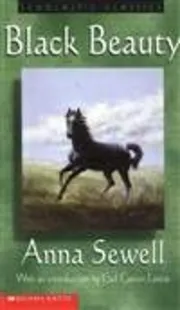
📄Black Beauty is a classic novel written by English author Anna Sewell, published in 1877. Narrated by the horse himself, the story traces Black Beauty's life from a peaceful rural childhood through a series of owners—some gentle and caring, others harsh and cruel. Through his eyes, readers witness the joys and hardships of working horses in Victorian England. The novel conveys powerful themes of compassion, kindness, perseverance, and animal welfare. As Sewell's only published work, it became a landmark in children's literature and played a significant role in inspiring more humane treatment of animals worldwide.
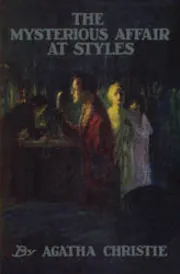
📄The Mysterious Affair at Styles (1920), Agatha Christie's debut novel, introduces the brilliant Belgian detective Hercule Poirot. Set in wartime England, the story unfolds at Styles Court, where wealthy widow Emily Inglethorp dies from strychnine poisoning. Narrated by Captain Arthur Hastings, the tale follows Poirot as he investigates a household of suspects: a much younger husband, resentful stepsons, and a sharp-tongued companion. With misleading clues, tangled alibis, and a dramatic courtroom revelation, Poirot unravels a chilling conspiracy driven by greed and betrayal. This classic whodunit launched Christie's legendary career and helped define the golden age of detective fiction.
📄Hercule Poirot is drawn into a baffling case when the beautiful American actress Jane Wilkinson asks him to persuade her husband, Lord Edgware, to grant her a divorce. Surprisingly, Edgware agrees—only to be found stabbed to death that same night. Jane appears to have a perfect alibi: she was dining with twelve distinguished guests when the murder occurred. Yet witnesses claim they saw her at the murder scene. As Poirot investigates, more deaths follow, including that of impressionist Carlotta Adams. To unravel this puzzle of impersonation and deception, Poirot must discover how an impossible alibi was cleverly manufactured.
📄In the fog-shrouded coastal town of Greywater, Amos has kept the lighthouse for forty years without ever aging a day. The townsfolk whisper about him but never dare ask. When fifteen-year-old Clara washes ashore after a storm, clutching a photograph of Amos taken in 1893, the keeper's carefully guarded secret begins to unravel. Amos is bound to the lighthouse by an ancient bargain—one made to save the town from a curse that still stirs beneath the waves. Now, with Clara's arrival, the sea demands its final payment, and Amos must choose between his immortality and the girl who holds the key to his freedom.
📄Resurrection, Leo Tolstoy's final novel, follows Prince Dmitri Nekhlyudov, a wealthy aristocrat serving on a jury who recognizes the accused—Maslova, a prostitute charged with poisoning—as the innocent servant girl he seduced and abandoned years earlier. Consumed by guilt when she is wrongly sentenced to Siberia, Nekhlyudov abandons his privileged life to seek her pardon and redeem his soul. As he follows her into exile, confronting injustice, corruption, and hypocrisy at every level of Russian society, both embark on profound spiritual journeys. A sweeping indictment of social inequality, Resurrection is ultimately a moving meditation on guilt, forgiveness, and moral rebirth.
📄Set in 520 BCE, this novel follows Haggai, a prophet who returns from Babylonian exile to find Jerusalem in ruins and its people resigned to despair. While the returnees lavish their resources on panelled houses, God's temple lies forgotten. When drought ravages the land and harvests fail, Haggai receives a divine summons: challenge the people's complacency and command them to rebuild. Facing opposition from elders weary of failed dreams and a community divided by fear of empire, Haggai must reignite a flickering faith. As the temple's foundation rises, an aging prophet discovers that rebuilding stones is easier than rebuilding hearts.