short story
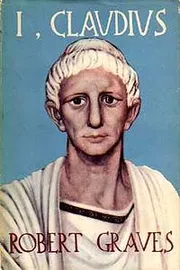
📄I, Claudius (1934) by Robert Graves is a masterful historical novel written as the secret autobiography of Roman Emperor Claudius. Born lame, stammering, and dismissed as a fool, Claudius survives the murderous intrigues of the imperial family by pretending to be an idiot. Through his eyes, Graves chronicles the reigns of Augustus, the scheming Empress Livia, the tyrannical Tiberius, and the mad Caligula—a world rife with poisoning, betrayal, and corruption. Drawing on ancient historians like Suetonius and Tacitus, the novel vividly portrays the dark heart of the Julio-Claudian dynasty, ending with the improbable moment Claudius himself is proclaimed emperor.
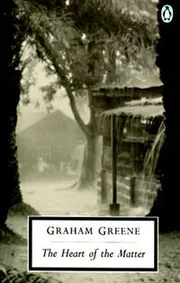
📄Graham Greene's The Heart of the Matter (1948) follows Major Henry Scobie, a deputy police commissioner in a West African colony during World War II. Passed over for promotion and trapped in a loveless marriage, Scobie is driven by an overwhelming sense of pity and duty. To secure his wife Louise's happiness, he borrows money from a corrupt Syrian merchant; soon after, he begins a doomed affair with a young widow, Helen Rolt. A devout Catholic, Scobie becomes caught between love, faith, and moral responsibility. Unable to reconcile his sins, he chooses a tragic final solution—deceiving even God—to free everyone from himself.
📄In this quiet, luminous novel, retired professor Elias Hart begins teaching a free philosophy class in a small coastal town, expecting no one to come. Instead, his classroom fills with ordinary people carrying extraordinary questions: a grieving widow, a doubting priest, a teenager fleeing expectations. As the Socratic dialogues unfold week by week, their lives begin to shift in unexpected ways. Blending gentle humor with profound inquiry, An Introduction to Philosophy explores how ancient questions—what is a good life, what do we owe each other—illuminate modern struggles. A moving meditation on wonder, mortality, and the courage to think.
📄Set in the quiet Dutch settlement of Sleepy Hollow, Washington Irving's classic tale follows Ichabod Crane, a lanky and superstitious schoolteacher who vies for the hand of Katrina Van Tassel, the beautiful daughter of a wealthy farmer. His rival is Brom Bones, a bold and mischievous local horseman. One autumn night after a festive party, Ichabod rides home alone and encounters the terrifying Headless Horseman, the ghost of a Hessian soldier who lost his head in battle. After a desperate chase, the specter hurls his "head" at the frightened schoolteacher, who vanishes forever. Only his hat and a shattered pumpkin are found, leaving the mystery unsolved.
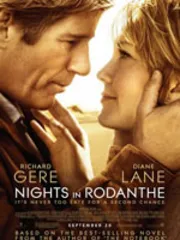
📄Nights in Rodanthe, by Nicholas Sparks, tells the story of Adrienne Willis, a divorced mother struggling to rebuild her life, and Paul Flanner, a surgeon burdened by regrets and a failing marriage. Both arrive at a seaside inn in the small coastal town of Rodanthe, North Carolina, Adrienne to care for a friend's inn, Paul to reflect on his choices. As a powerful storm approaches, the two strangers find comfort in each other, and their weekend together blossoms into a deep, life-changing love. Though separated by circumstance and tragedy, their brief encounter leaves a lasting impact, reminding them that true love can transform a life forever.
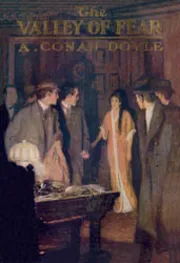
📄The Valley of Fear, the final Sherlock Holmes novel by Sir Arthur Conan Doyle, begins when Holmes decodes a warning from his nemesis, Professor Moriarty, about John Douglas of Birlstone Manor. Shortly after, Douglas is found brutally murdered—his face blown off by a shotgun. As Holmes investigates, suspects include his wife, his best friend, and mysterious strangers. The novel then flashes back to America, revealing Douglas's past as an undercover Pinkerton agent who infiltrated the Scowrers, a murderous gang terrorizing the Vermissa Valley. In a gripping twist, Holmes discovers the murder was staged, and Douglas's escape leads to a fatal confrontation with Moriarty's agents.
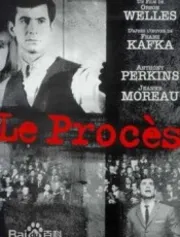
📄Franz Kafka's The Trial follows Josef K., an ordinary bank clerk who is abruptly arrested one morning for a crime that is never named. Though released, he becomes entangled in a vast, inscrutable judicial system whose courts hide in attics and whose laws no one has seen. As K. struggles to prove his innocence—through lawyers, court officials, and a prison chaplain—he descends into a nightmare of bureaucracy, guilt, and powerlessness. His fate grows increasingly inevitable, culminating in his execution "like a dog." Published posthumously in 1925, the novel remains a haunting meditation on alienation, authority, and absurdity.
📄Everyman by Philip Roth is a poignant meditation on mortality, illness, and the fragility of human life. The novel opens at the funeral of its unnamed protagonist, a retired advertising executive, then traces his life in reverse. From his boyhood in New Jersey, working in his father's jewelry store, through three failed marriages, estrangement from his children, and a series of grave medical ordeals, the narrative unflinchingly examines aging and bodily decline. As friends and lovers die around him, the protagonist confronts humanity's universal fate with raw honesty. Roth's spare, unsentimental prose delivers a powerful reckoning with death itself.
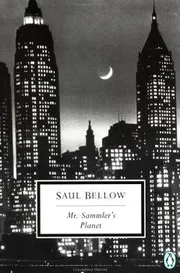
📄Mr. Sammler's Planet (1970) by Saul Bellow follows Artur Sammler, an elderly Holocaust survivor and intellectual living on Manhattan's Upper West Side during the turbulent late 1960s. Having escaped Nazi-occupied Poland, Sammler observes urban chaos—crime, sexual permissiveness, and countercultural upheaval—while pondering humanity's fragile claims to civilization. Through encounters with his eccentric family, including his unstable daughter Shula and his dying nephew Elya Gruner, and his fascination with NASA's lunar ambitions, Sammler meditates on death, morality, and mankind's future among the stars, ultimately glimpsing the possibility of peace and grace amid degradation.
📄In the quiet town of Merrow, every household keeps a clock that never shows the same time twice. When master clockmaker Elias Thorn dies, leaving his workshop to his estranged daughter Vera, she discovers a hidden timepiece still ticking—one that runs backward. As its hands reverse, so do fragments of her past: her mother's disappearance, her father's silence, a promise broken long ago. Racing against the mechanism's final turn, Vera must unravel the secret her father guarded for decades—before time, quite literally, runs out. Clocks is a haunting tale of memory, grief, and second chances.
📄"A Lover's Complaint" is a narrative poem traditionally attributed to William Shakespeare, first published in 1609 at the end of the quarto edition of his Sonnets. Written in rhyme royal, the poem depicts a young woman weeping beside a river, tearfully casting love letters and tokens into the stream. To a passing reverend man, she recounts how a handsome, eloquent youth seduced and then abandoned her. The poem explores themes of desire, betrayal, gender, and the seductive power of persuasive language. Though its authorship has been debated by scholars, it remains a compelling companion piece to Shakespeare's Sonnets.
📄Man's Rights is a thought-provoking novel set in a society where individual freedoms are systematically eroded. The story follows David Mercer, a lawyer who discovers a hidden archive revealing the true origins of his nation's constitution. As he battles a powerful regime determined to suppress the truth, David faces betrayal, imprisonment, and moral dilemmas that test his convictions. Alongside journalist Elena Cross, he sparks a movement demanding justice and human dignity. Blending political thriller with philosophical inquiry, the novel explores the fragile balance between state power and personal liberty, ultimately asking: what are we willing to sacrifice for freedom?
📄"The Lifted Veil" is a Gothic novella by George Eliot, first published in 1859. Unlike her realist works, it explores themes of clairvoyance, fate, and betrayal. The protagonist, Latimer, possesses the cursed gift of foreseeing the future and reading minds. He foresees his own premature death and discovers the cold, self-interested nature of Bertha, his brother's fiancée, whom he nevertheless marries after his brother's death. The marriage proves miserable. Years later, a macabre experiment reviving the dying servant Mrs. Archer exposes Bertha's plot to poison Latimer. Narrated by Latimer, the story ends with his chilling premonition of his own approaching death.
📄Leaves of Grass, written by American poet Walt Whitman, was first published in 1855 and continuously revised throughout his lifetime until the final "deathbed edition" in 1892. This groundbreaking poetry collection celebrates democracy, nature, the human body, and the spiritual interconnectedness of all humanity. Through revolutionary free verse that abandoned traditional rhyme and meter, Whitman explores themes of individualism, equality, and the vast American experience. Famous poems include "Song of Myself" and "I Sing the Body Electric." Though initially controversial for its sensual content, the work is now regarded as a cornerstone of American literature, profoundly influencing generations of poets and redefining the possibilities of poetic expression.
📄Spencer Brydon, a middle-aged American who has spent thirty-three years in Europe, returns to New York after his family's deaths. Obsessed with imagining the man he might have become had he remained in America to pursue business, he haunts his empty childhood house at night, sensing a ghostly presence—his alternate self. One night he finally confronts this spectral double, a ruthless, maimed figure of wealth and power, and collapses in terror. He awakens in the arms of Alice Staverton, the woman who loves him, who has dreamed of his alter ego and accepts both of his possible selves.
📄Edgar Allan Poe's stories stand as foundational works of Gothic fiction and detective literature. Known for their dark, atmospheric settings and psychological depth, tales such as "The Tell-Tale Heart," "The Fall of the House of Usher," and "The Pit and the Pendulum" explore themes of madness, death, and terror. Poe's masterful command of language creates mounting dread and obsession, drawing readers into the minds of unreliable narrators. Beyond horror, he pioneered the detective genre with "The Murders in the Rue Morgue." His short stories remain deeply influential, shaping modern horror and mystery writing while captivating audiences with haunting imagery and unsettling beauty.
📄"An Account of Egypt" by Herodotus offers a fascinating portrait of ancient Egypt through the eyes of the celebrated Greek historian known as the "Father of History." Drawing from his personal travels along the Nile, Herodotus chronicles the land's geography, religious practices, monumental architecture, and rich customs with characteristic curiosity and wonder. He describes the pyramids, the flooding of the Nile, mummification rituals, and the lives of pharaohs, blending careful observation with legendary tales. This timeless work remains one of the earliest and most vivid foreign accounts of Egyptian civilization, capturing both historical fact and the enduring mystery of ancient Egypt.
📄The House on the Borderland (1908) by William Hope Hodgson is a landmark of cosmic horror. Two friends fishing in rural Ireland discover a ruined house and a mysterious manuscript. The document records the Recluse's terrifying experiences: he battles grotesque swine-like creatures emerging from a pit beneath his home, endures a supernatural siege on the house, and is hurled through time and space, witnessing the distant deaths of Earth, the sun, and the universe itself. Blending gothic haunted-house terror with vast cosmic visions, Hodgson's novel pioneered a unique fusion of horror and fantasy, profoundly influencing writers such as H.P. Lovecraft.
📄Notes of a Journey From Cornhill to Grand Cairo (1846) is a witty travelogue by William Makepeace Thackeray, based on his 1844 journey through Egypt and the Near East. Writing under the pseudonym George Fitz-Boodle, Thackeray recounts his voyage from London's Cornhill to Cairo, passing through Gibraltar, Malta, and Greece. With characteristic irony and self-deprecating humor, he satirizes fellow tourists, tourist guides, and his own reactions to famous landmarks such as the Pyramids and the Sphinx. Blending sharp social commentary with vivid observation, the book offers a lively portrait of Victorian travel culture and the curious disillusionments of sightseeing abroad.