short story
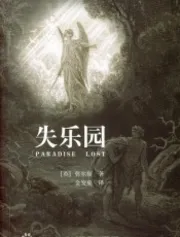
📄Paradise Lost, John Milton's epic masterpiece published in 1667, retells the biblical story of humanity's fall from grace. The poem follows Satan, once Heaven's most radiant archangel, who rebels against God and is cast into Hell with his legion of fallen angels. Consumed by envy and revenge, Satan journeys across chaos to the newly created Earth, infiltrating the Garden of Eden. There he tempts Eve to eat the forbidden fruit from the Tree of Knowledge. Eve succumbs and shares the fruit with Adam, and together they lose their innocence, bringing sin and death into the world. Expelled from Paradise, humanity embarks upon its long journey toward redemption and divine forgiveness.
📄Heart of Darkness, written by Joseph Conrad in 1899, follows Charles Marlow, a sailor who journeys up the Congo River into Central Africa to find Kurtz, a brilliant but enigmatic ivory agent who has gained godlike power over the local people and descended into madness. Through Marlow's narrative, Conrad exposes the brutality and hypocrisy of European imperialism, revealing how so-called "civilized" colonizers commit horrific atrocities under the guise of enlightenment. As Marlow penetrates deeper into the jungle, he confronts the darkness lurking within human nature itself. This powerful novella remains a profound meditation on colonialism, moral ambiguity, and the fragile veneer of civilization.
📄"The Stolen White Elephant" is a satirical short story by Mark Twain. The tale begins when the King of Siam sends a rare white elephant as a gift to the Queen of England. Upon arrival in New Jersey, the elephant mysteriously disappears. The narrator, the animal's caretaker, hires Inspector Blunt and his team of celebrated detectives to track it down. As the investigation unfolds with absurd clues and false sightings, the detectives' expenses skyrocket, draining the narrator's finances. Twain masterfully parodies detective fiction, exposing the incompetence and greed behind the detectives' polished reputations, culminating in a darkly comic and ironic twist ending.
📄"The Real Thing" by Henry James follows an illustrator who is visited by Major and Mrs. Monarch, impoverished aristocrats seeking work as artist's models, convinced that their refined breeding makes them perfect for portraying their own class. Paradoxically, the artist discovers that their very "realness" limits them: they cannot transform, appearing stiff and typecast, while his humble models, Miss Churm and Oronte, convincingly embody any character through sheer versatility. Forced to choose between authenticity and artistry, the illustrator dismisses the Monarchs, who quietly fade into obscurity. Through this poignant tale, James explores the tension between reality and representation, suggesting that art often demands more than literal truth.
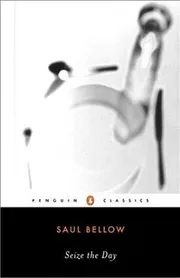
📄"Seize the Day," Saul Bellow's celebrated novella, unfolds over a single day in mid-century New York, chronicling the downfall and fleeting redemption of Tommy Wilhelm, a middle-aged failed salesman. Estranged from his wife, rejected by his aging father, and manipulated by the charismatic charlatan Dr. Tamkin, Wilhelm teeters on the edge of ruin. When a reckless grain investment wipes out his remaining savings, his fragile identity collapses entirely. In the novel's unforgettable climax, Wilhelm weeps openly at a stranger's funeral, experiencing a cathartic release of buried grief. Bellow's masterpiece probes alienation, father-son estrangement, and humanity's desperate yearning for connection and meaning.
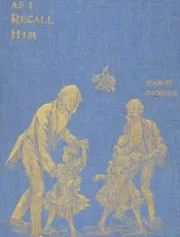
📄My Father as I Recall Him is a tender and intimate memoir in which a daughter reflects on the life and character of her celebrated father. Drawing on cherished memories, she portrays him not as the world saw him—a towering literary figure—but as he was at home: a devoted parent, a playful companion, and a man of profound warmth and generosity. Through anecdotes of family holidays, private theatricals, and quiet domestic moments, the book reveals his humor, tireless energy, and deep love for his children. It stands as both a moving personal tribute and an invaluable portrait of a great man.
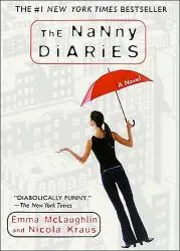
📄"The Nanny Diaries" by Emma McLaughlin and Nicola Kraus is a satirical novel about Nan, a college student working as a nanny for a wealthy Manhattan family. Hired by the demanding and self-absorbed Mrs. X, Nan cares for four-year-old Grayer while navigating the absurd expectations of his neglectful parents. Working endless hours and performing tasks far beyond her job description, she becomes the emotional anchor the child desperately needs. As her personal life crumbles under mounting pressure, Nan must decide how long she can endure. Blending humor with sharp social commentary, the novel exposes the hidden lives of caregivers and the hollow priorities of privilege.
📄In a decaying coastal city where alchemy survives in secret, a young chemist discovers her late father's manuscript—a treatise claiming to explain not the transformation of matter, but of souls. Following his research through labyrinthine archives and forgotten laboratories, she uncovers a hidden society that has quietly manipulated generations of leaders, artists, and revolutionaries. As its members close in around her, she must decide whether to destroy the knowledge or complete her father's final experiment. Blurring philosophy and thriller, On the Generation and Corruption meditates on how ideas are born, how they decay, and whether anything created by human hands can escape its own dissolution.
📄Father Sergius is a short novel by Leo Tolstoy, published posthumously in 1911. It follows Stepan Kasatsky, a proud and ambitious imperial officer whose engagement collapses when he discovers his fiancée was once the Tsar's mistress. Disillusioned, he enters a monastery and becomes Father Sergius, renowned as a holy man. Yet beneath his ascetic exterior, he struggles with vanity and desire, famously thwarting a noblewoman's seduction by severing his own finger. Renouncing his fame, he wanders as a pilgrim and is exiled to Siberia, where he finally finds genuine faith through humility and humble service to others.
📄Crome Yellow (1921) is Aldous Huxley's debut novel, a witty social satire set in an English country house. The story follows Denis Stone, a sensitive young poet who visits Crome, the eccentric estate owned by Henry Wimbush. Among the guests are Mr. Scogan, who envisions a scientifically controlled future society, along with assorted intellectuals, artists, and eccentrics. Through their conversations, romances, and misadventures, Huxley skewers the pretensions of the postwar intelligentsia. Blending comedy of manners with philosophical speculation, the novel also foreshadows the dystopian themes Huxley would later develop in Brave New World.
📄Robin Hood is a timeless tale of adventure and justice set in medieval England. When Robin of Locksley returns from the Crusades, he discovers his homeland suffering under the tyranny of the corrupt Sheriff of Nottingham and Prince John, who scheme to seize the throne while King Richard is away. Forced into exile, Robin retreats to Sherwood Forest, where he gathers a band of Merry Men, including Little John, Friar Tuck, and Will Scarlet. With unmatched archery skills and clever disguises, he robs the rich to help the poor, defends the oppressed, and wins the heart of the brave Maid Marian in this enduring legend of courage.
📄"The Old Maid" by Edith Wharton is a Pulitzer Prize–winning novella set in nineteenth-century New York. It follows spinster Charlotte Lovell, who secretly bears a daughter, Tina, fathered by Clem Spender—once the fiancé of her wealthy cousin Delia Ralston. Passing Tina off as an orphan, Charlotte raises the girl while running a foundling home. When Tina becomes engaged to Delia's son, Charlotte, fearing for her daughter's future, reveals the truth to Delia, who guards the secret for decades. Exploring sacrifice, hidden motherhood, repressed passion, and the rigid conventions of old New York society, the story portrays women trapped by duty and deception.
📄Franz Kafka's The Metamorphosis (1915) tells the haunting story of Gregor Samsa, a traveling salesman who wakes one morning to find himself transformed into a monstrous insect. Trapped in his new body, Gregor becomes increasingly alienated from his family, who once depended on his income. As his condition deteriorates, their initial concern gives way to shame, disgust, and resentment. Confined to his room, Gregor slowly wastes away while his family reclaims their lives. This absurdist masterpiece explores themes of alienation, identity, dehumanization, and the crushing burdens of duty, leaving readers to ponder what truly makes us human.
📄In Nature, botanist Elena Marsh retreats to a remote forest after losing her daughter, seeking solitude among ancient trees. There she discovers a hidden valley untouched by human hands—a living archive of species thought extinct. As she documents her findings, she faces a choice: reveal the valley to a world hungry for resources, or protect its secrets forever. When a logging company arrives at the forest's edge, Elena must confront her grief, her past, and what it truly means to belong to the wild. A poignant meditation on loss, wonder, and humanity's fragile bond with the living earth.
📄Skipping Christmas by John Grisham tells the story of Luther and Nora Krank, whose daughter Blair leaves for a year in Peru with the Peace Corps. Facing an empty nest, the couple decides to skip Christmas entirely—no tree, no decorations, no party, no gifts—and instead spend the money on a Caribbean cruise. Their plan infuriates their holiday-obsessed neighbors, who pressure them relentlessly to conform. Just as they're about to depart, Blair calls on Christmas Eve announcing she's bringing her fiancé home, forcing the Kranks into a frantic, hilarious scramble to recreate a magical Christmas overnight. A witty satire on holiday conformity and commercialism.
📄Cranford by Elizabeth Gaskell is a gentle comic novel portraying life in a small English town dominated by independent, genteel spinsters. Narrated by Mary Smith, a frequent visitor from the nearby city of Drumble, the story captures the quaint customs, strict social codes, and careful economies of its elderly female residents, led by the kindly Miss Matty Jenkyns and her sister Deborah. Through episodes such as Captain Brown's tragic death, Miss Matty's thwarted romance with Mr Holbrook, and the collapse of the town bank, Gaskell explores themes of female friendship, resilience, and social change. Warm, witty, and quietly moving, the novel celebrates community amid genteel decline.
📄Emily of New Moon, by L.M. Montgomery, follows young Emily Byrd Starr, an orphaned girl sent to live at New Moon Farm on Prince Edward Island after her beloved father's death. Raised by her stern Aunt Elizabeth, gentle Aunt Laura, and kind Cousin Jimmy, Emily struggles to find her place in a rigid household. Gifted with a passionate imagination and a deep longing to write, she finds solace in nature, friendship, and her mysterious "flash" of inspiration. Through joys and sorrows, Emily matures into a determined young writer, learning to balance her artistic dreams with the expectations of those around her.
📄Hospital Sketches (1863) is a semi-autobiographical novella by Louisa May Alcott, based on letters she wrote while serving as a volunteer nurse during the American Civil War. The story follows "Nurse Periwinkle," Alcott's witty alter ego, as she journeys to Washington, D.C., to care for wounded Union soldiers in a makeshift army hospital. Blending humor with poignant realism, the narrative depicts the harsh conditions, the suffering and courage of the soldiers, and the emotional toll on caregivers. Alcott's vivid sketches challenged romanticized views of war and brought her widespread recognition, foreshadowing the success of Little Women five years later.
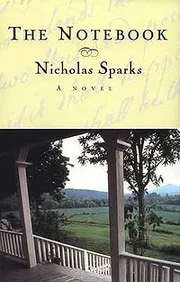
📄The Notebook, written by Nicholas Sparks, is a timeless romance novel published in 1996. Set in coastal North Carolina, it tells the story of Noah Calhoun, a poor country boy, and Allie Nelson, a wealthy young woman, who fall deeply in love during one unforgettable summer in the 1940s. Despite their passionate romance, social differences and family opposition tear them apart. Years later, on the eve of Allie's wedding, she returns to see Noah and must choose between her fiancé and her first love. Framed by the touching narrative of an elderly man reading to his wife suffering from Alzheimer's, the novel celebrates an enduring love that transcends time and memory.
📄The Battle of Life (1846) is one of Charles Dickens's Christmas novellas, set on ground where a historic battle once raged. The story follows the Jeddler sisters, Grace and Marion, who live with their philosophical father, Dr. Jeddler. When Alfred Heathfield, their father's ward and Marion's betrothed, departs to complete his education, the family anxiously awaits his return. Upon Alfred's homecoming, Marion mysteriously disappears, apparently having eloped, leaving Grace to console the heartbroken suitor. Years pass before the truth emerges: Marion sacrificed her own happiness so that her beloved sister could find love. Dickens suggests that life's quiet struggles—self-sacrifice, devotion, and forgiveness—are the true battles worth fighting.