classic books
📄In The Vital Message, grief-stricken journalist Evelyn Carter receives a mysterious letter from her brother—written after his confirmed death. Determined to uncover the truth, she descends into a shadowy world of spiritualists, skeptics, and secret societies, each claiming to hold the key to messages from beyond the grave. Following cryptic clues through foggy London streets and the windswept moors of Scotland, Evelyn unravels a conspiracy that threatens everything she believes about life, death, and the thin veil between them. A gripping tale of love, loss, and revelation, The Vital Message asks: how far would you go to hear from those you've lost?
📄The Autobiography of a Slander by Edna Lyall is a satirical allegory narrated by Slander itself. Born from a single careless, spiteful remark dropped by a fashionable woman, the Slander describes how it feeds on idle gossip, growing stronger with every retelling. Travelling from drawing rooms to country villages, it ruins reputations, breaks hearts, and destroys the happiness of innocent people, including a blameless young man and those who love him. Ultimately, the Slander returns to wound its own creator, proving that malicious words inevitably recoil upon those who first utter them. This moral tale powerfully warns against the destructive, self-perpetuating nature of gossip.
📄The Adventures of Reddy Fox is a beloved children's classic by Thornton W. Burgess. The story follows Reddy Fox, a young, overconfident fox living with his clever grandmother, Granny Fox, near the Green Meadows. Despite Granny Fox's wise teachings about survival, Reddy's recklessness and boastfulness lead him into constant trouble, especially with Farmer Brown's Boy. After a hunting accident leaves him lame, Reddy unexpectedly receives kindness from his former enemy, changing his outlook. Through thrilling escapades involving hounds, traps, and chicken-coop raids, Reddy gradually learns valuable lessons about humility, patience, and wisdom. This charming tale blends humor, adventure, and gentle moral instruction about nature and character.
📄In a kingdom where faith is law and doubt is death, one man dares to question. When scholar Elias Thorn discovers a forbidden manuscript that contradicts the Church's sacred doctrine, he becomes the most wanted heretic in the realm. Hunted by the ruthless Inquisitor Malachi, Elias flees with a band of outcasts—a fallen priest, an herbalist accused of witchcraft, and a nobleman's daughter harboring dangerous secrets. Together they uncover a conspiracy that could shatter the empire's foundations. But truth demands sacrifice, and heretics burn. A gripping tale of faith, defiance, and the unbearable price of freedom.
📄Charlotte Temple is a sentimental novel by Susanna Rowson, first published in 1791 and later in America in 1794, where it became the first bestseller in American literature. The story follows Charlotte Temple, a naive young English schoolgirl who is seduced by Lieutenant John Montraville and persuaded to elope with him to New York during the American Revolution. Abandoned by her lover and deceived by her companion Mademoiselle La Rue, Charlotte becomes pregnant and penniless. Despite repentance and reunion with her father, she dies tragically after giving birth to a daughter. The novel serves as a moral warning to young women about seduction, disobedience, and the consequences of straying from parental guidance.
📄In Maurice Leblanc's thrilling adventure, the gentleman thief Arsène Lupin faces his greatest challenge. Two of his trusted men have been sentenced to death after a bungled burglary at the home of Deputy Daubrecq, a corrupt politician hiding a deadly secret: a list of names concealed within a crystal stopper—evidence that could condemn several parliamentarians. Racing against time and the relentless detective Ganimard, Lupin must outwit the cunning Daubrecq, rescue his condemned comrades from the guillotine, and recover the elusive crystal stopper. Filled with daring escapes, disguises, romance, and brilliant deduction, this masterpiece showcases Lupin at his most audacious.
📄The Precipice (Obryv) is Ivan Goncharov's final novel, published in 1869. The story follows Boris Raisky, an affluent artist and dilettante, who returns to his aunt's country estate and becomes entangled in the lives of his cousins, the gentle Marfinka and the enigmatic Vera. Vera defies social convention by falling for Mark Volokhov, a passionate nihilist, but their romance collapses amid betrayal and disillusionment. Through Raisky's romantic obsessions and Vera's spiritual crisis, Goncharov examines the clash between traditional patriarchal Russia and radical new ideas, love's redemptive power, and the moral precipice confronting the younger generation.
📄Strictly Business: More Stories of the Four Million (1910) is a short story collection by celebrated American writer O. Henry, a sequel to his beloved The Four Million. Continuing his affectionate portrait of New York City's ordinary citizens, the collection delivers masterful tales of clerks, shop girls, con men, and dreamers navigating life, love, and commerce. With his signature wit, warmth, and ironic twists, O. Henry transforms everyday struggles into moments of surprising revelation. Stories like "Strictly Business," "While the Auto Waits," and "One Thousand Dollars" showcase his genius for blending sentiment, satire, and unforgettable surprise endings.
📄The Jungle Book, written by Rudyard Kipling in 1894, is a timeless collection of stories set in the Indian jungle. It follows Mowgli, a young boy raised by wolves after being abandoned as an infant. Guided by the wise panther Bagheera and the gentle bear Baloo, Mowgli learns the laws of the jungle while facing dangers, particularly from the fierce tiger Shere Khan. As he grows, Mowgli struggles with his identity, torn between the animal world and his human origins. Filled with adventure, memorable characters, and moral lessons, the novel explores themes of belonging, survival, and the delicate balance between nature and civilization.
📄Set in a dystopian future, Ayn Rand's Anthem depicts a collectivist society where individuality has been eradicated. People have no names, only numbers, and the word "I" has been forbidden. Equality 7-2521, a young street sweeper, discovers a hidden tunnel and secretly conducts scientific experiments, ultimately rediscovering electricity. When he presents his invention to the World Council of Scholars, he is condemned as a traitor. Fleeing to the Uncharted Forest with his beloved Liberty 5-3000, he discovers an abandoned house containing forbidden books. There, he rediscovers the sacred word "I," embracing individualism and renaming himself Prometheus.
📄Moon-Face and Other Stories is a 1906 short story collection by American author Jack London. The title story is a dark psychological tale in which the narrator harbors an irrational, murderous hatred for a man with a "moon face," ultimately luring him to a grisly death with a pack of starving dogs. Blending adventure, suspense, and the macabre, the collection explores London's signature themes: the brutality of nature, primal instinct, and the fragile line between civilization and savagery. Other tales, including "The Leopard Man's Story" and "Planchette," showcase his vivid storytelling and fascination with obsession, fate, and human darkness.
📄G.K. Chesterton's metaphysical thriller follows Gabriel Syme, a poet-turned-detective who infiltrates a sinister anarchist council in London. The secret society comprises seven members named after days of the week, presided over by the enigmatic Sunday. Elected as the new "Thursday," Syme embarks on a surreal journey through a nightmare world where nothing is what it seems. As he confronts murderous conspirators and engages in impossible chases across London, Syme uncovers startling secrets about his fellow anarchists—and ultimately about Sunday himself. Part detective story, part philosophical allegory, this 1908 masterpiece explores order, chaos, faith, and the nature of reality.
📄When Detective Sarah Chen's family is brutally murdered, the justice system fails her—the killer walks free on a technicality. Consumed by grief and rage, she abandons her badge and disappears into the city's underworld. Years later, a vigilante known only as "The Avenger" begins eliminating criminals who escaped the law. As the body count rises, her former partner races to unmask the vigilante before her family's killer strikes again. But when Sarah finally corners the murderer, she must choose between the vengeance that has defined her and the person she once was. Some justice costs everything.
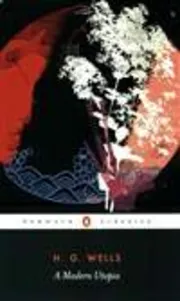
📄A Modern Utopia (1905), by H.G. Wells, follows two travelers who mysteriously find themselves on a duplicate Earth orbiting a distant star, where a single world government has established a rational and progressive civilization. Guided through this society, they encounter the "samurai"—a voluntary order of educated public servants who govern and sustain the utopia. Unlike the static, perfect worlds of earlier utopian fiction, Wells's utopia is dynamic, embracing science, individual liberty, and continuous reform. Blending narrative adventure with philosophical essay, the novel explores the tension between individuality and collectivism, imagining how technology and enlightened governance might transform humanity's collective future.
📄When Maya Chen's toast lands buttered side down for the seventh consecutive morning, she begins to wonder if the universe is sending her a message. Recently laid off, freshly heartbroken, and living in a crumbling apartment, she has every reason to believe in the physics of bad luck. But a chance encounter with an eccentric elderly baker introduces her to the art of sourdough—and the philosophy that fallen bread can always be salvaged. As Maya kneads, proofs, and rises alongside her stubborn starter, she discovers that resilience, like dough, needs time and patience. A wry, warm-hearted novel about second chances and finding sweetness even when life lands buttered side down.
📄In the shadow of a decaying steel town, three generations of Harlan men confront the weight of inheritance—of silence, pride, and unspoken love. When Samuel Harlan returns home after his father's stroke, he must reckon with the man who taught him that strength means never bending. Caught between his dying father's rigid silence and his own rebellious son's questions, Samuel discovers that the ways of men are not laws but habits, passed down like scars. A haunting meditation on masculinity, memory, and the fragile threads binding fathers to sons, this novel asks whether we are doomed to repeat—or brave enough to change.
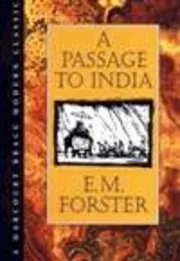
📄A Passage to India (1924), E.M. Forster's masterpiece, explores tensions between British colonizers and Indians during the Raj. When Adela Quested arrives in India hoping to see the "real India," she befriends Dr. Aziz, a young Indian Muslim physician. During an excursion to the mysterious Marabar Caves, Adela accuses Aziz of assaulting her, triggering a sensational trial that exposes deep racial prejudice within the colonial community. Though the truth emerges and Aziz is acquitted, the incident shatters potential friendship between the two cultures. The novel poignantly examines racism, cultural misunderstanding, and whether genuine human connection is possible under imperialism.