classic books
📄Clotelle, written by William Wells Brown and first published in 1853 as Clotel, is celebrated as the first published novel by an African American author. The story follows Clotelle, the fictional daughter of President Thomas Jefferson and his enslaved mistress Currer. After Jefferson's death, Clotelle and her family are torn apart at a slave auction. She suffers betrayal by her white lover Horatio Green, endures separation from her daughter Mary, and drowns tragically while escaping across the Potomac River. Blending fiction with historical events, the novel powerfully exposes the hypocrisy of a nation preaching liberty while practicing slavery, ending with hope as Mary escapes to freedom in Europe.
📄Dead Souls by Nikolai Gogol is a satirical masterpiece of Russian literature. The novel follows Pavel Chichikov, a charming and cunning con artist who travels through provincial Russia purchasing "dead souls"—serfs who have died but remain listed on official census records. Chichikov's scheme is to acquire these paper lives as collateral for massive loans, thereby gaining wealth and social status. Through his encounters with eccentric landowners, greedy officials, and grotesque characters, Gogol paints a devastating portrait of corruption, vanity, and moral decay in imperial Russia. Blending dark humor with sharp social criticism, this unfinished novel remains a cornerstone of world literature.
📄When retired cat burglar Jack Morland witnesses a murder from his penthouse window, the police dismiss it—there's no body, no evidence, no victim. But Jack knows what he saw, and the killer knows Jack saw it. As he races to expose a conspiracy reaching into the city's highest offices, Jack must rely on his old skills: stealth, deception, and the ability to vanish. Yet the murderer always seems one step ahead, striking like a thief in the night. In a game where every shadow hides danger, Jack discovers the hardest heist of all—surviving until dawn.
📄Henry James's "The Pupil" (1891) tells the story of Pemberton, a penniless young scholar hired as tutor to Morgan Moreen, the precocious son of a charming but financially irresponsible American family living extravagantly in Europe. As Pemberton grows fond of the sensitive, intelligent boy, he becomes increasingly aware of the family's mounting debts and moral hollowness. Morgan, disillusioned by his parents' deceptions, forms a deep bond with his tutor, seeing in him a possible escape from his hollow upbringing. The novella explores themes of innocence, exploitation, class, and loyalty, culminating in a poignant tragedy that questions whether genuine love can survive within a corrupt and self-serving world.
📄Men, Women and Ghosts (1916) is Amy Lowell's celebrated second poetry collection, showcasing her mastery of imagist verse and pioneering polyphonic prose. Drawing its title from Henrik Ibsen's play Ghosts, the volume weaves together vivid portraits of human relationships, wartime experiences, and spectral encounters. Standout pieces include the World War I poem "The Bombardment," the widely anthologized "The Ghetto," and the haunting "A Lady." Lowell experiments boldly with free verse and rich sensory imagery, capturing fleeting moments of perception. Blending the concrete world of men and women with ethereal ghostly presences, the collection cemented Lowell's position as a leading voice in modern American poetry.
📄Ridgway of Montana, a Western novel by Willis George Emerson published in 1907, tells the story of Jack Ridgway, a charismatic and daring mine owner battling a ruthless corporate trust for control of Montana's rich copper country. As the conflict escalates into cutthroat business warfare, sabotage, and peril deep within the mines, Ridgway relies on courage, ingenuity, and the loyalty of his men to defend his independence and protect his workers. Woven into the struggle is a tender romance with Alice, whose loyalties are torn between the two sides. The novel celebrates frontier individualism, honest enterprise, and love triumphing over greed.
📄Set in the Ohio Valley during the late eighteenth century, Zane Grey's The Spirit of the Border vividly portrays the turbulent American frontier where settlers and Native Americans clash. Frontier scout Lewis Wetzel, known as "Deathwind," fights to protect Fort Henry from the treacherous Girty brothers—white renegades who incite Indian attacks against pioneers. Amid the violence, missionary brothers Joe and Jim Downs journey west to bring Christianity to the tribes, establishing the Village of Peace among the Delaware. Romance, betrayal, and sacrifice intertwine as Jim falls for the beautiful Nellie. Grey's classic captures the savage beauty, courage, and moral complexity of the wild borderland.
📄The Diary of a Goose Girl (1902) by Kate Douglas Wiggin is a charming, humorous novel told through diary entries. It follows an unnamed city woman who retreats to a farmhouse in Sweet Apple Valley for rest and inspiration. Eager to embrace rural life, she takes charge of a flock of geese, earning the title of "goose girl." Through witty and affectionate observations, she chronicles her mishaps with stubborn farm animals, encounters with colorful country neighbors, and the quiet rhythms of pastoral existence. Blending gentle humor, warmth, and a touch of unexpected romance, the novel celebrates country living and personal self-discovery.
📄The Devil's Dictionary by Ambrose Bierce is a satirical masterpiece that redefines ordinary words with biting wit and cynical wisdom. First published in book form in 1911, this lexicon of dark humor skewers politics, religion, marriage, and human nature itself. Bierce famously defines love as "a temporary insanity curable by marriage" and history as "an account, mostly false, of events, mostly unimportant." Crafted over twenty-five years, these sardonic definitions reflect the author's worldview shaped by his experiences as a Civil War soldier and muckraking journalist. H.L. Mencken hailed it as containing "some of the most gorgeous wit in the English language." It remains a timeless classic of American satire.
📄When marine biologist Dr. Elena Marsh arrives on the remote island of Blackrock to study an unusual storm pattern, she discovers far more than weather anomalies. The tempest raging offshore seems to follow her—and within its eye lies a secret buried for thirty years. As communications fail and the islanders turn hostile, Elena uncovers her family's connection to a shipwreck that claimed twelve lives. With the storm intensifying and time running out, she must confront an unbearable truth: some tempests are born of nature, but the deadliest are born of guilt. A gripping tale of secrets, survival, and redemption.
📄"Black Jack" follows Dr. Kuroo Hazama, a brilliant but unlicensed surgeon known only as Black Jack. Marked by a disfigured face and a cloak of mystery, he operates in the shadows of the medical world, saving lives that official medicine has abandoned. Though he demands outrageous fees, his true motivations remain enigmatic—sometimes mercy, sometimes revenge against a system that failed him. Haunted by a childhood tragedy that claimed his mother, Black Jack navigates ethical dilemmas, corrupt institutions, and his own scarred past. Each patient teaches him something about humanity, even as he remains an outsider—a healer without a license, a legend without a name.
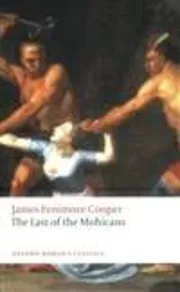
📄Set during the French and Indian War in 1757, James Fenimore Cooper's novel follows Hawkeye, a skilled white scout raised among Native Americans, and his Mohican companions, Chingachgook and his son Uncas. They undertake a dangerous mission to protect Cora and Alice Munro, the daughters of a British colonel, as they travel through the hostile wilderness of New York. Pursued by the cunning Huron warrior Magua, who seeks revenge against Colonel Munro, the group faces betrayal, capture, and bloody conflict. The novel explores themes of loyalty, racial tension, and the tragic decline of Native American cultures, culminating in sacrifice and loss.
📄Oblomov (1859), by Ivan Goncharov, portrays Ilya Ilyich Oblomov, a young Russian nobleman paralyzed by inertia. Spending his days in a St. Petersburg apartment, too indolent to rise from bed or manage his declining estate, Oblomov embodies aristocratic apathy. His energetic friend Stolz attempts to revive him, introducing Olga, a spirited woman with whom Oblomov falls in love. Yet his inability to act dooms the romance. Oblomov retreats into the care of his widowed landlady Agafya, living passively until his early death. The novel coined "Oblomovism"—a term for dreamy inaction—satirizing the Russian gentry while creating literature's most lovable idler.
📄The Bickerstaff-Partridge Papers is a celebrated satirical work by Jonathan Swift, published between 1708 and 1709. Writing under the pseudonym Isaac Bickerstaff, Swift mockingly predicted the exact date and hour of death of John Partridge, a well-known astrologer and almanac-maker. When the appointed date arrived, Bickerstaff proclaimed the prediction fulfilled, effectively ridiculing Partridge and exposing the fraudulent pretensions of astrology and almanac writers. The pamphlets sparked widespread public amusement and became a landmark of English literary satire. Through sharp wit and deadpan irony, Swift challenged superstition and charlatanism, cementing his reputation as one of the greatest satirists in English literature.
📄News from Nowhere (1890) is a utopian novel by William Morris. It follows William Guest, who falls asleep after a socialist meeting and awakens in a transformed twenty-first-century England. Guided by Dick Hammond, he journeys along the River Thames, discovering a pastoral, classless society where money, private property, government, and industry have been abolished following a peaceful revolution. People work joyfully, value craftsmanship, and live in harmony with nature. Through this vision, Morris critiques Victorian capitalism and Edward Bellamy's industrial utopianism, presenting his ideal of an agrarian socialist commonwealth rooted in beauty, meaningful labor, and human fellowship.
📄Aaron's Rod (1922) is a novel by D.H. Lawrence following Aaron Sweeney, a miner and talented flautist who abandons his wife and children in England to pursue personal freedom. Journeying through post-war London and Italy, Aaron seeks liberation from suffocating domesticity and social conventions, carrying a mysterious flute that symbolizes primal masculine power. Through encounters with intellectuals, including the philosophizing Lilly, the novel explores individualism, male autonomy, and the yearning for authentic leadership in a fractured society. Reflecting Lawrence's disillusionment with modern civilization, the work provocatively examines power dynamics, relationships, and the restless search for meaning after World War I.
📄Love of Life and Other Stories is a collection of short stories by American author Jack London, first published in 1907. Drawing on his experiences during the Klondike Gold Rush, London vividly depicts humanity's struggle against the merciless forces of nature. In the title story, a nameless gold prospector, abandoned by his sick friend in the Canadian wilderness, crawls across the barren tundra toward survival while stalked by a starving wolf, sustained only by sheer willpower. Other tales, such as "The Story of Keesh," explore courage, wisdom, and endurance in the frozen North. The collection powerfully celebrates resilience, determination, and the indestructible human spirit.
📄A Ward of the Golden Gate, written by Bret Harte and published in 1890, is a romantic novel set in San Francisco after the Civil War. The story follows Millicent Harcourt, a young Englishwoman who becomes the ward of a wealthy and mysterious Californian. As she navigates the vibrant, rough-edged society of the Golden Gate city, she encounters deception, concealed identities, and unexpected devotion. Harte blends humor, sentiment, and adventure, contrasting Old World refinement with New World vitality. The novel explores themes of trust, honor, and love, revealing nobility in unlikely characters and culminating in a satisfying romantic resolution.
📄When historian Claire Ashworth arrives at the crumbling Whitcombe Abbey to catalog its medieval archives, she expects dust and silence—not the cold whisper of the dead. But rumors speak of the Abbot's Ghost, a monk murdered five centuries ago, whose restless spirit still walks the cloisters at midnight. As strange occurrences escalate, Claire uncovers a hidden manuscript that could shatter the Church's darkest secret. Drawn deeper into the abbey's haunting past, she must solve the mystery of the abbot's death before history repeats itself—with her as the next victim. Some sins refuse to stay buried.
📄Lady Evangeline Ashworth is renowned throughout London for her caprices—one day hosting extravagant balls, the next vanishing to the countryside on a whim. When her exasperated family hires the stoic Mr. James Thornton as her secretary, she vows to make his life miserable. Yet behind her willful façade lies a woman haunted by loss, using whimsy as armor against a world that once broke her heart. As James patiently peels away her defenses, Evangeline must decide whether to trust him with her deepest secret—or flee, as she always has. A tale of wit, wounded hearts, and love's redemptive power.