classic books
📄This Side of Paradise, F. Scott Fitzgerald's debut novel, follows Amory Blaine, a handsome, ambitious young man shaped by an unconventional upbringing and his glamorous mother's influence. Chronicling his journey through preparatory school, Princeton University, and service in World War I, the novel traces Amory's romantic pursuits—especially his passionate but doomed love for Rosalind Connage—and his gradual disillusionment with wealth, status, and the American Dream. As he confronts failure, heartbreak, and the collapse of his youthful ambitions, Amory embarks on a restless search for identity and meaning. A defining portrait of Jazz Age youth, the novel captures a generation's spirit and moral uncertainty.
📄Island Nights' Entertainments (1893) is a collection of three tales by Scottish author Robert Louis Stevenson, inspired by his residence in the South Pacific. The volume includes "The Beach of Falesá," a gripping tale of a white trader's life on a Polynesian island; "The Bottle Imp," a fantastical story about a cursed bottle that grants wishes at a terrible price; and "The Isle of Voices," a tale of sorcery and greed. Blending adventure, supernatural elements, and keen social observation, these stories capture the mystery and moral complexity of island life, showcasing Stevenson's masterful storytelling and his fascination with Pacific cultures and colonial encounters.
📄Set in late-Victorian London, George Gissing's New Grub Street (1891) offers a bleak portrait of the literary marketplace, where art succumbs to commerce. The novel contrasts two writers: Edwin Reardon, an idealistic novelist of declining talent and shrinking sales, and Jasper Milvain, a pragmatic, ambitious journalist who understands publicity and profit. As Reardon's marriage to Amy collapses under financial strain, Milvain ruthlessly pursues success and romance. Gissing exposes a world of precarious livelihoods, failed marriages, and quiet despair, asking whether literary integrity can survive in a commodified age. It remains a piercing critique of authorship, class, and economic pressure.
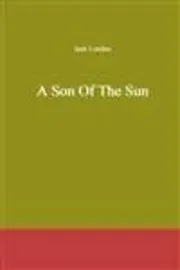
📄A Son of the Sun, a collection of adventure stories by Jack London, follows David Grief, a wealthy and resourceful trader whose empire spans the vast South Pacific. From coral atolls to uncharted islands, Grief navigates treacherous waters, outwitting pirates, schemers, and rival adventurers while upholding his own code of honor. Each tale captures the romance and brutality of the South Seas—pearl diving, stolen treasures, mutinies, and doomed dreams. London's vivid prose, drawn from his firsthand sailing experiences, brings the tropics vividly to life, blending action, intrigue, and moral complexity into a thrilling portrait of adventure, empire, and fortune upon the open sea.
📄Buttercup Gold and Other Stories by Ellen Robena Field is a charming collection of children's tales first published in the late nineteenth century. Weaving together whimsy, nature, and gentle moral lessons, these stories transport young readers into a world where flowers speak, kindness is rewarded, and everyday wonders carry deeper meaning. From the titular tale of golden buttercups to narratives of generosity, honesty, and love, Field's prose sparkles with warmth and imagination. Perfect for reading aloud, this timeless anthology captures the innocence of childhood and the enduring magic found in meadows, gardens, and the hearts of good children.
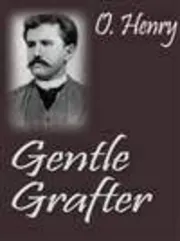
📄"The Gentle Grafter" is a humorous short story collection by O. Henry, first published in 1908. The book follows Jeff Peters and Andy Tucker, two affable con men who travel across America devising ingenious schemes to part gullible citizens from their money. Despite their questionable profession, the pair operates by a curious moral code—they refuse to cheat the poor or truly deserving, targeting instead the greedy and corrupt. Through O. Henry's signature wit, irony, and surprise endings, these stories satirize human gullibility and avarice, portraying swindlers as charming rogues whose "gentle" grafting often appears more honest than legitimate business itself.
📄Nada the Lily (1892), by H. Rider Haggard, is a tale of love, tragedy, and the rise and fall of the great Zulu king Chaka. Narrated by Mopo, the medicine man who ultimately takes part in Chaka's assassination, the story follows the fate of the beautiful Nada, Mopo's daughter, whose peerless beauty ignites destructive passions. At its heart lies the doomed love between Nada and Umslopogaas, believed to be Chaka's son. Set against the brutal wars and massacres of early Zululand, the novel blends African legend with adventure, portraying tyranny, loyalty, and the devastation wrought upon those who loved and feared the king.
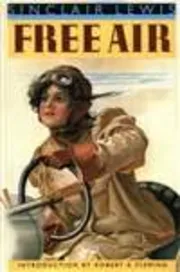
📄Free Air (1919) by Sinclair Lewis is one of America's first road-trip novels. It follows Claire Boltwood, a wealthy, pampered young woman from Brooklyn, as she and her father drive across the country by automobile toward Seattle. When her father suffers a nervous breakdown on the rugged prairie roads, they are rescued by Milt Daggett, a resourceful and honest small-town mechanic. As their journey continues, Claire grows drawn to Milt's vitality and authenticity, contrasting sharply with her refined Eastern suitors. The novel explores class divides, gender roles, and the promise of the open road, capturing America's emerging automobile culture and pioneering spirit.
📄A Waif of the Plains, written by Bret Harte and published in 1890, is a Western novel set in 1853. It follows a wagon caravan crossing the Great Plains toward California, centered on Clare, a young orphaned girl disguised as a boy. Amid the harsh realities of frontier travel—dust, drought, disease, and the constant threat of attack—the travelers form a fragile community of diverse characters. Silas Rainsford, a brave young scout, becomes Clare's protector as mysteries surrounding her past unfold. Blending adventure, romance, and vivid frontier detail, Harte's tale captures the perilous westward migration and the enduring strength of human compassion.
📄Uncle Josh's Punkin Centre Stories is a beloved collection of humorous tales by American humorist Cal Stewart, first published in 1900. Narrated by Uncle Josh, a folksy New England farmer, the stories recount his comical encounters with the rapidly modernizing world—electric lights, automobiles, telephones, and city life—all filtered through his rustic wit and healthy skepticism. Set in the fictional rural village of Punkin Centre, Vermont, the sketches capture the charm of small-town Americana at the turn of the century. Stewart's warm humor and masterful use of dialect made Uncle Josh a national sensation, inspiring popular phonograph recordings and securing the character's lasting place in American folk humor.
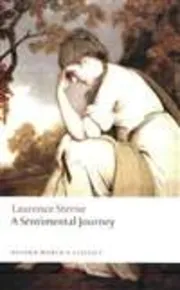
📄A Sentimental Journey Through France and Italy (1768) is Laurence Sterne's final novel, following the gentle Reverend Yorick as he travels across France. Abandoning conventional plot, the work chronicles the narrator's fleeting encounters—with monks, innkeepers, lovers, and strangers—through which Yorick experiences waves of sympathy, desire, tenderness, and whimsy. Celebrated as a masterpiece of sentimentalist literature, the novel prioritizes feeling over reason, exploring how small emotional moments reveal human nature. Humor, sensibility, and melancholy interweave as the journey ends abruptly, left unfinished at Sterne's death, leaving readers with an intimate portrait of a wandering heart.
📄The Darrow Enigma is a Victorian-era mystery blending detective fiction with early science fiction. When a man is found dead under inexplicable circumstances—no wounds, no poison, no traceable cause—investigators are drawn into a labyrinth of baffling clues. Suspicion soon falls upon strange experiments conducted in secret, involving mysterious rays and unseen forces far ahead of their time. A young scientist's obsessive research, a tender romance, and a trail of cryptic evidence intertwine as the truth slowly emerges. Part whodunit, part scientific romance, the novel probes the perilous boundary between brilliant discovery and deadly ambition.
📄In Sidney Sheldon's gripping thriller The Sky Is Falling, renowned TV anchorwoman Dana Evans is stunned when the entire Winthrop family—America's most beloved philanthropists—dies in a series of bizarre "accidents." Convinced the tragedies are no coincidence, Dana embarks on a perilous investigation spanning from Washington, D.C. to the former Soviet Union. As she unravels a chilling conspiracy reaching the highest echelons of power, Dana becomes a target herself. Racing against time to expose the truth while protecting her young son, she discovers that some secrets are worth killing for—and the sky may indeed be falling around her.
📄"Smoke Bellew" (1912) is an adventure novel by American author Jack London, set during the Klondike Gold Rush. The story follows Christopher Bellew, a cultured young man from San Francisco who transforms into the rugged frontiersman known as "Smoke" after venturing north to seek his fortune. Alongside his loyal companion "Shorty" Petite, Smoke faces brutal winters, treacherous landscapes, and cutthroat prospectors. Through courage, wit, and determination, he evolves from an inexperienced tenderfoot into a seasoned veteran of the Northland. Blending action, humor, and romance, the novel captures the raw spirit of the gold rush era and celebrates human resilience in the wilderness.
📄The Amazing Interlude, by Mary Roberts Rinehart, is a World War I romance set in war-torn Belgium. Sara Lee Kennedy, an American woman engaged to a steady but unimaginative fiancé, Harvey, longs to do something meaningful with her life. She travels to Belgium and establishes a soup kitchen near the front lines, serving starving civilians and wounded soldiers. There she meets the mysterious Captain Louis, an Englishman secretly working as an Allied spy behind German lines. Torn between duty and passion, Sara Lee experiences love, sacrifice, and tragedy when Louis's mission ends in capture and execution. Returning home, she forever cherishes her amazing interlude.
📄The Golden Bowl (1904), Henry James's final major novel, explores deception and moral complexity within marriage. Wealthy American widower Adam Verver marries Charlotte Stant while his daughter Maggie weds Italian Prince Amerigo. Unknown to both spouses, Charlotte and Amerigo were formerly lovers and secretly resume their affair. The relationship's hidden flaw is symbolized by a crystal bowl containing an invisible crack, purchased by the lovers. When Maggie discovers the truth through the bowl, she ingeniously resolves the crisis without open confrontation, sacrificing her father's companionship to preserve the marriages. The novel masterfully examines consciousness, betrayal, and the price of maintaining appearances.
📄Around the World in Eighty Days, written by Jules Verne, follows Phileas Fogg, a wealthy and precise English gentleman who wagers his fortune that he can travel around the world in eighty days. Accompanied by his loyal French valet Passepartout, Fogg journeys by train, steamship, and even elephant across continents. Pursued by Detective Fix, who wrongly suspects Fogg of bank robbery, the travelers overcome countless obstacles, including rescuing the Indian princess Aouda from certain death. Despite storms, delays, and setbacks, Fogg remains calm and determined. In the end, he discovers he has gained a day by traveling eastward, arriving in London just in time to win the bet—and find love.
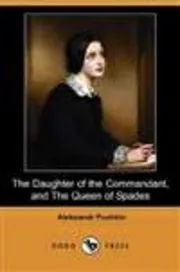
📄"The Daughter of the Commandant" (also known as "The Captain's Daughter") is a historical novel by Alexander Pushkin set during the Pugachev Rebellion of 1773–1775. The story follows Pyotr Grinyov, a young nobleman sent to serve at a remote fortress, where he falls in love with Masha, the commandant's daughter. Their romance is threatened by a jealous rival, Shvabrin. When the rebel leader Pugachev captures the fortress and executes the commandant, Grinyov's life is spared due to a past act of kindness. Amid war, betrayal, and loyalty, Grinyov risks everything to save Masha, ultimately proving his innocence before Empress Catherine.
📄Every Monday, the small town of Maple Hollow gathers for its flag-raising at the old courthouse square—a tradition unbroken for seventy years. When seventeen-year-old Ellie Chen, the town's newest resident and a reluctant volunteer, is asked to lead the ceremony, she discovers a forgotten letter hidden inside the flagpole's base. The letter pulls her into the past, revealing a fallen soldier, a forbidden love, and a promise made on the eve of war. As Ellie pieces together the truth, she must decide whether honoring the past means preserving its silence—or finally letting the town remember. A moving story about memory, courage, and the threads that bind generations together.
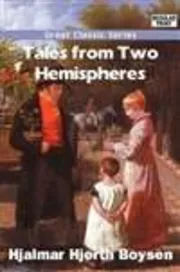
📄Tales from Two Hemispheres (1879) is a collection of short stories by Norwegian-American author Hjalmar Hjorth Boyesen. Drawing on his transatlantic experience, Boyesen weaves narratives set in both Europe and America, capturing the contrasts and connections between the Old World and the New. The stories explore themes of immigration, cultural displacement, love, ambition, and the search for identity. With warmth, humor, and keen observation, Boyesen portrays Norwegian peasants, immigrants adapting to American life, and characters caught between two worlds. The collection celebrates the immigrant spirit while offering vivid portraits of Scandinavian landscapes and customs, establishing Boyesen as a pioneering voice in Norwegian-American literature.