classic books
📄A Daughter of the Snows (1902) is Jack London's first novel, set against the backdrop of the Klondike Gold Rush. It follows Frona Welse, an intelligent and fiercely independent woman who, after receiving an Eastern education, returns to her father's mining camp in the Yukon. Strong-willed and physically capable, Frona challenges the era's conventions of femininity while navigating the harsh frontier society. Through her romantic entanglements and encounters with diverse characters—British aristocrats, Irish adventurers, and rugged pioneers—the novel explores themes of race, class, gender, and civilization. It celebrates the pioneering spirit while reflecting London's complex views on human nature and wilderness.
📄When Jake Morrison fails his college entrance exams, his grandfather sends him to work at the family's struggling hardware store in a fading rust-belt town. Between stubborn customers, financial troubles, and unexpected friendships, Jake discovers that life's most valuable lessons aren't taught in lecture halls. Each hardship—a bankruptcy threat, a first love's betrayal, his mentor's illness—becomes a course in resilience, empathy, and self-discovery. Blending humor with heartbreak, The University of Hard Knocks follows one young man's journey from bitter disappointment to hard-won wisdom, proving that the toughest schools often produce the strongest graduates. Some educations can never be measured in diplomas.
📄"The Snow Image" by Nathaniel Hawthorne tells the enchanting tale of two children, Violet and Peony, who build a snow girl in their garden and dress her with a scarf and bonnet. Miraculously, their creation comes to life as a playmate they call "Snow-Sister." When their father, a practical, hard-headed man, returns home, he refuses to believe the child is made of snow and insists she warm herself by the fire. Tragically, the girl melts away, leaving only water and scraps of cloth. Hawthorne's poignant parable explores the conflict between childlike imagination and adult rationality, warning against the destruction of innocence and wonder.
📄In the quiet coastal town of Greyfield, young painter Elena discovers an impossible shade of blue hidden in her late grandmother's attic—a color that appears nowhere else on earth. Compelled to trace its origin, she journeys across distant shorelines, fragmented memories, and decades of family silence. Through lost letters and faded photographs, Elena pieces together a wartime love story that was never finished—and realizes the blue was born from a promise her grandmother could never keep. Where the Blue Begins is a luminous tale of art, grief, and the quiet places where healing and hope first take root.
📄In a quiet university town, philosophy professor Elias Thorn inherits his late father's unpublished manuscript—a sprawling attempt to classify every human experience into rigid categories. As Elias edits the work, he discovers marginal notes in his mother's handwriting, revealing a hidden life his father never documented. Obsessed with completing the taxonomy, he begins sorting his own grief, memories, and loves into boxes, only to find that the most essential parts of existence resist all classification. The Categories is a meditation on order and chaos, a luminous exploration of how we name the world—and how it escapes our names.
📄Philip Dru: Administrator is a political novel published anonymously in 1912 by Edward Mandell House, a close advisor to President Woodrow Wilson. Set in the 1920s, it follows Philip Dru, a brilliant West Point graduate who, disillusioned by political corruption and social injustice, leads a peaceful second American revolution. After defeating entrenched special interests, Dru becomes "Administrator of the Republic," ruling as an enlightened dictator and enacting sweeping progressive reforms, including progressive taxation, social insurance, and labor protections. Blending utopian fiction with political theory, the novel offers a fascinating window into Progressive Era thought and is often linked to House's influence on Wilson's policies.
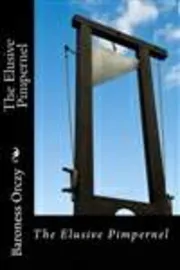
📄"The Elusive Pimpernel" by Baroness Orczy continues the thrilling adventures of Sir Percy Blakeney, the daring English hero known as the Scarlet Pimpernel, during the French Revolution. This time, his mission is his most perilous yet: rescuing the young Dauphin from the clutches of the revolutionary French government. His cunning nemesis, Chauvelin, desperately seeks to capture him at last, setting up a tense game of wits between the two adversaries. As Sir Percy employs ingenious disguises and audacious schemes, his devoted wife Marguerite endures agonizing worry. Filled with suspense, romance, and adventure, the novel celebrates heroism, sacrifice, and love triumphing over tyranny.
📄When forest ranger Maya Delgado discovers an illegal blaze spreading through the Sierra pines, she knows it's no accident. As flames devour everything in their path, she teams up with arson investigator Ethan Cole to uncover a conspiracy buried deep in the town's history. Amid evacuation sirens and falling ash, old secrets ignite—and so does an unexpected love. But the fire is moving faster than the truth, and someone will do anything to keep the past from surfacing. In a race against smoke and time, Maya must decide what's worth saving: the town, the truth, or her own life.
📄Jack London's The Human Drift (1917) is a sweeping meditation on humanity's origins and destiny. In the title essay, London traces humankind's prehistoric migrations from Asia across the globe, arguing that population pressure and the perpetual struggle for food have driven our species' endless wandering. He chronicles the rise and collapse of civilizations, the extinction of countless species, and humanity's relentless conquest of nature. Blending Darwinian science, history, and bold prophecy, London warns that modern civilization, like empires before it, will eventually exhaust its resources and face decline. The result is a vivid, provocative portrait of human evolution and survival.
📄In a world that demands smiles, Elena Marsh has perfected the art of pretending. As the beloved host of a morning radio show, her laughter brightens millions of breakfasts—while behind the microphone, she can barely remember what joy feels like. When a listener's letter dares her to answer one honest question on air, Elena's carefully constructed facade begins to crack. Set against the glittering yet hollow backdrop of broadcast media, Cheerful by Request is a poignant, darkly funny exploration of emotional labor, quiet despair, and the dangerous, liberating power of finally telling the truth.
📄In the shadowy world of 1920s London, Charles Marlowe appears to be a successful art dealer with impeccable connections. But beneath his charming facade lies a master manipulator running double lives: he secretly sells forged masterpieces to wealthy collectors while informing on his criminal associates to Scotland Yard. When journalist Evelyn Hart begins investigating a suspicious painting, she uncovers a web of betrayal implicating both the underworld and the police. As Charles's two worlds collide, he must outwit enemies on every side before his secrets destroy him. A gripping tale of deception, greed, and the perilous game of playing both sides.
📄The Merry Adventures of Robin Hood, written by Howard Pyle in 1883, is a classic retelling of the legendary English outlaw's tale. The story follows Robin Hood, who flees to Sherwood Forest after accidentally killing a royal forester. There, he gathers a band of Merry Men—including Little John, Friar Tuck, and Will Scarlet—who live by robbing the rich to aid the poor. Through archery contests, daring rescues, and clever schemes against the corrupt Sheriff of Nottingham, Robin becomes a beloved folk hero. The novel celebrates adventure, loyalty, and justice, culminating in Robin's pardon by King Richard the Lionheart.
📄Chastelard is a haunting historical tragedy set in sixteenth-century Scotland and France. The novel follows Pierre de Chastelard, a young French poet and nobleman who accompanies Mary, Queen of Scots, on her return from France to her troubled homeland. Consumed by a dangerous, unrequited passion for the young queen, Chastelard's devotion deepens into obsession. Twice discovered hiding in her chamber, he faces the ultimate consequence of his love. As political intrigue swirls around the crown and religious conflict divides the nation, Chastelard must choose between silence and betrayal—a choice that leads inexorably to the scaffold. A poignant meditation on love, honor, and doomed devotion.
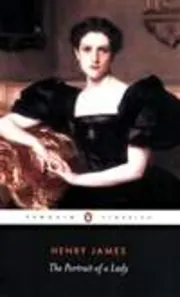
📄The Portrait of a Lady, written by Henry James and published in 1881, tells the story of Isabel Archer, a spirited young American woman brought to Europe by her aunt after her parents' death. Determined to preserve her independence, Isabel rejects marriage proposals from Caspar Goodwood and Lord Warburton. However, after unexpectedly inheriting a large fortune, she becomes the victim of a scheme orchestrated by Madame Merle, who manipulates her into marrying Gilbert Osmond, a cynical expatriate seeking her wealth. Trapped in a loveless and controlling marriage, Isabel eventually discovers the truth of the deception. The novel masterfully explores themes of freedom, betrayal, individuality, and the consequences of personal choice.
📄In a rain-soaked bookshop in Edinburgh, failed novelist Clara Winters begins writing letters to the dead authors she once worshipped—Austen, Woolf, Kafka, Borges. What starts as grief therapy after losing her mentor becomes something stranger: the letters seem to answer back. Or do they? As Clara unravels secrets hidden in marginalia and forgotten first editions, she discovers a secret literary society that has communicated across centuries through invisible ink and coded dedications. Blurring the line between devotion and delusion, Letters to Dead Authors is a haunting meditation on immortality, authorship, and the words we leave behind.
📄The Castle of Otranto (1764), written by Horace Walpole, is widely regarded as the first Gothic novel. Set in a mysterious medieval castle, the story follows Prince Manfred, who seeks to secure his dynasty after his son Conrad is crushed to death by a gigantic helmet on his wedding day. To preserve his power, Manfred attempts to marry Conrad's bride, Isabella, driving her to flee through the castle's subterranean passages. Filled with supernatural events—animated portraits, spectral figures, and prophetic visions—the novel explores themes of tyranny, guilt, and divine retribution. Its blend of romance, terror, and the supernatural established the foundations of Gothic fiction, influencing generations of writers.
📄"The Well at the World's End" (1896) by William Morris is a pioneering fantasy romance. It follows Ralph, youngest son of the King of Upmeads, who leaves home seeking adventure and the legendary Well at the World's End, whose waters grant strength, courage, and long life. On his perilous journey, Ralph faces war, captivity, treacherous lords, and deadly encounters, while meeting the noble lady Ursula. After trials of loyalty, loss, and love, the two quest together and at last find the Well. Written in archaic, chivalric prose, the novel profoundly influenced later fantasy writers, including J.R.R. Tolkien and C.S. Lewis.
📄Old Indian Days by Charles A. Eastman (Ohiyesa) is a collection of stories portraying the traditional life of the Sioux people. Divided into two parts—one devoted to the lives of warriors and hunters, the other to women—the book captures the courage, honor, and spirituality of Native American culture. Through vivid tales of buffalo hunts, battles, courtship, and daily hardships, Eastman celebrates the dignity and heroism of his people. Drawing upon his own Dakota heritage and childhood experiences, he offers readers an authentic glimpse into a vanishing way of life, emphasizing values of bravery, loyalty, generosity, and harmony with the natural world.
📄In the shadowy streets of 1920s London, detective Paul Harley is summoned to the home of Sir Charles Abingdon, a dying man who whispers of a mysterious cult known as Fire-Tongue. As Harley investigates his friend's suspicious death, he uncovers a sinister web of secret rituals, blackmail, and murder orchestrated by a ruthless Eastern mystic seeking vengeance. Joined by his loyal friend Knox, Harley races against time to rescue Abingdon's daughter, Nicol, from the clutches of the hidden Order. But the deeper he delves, the more he realizes that Fire-Tongue's tentacles reach into the highest levels of society—and that no one can be trusted.
📄"Frivolous Cupid" by E. Temple Thurston is a charming Edwardian romance that explores the tension between lighthearted flirtation and genuine love. The story follows characters who treat courtship as an amusing game, wounding hearts without consequence—until Cupid's arrow strikes with unexpected seriousness. When one player of this romantic charade discovers true feeling, they must confront the pain caused by their carelessness. Set against the elegant backdrop of upper-class English society, the novel blends wit, tender emotion, and moral reflection, reminding readers that love, however casually played with, is never truly frivolous in its consequences.