classic books
📄When Dr. Elena Marsh wakes in a scorched wasteland where the sky bleeds ash, she has no memory of dying—yet everyone here insists she has. In this twisted inversion of the world she knew, suffering is currency, and memories are the only escape. To leave, she must confront the one sin she has spent her entire life burying. But Hell keeps changing its rules, and its inhabitants. As Elena descends through nine fractured circles, she uncovers a truth more terrifying than damnation itself: some souls were never meant to leave, and some hells we build ourselves.
📄*The Sleeper Awakes* by H.G. Wells tells the story of Graham, an Englishman who falls into a mysterious trance in 1897 and awakens 203 years later. During his long sleep, his investments have multiplied enormously, making him the wealthiest man on Earth and owner of half the world. He wakes to find a dystopian society where a ruling council controls humanity using his wealth, while workers labor in subterranean cities beneath glittering upper-world cities. When revolution erupts, Graham joins the oppressed people against their masters, only to discover that new tyrants lurk among the revolutionaries, forcing him into a final aerial battle for genuine freedom.
📄When Emma Chen fled her hometown ten years ago, she left behind a shattered family, a ruined reputation, and a secret she swore to bury forever. Now a restorer of antique porcelain, she repairs broken things for a living—everything except herself. When her father's death forces her home, she must confront the past she abandoned, including Daniel Brooks, the boy who once loved her and the man who never believed the rumors. As long-buried truths surface, Emma discovers that the labels others give us—damaged, broken, worthless—are never the whole story. A haunting tale of forgiveness, redemption, and the courage to heal.
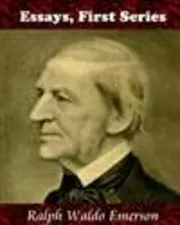
📄Essays, First Series (1841) is Ralph Waldo Emerson's landmark collection that crystallized the philosophy of American Transcendentalism. Gathered here are twelve of his most influential essays, including the celebrated "Self-Reliance," "Compensation," "The Over-Soul," and "Friendship." With aphoristic vigor and poetic prose, Emerson urges readers to trust their own intuition, embrace nonconformity, and recognize the divine spark within every individual. Drawing on nature, history, and personal experience, he challenges inherited conventions and celebrates the boundless potential of the human spirit. This collection profoundly shaped American thought, influencing generations of writers and thinkers from Thoreau and Whitman to Nietzsche.
📄"The Love Affairs of a Bibliomaniac" by Eugene Field is a witty, semi-autobiographical work chronicling an obsessive book collector's passionate romance with books. Narrated with charm and humor, it traces the narrator's lifelong infatuation with rare volumes, first editions, and literary treasures. Each "love affair" describes the thrill of discovering, pursuing, and acquiring coveted books, often at great expense despite modest means. Field personifies books as beloved companions, exploring the joys, sacrifices, and absurdities of bibliomania. Blending personal anecdote, literary reflection, and playful self-mockery, this classic celebration of book love captures the timeless devotion of collectors to their treasured volumes.
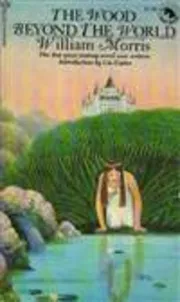
📄The Wood Beyond the World (1894) by William Morris follows Walter, a young man who, fleeing his unfaithful wife, embarks on a sea voyage that leads him to a mysterious enchanted land. Guided by a strange dwarf, Walter arrives at a walled city ruled by a beautiful but treacherous sorceress-queen. There he encounters a captive maiden, and together they must escape the Queen's dark magic and jealous power. Blending medieval romance with supernatural adventure, this pioneering fantasy established many conventions of the genre and profoundly influenced later masters such as J.R.R. Tolkien and C.S. Lewis.
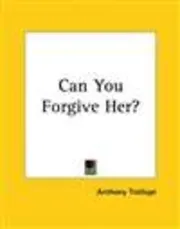
📄*Can You Forgive Her?* (1865) is the first novel in Anthony Trollope's Palliser series. The story centers on Alice Vavasor, a young Victorian woman who breaks off her engagement to the steady, honorable John Grey, only to become engaged to her charming but unscrupulous cousin, George Vavasor, who needs her fortune to advance his political ambitions. Interwoven are the parallel stories of her cousin Glencora, unhappily matched with the solemn politician Plantagenet Palliser, and her widowed aunt Greenow, courted by rival suitors. The novel explores women's autonomy, moral failure, and Victorian society's unforgiving judgment of independent-minded women who dare to choose for themselves.
📄*Malbone: An Oldport Romance* (1869) is a novel by Thomas Wentworth Higginson, set in Newport, Rhode Island. The story centers on Philip Malbone, a charming but morally irresponsible man whose flirtations entangle several women, including the idealistic Hope Ingleside and her spirited cousin Kate. When tragedy strikes, the characters must confront the consequences of Malbone's vanity and weakness. Blending romance with psychological realism, the novel explores idealism, self-deception, and the destructive power of charm without principle. Drawing on Higginson's keen observations of Newport society, it remains a notable example of post-Civil War American fiction examining women's inner lives.
📄Child Christopher and Goldilind the Fair (1895) is a romance by William Morris, inspired by the medieval tale of Havelok the Dane. Christopher, a youth raised by a wood-wright, unknowingly is the true heir to Oakenrealm's throne, hunted by the usurper King Rolf. Goldilind, a captive princess of Meadham, escapes her tower and encounters Christopher in the greenwood, where love blooms between them. Betrayed and separated, both endure trials: Christopher joins rebels to reclaim his crown, while Goldilind suffers hardship at court. After battles and revelations of hidden identity, the lovers reunite, Christopher is crowned king, and Goldilind becomes his beloved queen.
📄Billy Baxter's Letters, written by William James Lampton and first published in 1899, is a classic of American humor told entirely through correspondence. The book presents a collection of letters penned by Billy Baxter, an enthusiastic and self-assured young man, addressed to relatives, friends, sweethearts, and business acquaintances. Billy's letters are peppered with creative misspellings, grammatical blunders, grandiose ambitions, and earnest yet absurd observations about life, love, and work. His naive confidence and comic misjudgments gently satirize small-town American life at the turn of the century. The epistolary format showcases Lampton's gift for capturing a distinctive vernacular voice, making the book an enduring example of dialect humor.
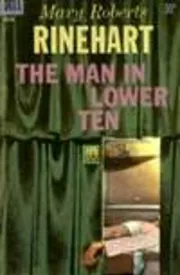
📄The Man in Lower Ten (1909) by Mary Roberts Rinehart follows Lawrence Blakely, a young Pittsburgh attorney, who travels by train to Washington, D.C., carrying crucial legal papers. After retiring to lower berth ten, he wakes to find his documents stolen—and a dead body in the opposite berth, which soon mysteriously vanishes. Blakely becomes the prime suspect and, aided by Alison McBride, a beautiful woman traveling under a false identity, struggles to clear his name. Filled with mistaken identities, disguises, suspense, and unexpected romance, the novel is regarded as one of the earliest detective classics written by an American woman.
📄Louise de la Vallière by Alexandre Dumas is the third volume of the Vicomte de Bragelonne series, concluding the D'Artagnan Romances. Set in the early reign of Louis XIV, it centers on the tender romance between the young king and the gentle Louise de la Vallière, beloved of Raoul de Bragelonne, son of Athos. Amid court intrigue at Versailles and Fontainebleau, the Musketeers face divided loyalties: D'Artagnan serves the king faithfully, while Aramis pursues a secret scheme involving a mysterious prisoner. When Louis abandons Louise for Madame de Montespan, Raoul departs for war in despair, weaving a poignant tale of love, honor, and betrayal.
📄In All Roads Lead to Calvary, Joan Allway, a spirited young journalist in Edwardian England, abandons a comfortable life to fight for social justice among the poor. Through factories, prisons, and the gathering storm of the Great War, she clings stubbornly to her ideals—until the harsh realities of human nature and sacrifice begin to test her faith. As love, loss, and war converge, Joan discovers that every path of conviction ultimately leads to one's own Calvary: the price of believing in something greater than oneself. A moving meditation on idealism, duty, and the quiet cost of compassion.
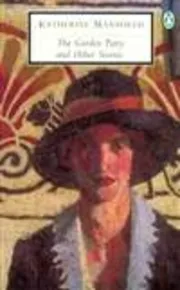
📄Katherine Mansfield's "The Garden Party" (1922) follows Laura Sheridan, a privileged young woman preparing for her family's elegant garden party in colonial New Zealand. When news arrives that a working-class neighbor has died in a tragic accident, Laura suggests canceling the celebration, but her family dismisses her concerns. After the party's success, her mother sends Laura to deliver leftovers to the grieving widow. Confronted with the dead man's peaceful face, Laura experiences a profound epiphany about class divisions, mortality, and human connection. The story masterfully explores themes of social inequality, lost innocence, and the delicate boundary between life and death.
📄"The Ambassadors" (1903), one of Henry James's most celebrated novels, follows Lambert Strether, a middle-aged American sent to Paris by his wealthy fiancée, Mrs. Newsome, to rescue her son Chad from what she believes is a corrupting affair with a European woman. However, as Strether immerses himself in Parisian culture and observes Chad's refined transformation, he gradually questions his mission and his own narrow New England values. Torn between duty and his awakening appreciation for life's richness, Strether confronts the possibility that he has sacrificed too much for others. This masterwork explores themes of self-discovery, cultural contrast, and living fully.
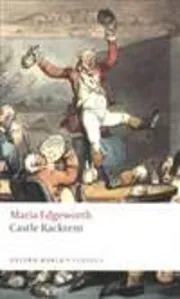
📄Castle Rackrent (1800) by Maria Edgeworth is widely regarded as the first historical novel and a pioneering work of Anglo-Irish literature. Narrated by Thady Quirk, a shrewd old family servant, the story satirically chronicles the decline of an Irish estate under successive landlords—Sir Patrick, Sir Murtagh, Sir Kit, and Sir Condy. Through Thady's unreliable and self-serving narration, Edgeworth exposes the extravagance, greed, and negligence of the landed gentry, reflecting Ireland's troubled colonial relationship with England. Blending comedy with sharp social critique, the novel influenced writers such as Walter Scott and Jane Austen, and remains a landmark in Irish fiction.
📄When marine biologist Elena Vasquez returns to her childhood village on one side of a divided strait, she never expects to find a message in a bottle—written by a stranger from the forbidden far shore. As tides carry their correspondence across the water, Elena and fisherman's son Tomas weave a bond that defies decades of hostility between their peoples. But when old wounds resurface and war threatens to erupt, they must choose between loyalty to their shores and a love that knows no borders. A sweeping tale of courage, loss, and the currents that carry us home.
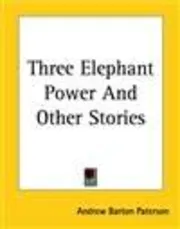
📄Three Elephant Power and Other Stories (1917) is a delightful collection of short stories by celebrated Australian writer Banjo Paterson, best known for "The Man from Snowy River." The title story humorously recounts a chaotic railway race involving a powerful locomotive, showcasing Paterson's signature wit. The collection captures the essence of Australian bush life through vivid tales of horse racing, railway adventures, shearers, drovers, and eccentric outback characters. With sharp humor and keen observation, Paterson vividly portrays rural Australia at the turn of the century. These stories celebrate mateship, resourcefulness, and the irreverent spirit of the bush, cementing Paterson's legacy as a beloved chronicler of Australian national identity.
📄Joan of Naples, part of Alexandre Dumas's Celebrated Crimes, chronicles the dramatic life of Joanna I, Queen of Naples. Crowned young, Joan's reign is overshadowed by scandal when her first husband, Prince Andrew of Hungary, is brutally murdered—many suspecting her complicity. Surrounded by scheming nobles, papal intrigue, and vengeful relatives, she marries repeatedly in pursuit of power and security. Yet betrayal stalks her: deserted by allies and having disinherited her adopted heir, Charles of Durazzo, she finally faces invasion and imprisonment. Dumas blends history and legend, portraying a queen whose beauty and ambition could not save her from a tragic, violent fate.