classic novels
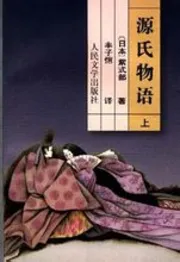
📄The Tale of Genji, written by Murasaki Shikibu in the early 11th century, is widely regarded as the world's first novel. Set during Japan's Heian period, this masterpiece chronicles the life of Hikaru Genji, the "Shining Prince," son of an emperor and a beloved concubine. Denied his imperial succession, Genji navigates a world of courtly elegance, passionate love affairs, and political intrigue. The narrative continues beyond his death through the lives of his descendants. With exquisite prose and psychological depth, Murasaki Shikibu portrays the splendor and melancholy of aristocratic life, exploring themes of love, impermanence, and the fleeting nature of beauty.
📄"Beowulf" is an Old English epic poem composed between the 8th and 11th centuries, celebrating heroic courage and loyalty. The story follows Beowulf, a mighty Geatish warrior who sails to Denmark to aid King Hrothgar, whose great hall Heorot is terrorized by the monster Grendel. Beowulf slays Grendel with his bare hands and later defeats Grendel's vengeful mother in her underwater lair. Returning home in glory, he becomes king of the Geats. Fifty years later, an aging Beowulf confronts a fearsome dragon threatening his kingdom. He kills the beast but dies from his wounds, leaving behind a timeless legacy of honor and bravery.
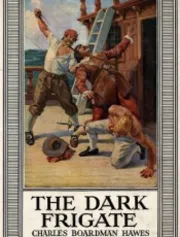
📄"The Dark Frigate" by Charles Boardman Hawes is a gripping maritime adventure set in seventeenth-century England. The story follows Philip Marsham, a bold young sailor orphaned after his father's death at sea. When the frigate Rose of Devon is seized by pirates in mid-ocean, Philip is forced against his will to join their ruthless crew. Bound by circumstance, he endures storms, sea battles, and treachery on the high seas. Upon returning to England, Philip faces trial for piracy and must fight desperately to prove his innocence. Winner of the Newbery Medal, this novel vividly captures the harsh realities and dangers of seafaring life.
📄James Bond, devastated by his wife's murder, is failing at his job when M gives him one final diplomatic assignment in Japan. There, Bond strikes a bargain with Tiger Tanaka, head of the Japanese secret service: he will complete an impossible intelligence task in exchange for the chance to eliminate Dr. Guntram Shatterhand, whose mysterious "Castle of Death" lures hundreds to suicide. Disguised as a Japanese fisherman and trained as a ninja, Bond infiltrates the castle—only to discover Shatterhand is Ernst Stavro Blofeld, his wife's killer. What follows is a violent reckoning that ends with Bond presumed dead, living a new life with amnesia among the fishermen of a quiet island village.
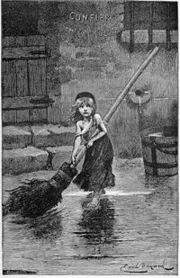
📄Les Misérables, written by Victor Hugo and published in 1862, is a sweeping epic set in nineteenth-century France. The novel follows Jean Valjean, an ex-convict imprisoned for nineteen years for stealing bread, who transforms his life after an act of compassion from a bishop. Relentlessly pursued by the rigid Inspector Javert, Valjean dedicates himself to redemption, rescuing the orphaned Cosette and becoming entangled in the Paris uprising of 1832. Interweaving stories of love, sacrifice, and injustice, Hugo explores themes of poverty, law versus grace, and human dignity, creating one of literature's most powerful portraits of the human spirit's capacity for change.
📄The Life of John Sterling, written by Thomas Carlyle and published in 1851, is a biographical memoir of the author's dear friend John Sterling (1806–1844), a gifted English writer and clergyman who died young. Dissatisfied with an earlier biography by Julius Hare, Carlyle set out to capture Sterling's true character—his intellectual brilliance, spiritual restlessness, and warm humanity. The book follows Sterling from his Cambridge days among the Apostles, through his flirtation with utilitarianism alongside John Stuart Mill, to his religious vocation and early death from tuberculosis. Celebrated for its eloquent prose and affectionate portrait, the work remains a moving meditation on friendship, faith, and genius.
📄Gulliver's Travels (1726), written by Jonathan Swift, follows Lemuel Gulliver, a ship's surgeon, on four extraordinary voyages. He encounters the tiny Lilliputians, the towering giants of Brobdingnag, the impractical scientists of Laputa, and the intelligent horse-like Houyhnhnms who rule over the savage Yahoos. Through these fantastical adventures, Swift delivers biting satire of English politics, society, and human nature itself. The novel explores themes of perspective, corruption, and the thin line between civilization and barbarism. A masterpiece of English literature, it functions both as an entertaining adventure tale for readers of all ages and as a profound philosophical critique of humanity.
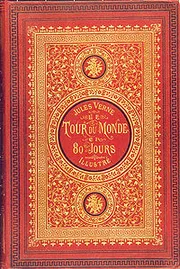
📄When disgraced journalist Maya Chen accepts a dare to circle the globe in thirty days—without airplanes—she expects a publicity stunt. Instead, she discovers a world transformed. From cargo ships crossing the stormy Pacific to trans-Siberian rails, from desert caravans to island ferries, each leg of the journey introduces strangers who become teachers and obstacles that become revelations. Racing against a ticking clock and her own buried grief, Maya learns that circumnavigating the planet isn't about distance—it's about perspective. Around the World in Days is a breathless adventure about slowness, connection, and finding home in constant motion.
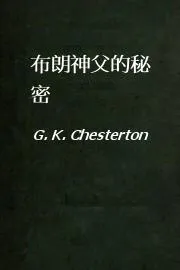
📄The Secret of Father Brown is a 1927 collection of detective stories by G.K. Chesterton, featuring his beloved clerical sleuth. In the framing narrative, Father Brown astonishes an eager listener by revealing his method: to solve a crime, he imaginatively becomes the murderer, thinking as the criminal would. The volume gathers tales such as "The Mirror of the Magistrate," "The Man with Two Beards," and "The Chief Mourner of Marne," blending puzzling mysteries with moral and theological depth. With wit and paradox, Chesterton explores sin, redemption, and human nature, showing that understanding evil requires imagination, humility, and compassion.
📄In Frenzied Fiction, struggling novelist Ambrose Quill discovers his characters have developed minds of their own—and they are furious with the plots he's given them. When his melodramatic heroine storms off the page, his cynical detective refuses to solve cases, and his villain demands a redemption arc, Ambrose's carefully ordered life unravels into hilarious chaos. Chased through his own unfinished manuscripts, he must negotiate with his rebellious creations, confront his literary ambitions, and finish the one story they all agree on. A witty, fast-paced satire about storytelling, ego, and the beautiful madness of the writing life.
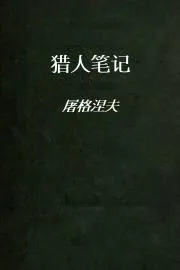
📄A Sportsman's Sketches, written by Ivan Turgenev and published in 1852, is a landmark collection of short stories that transformed Russian literature. Narrated through the eyes of a nobleman hunter wandering the countryside, the work paints vivid portraits of rural Russian life, offering compassionate and dignified depictions of serfs alongside subtle critiques of their landlords. With lyrical prose and keen psychological insight, Turgenev captures the beauty of the Russian landscape while exposing the moral injustices of serfdom. The collection is widely credited with influencing Tsar Alexander II's decision to emancipate the serfs in 1861, cementing its place as both an artistic and historically significant masterpiece.
📄When Clara inherits her grandmother's crumbling farmhouse, she discovers a handwritten book of household tales hidden beneath the floorboards—stories her grandmother never published. Each tale mirrors a family secret: a brother lost to the river, a mother's unspoken grief, a father's quiet disappearance. As Clara reads on, the stories begin to shift, predicting events before they happen. Blending domestic realism with the haunting cadence of old fairy tales, Household Tales is a luminous novel about inheritance, memory, and the stories families tell to survive—and the one story Clara must finally rewrite to set herself free.
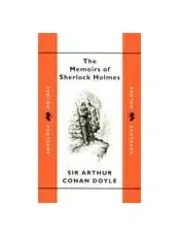
📄"The Memoirs of Sherlock Holmes" is a collection of eleven short stories by Sir Arthur Conan Doyle, first published in 1894. Following the brilliant detective Sherlock Holmes and his loyal companion Dr. John Watson, these tales showcase Holmes's unparalleled powers of deduction through a series of baffling mysteries—from the disappearance of a racehorse in "Silver Blaze" to the enigmatic Musgrave Ritual. The collection culminates in "The Final Problem," where Holmes confronts his formidable nemesis, Professor Moriarty, at the Reichenbach Falls. Intended by Doyle as the detective's last appearance, this dramatic finale shocked Victorian readers and secured Holmes's legendary place in crime fiction.
📄Little Men (1871) by Louisa May Alcott is the sequel to Little Women. The novel follows Jo March—now Jo Bhaer—and her husband, Professor Friedrich Bhaer, as they run Plumfield, an unconventional school for boys on the estate inherited from Aunt March. The story centers on a lively group of students, including Nat Blake, a shy orphan and gifted violinist, and the mischievous Dan. Through daily adventures, lessons, and small moral trials, the Bhaers nurture each boy's character, imagination, and individuality. Warm and gently didactic, the book celebrates education, kindness, and the transformative power of a loving home.
📄Babbitt (1922), by Sinclair Lewis, is a satirical novel portraying George F. Babbitt, a prosperous, middle-aged real estate broker in the fictional Midwestern city of Zenith. Babbitt embodies the boosterism, conformity, and materialism of America's 1920s middle class. Beneath his outward success lies growing dissatisfaction: he briefly rebels by befriending bohemians, flirting with liberal politics, and pursuing an affair, yet ultimately retreats into conventional life. Through sharp irony, Lewis critiques commercialism, social pressure, and spiritual emptiness in American business culture. The name "Babbitt" entered the English language as a term for a smug, conforming businessman, and the novel contributed to Lewis winning the 1930 Nobel Prize in Literature.
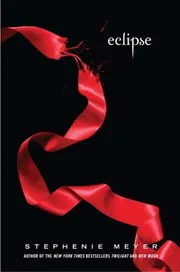
📄On the night of the total eclipse, astronomer Elena Vasquez discovers an impossible signal hidden in the darkness—a message that predates humanity itself. As the moon's shadow sweeps across the Earth, people begin to vanish, leaving behind only faint silhouettes burned into walls. Haunted by her late husband's cryptic research, Elena races against the next eclipse to decode the signal before the shadows claim what remains of her family. But some truths are meant to stay hidden in darkness. Eclipse is a gripping tale of loss, cosmic mystery, and the light we cling to when everything else fades.
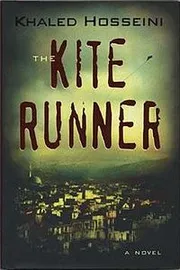
📄The Kite Runner, by Khaled Hosseini, tells the story of Amir, a wealthy boy in 1970s Kabul, and his deep friendship with Hassan, the son of his father's servant. After betraying Hassan in a moment of cowardice, Amir is haunted by guilt for decades. When the Soviet invasion forces his family to flee to America, Amir builds a new life, yet his past continues to torment him. Years later, he returns to Taliban-ruled Afghanistan on a dangerous journey of redemption to rescue Hassan's son. A powerful tale of friendship, betrayal, guilt, and forgiveness, the novel vividly portrays Afghanistan's turbulent history.
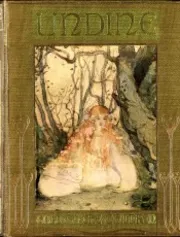
📄"Undine," a classic Romantic novella by Friedrich de la Motte Fouqué, tells the haunting tale of a water spirit who marries a mortal knight to gain a human soul. Undine, gentle and enchanting, brings joy to Knight Huldbrand, but their happiness is threatened by the sea's eternal law: should her husband prove faithless, she must return to the watery depths and take his life. As jealousy and betrayal seep into their marriage, Undine faces an impossible choice between love and duty to her elemental nature. A lyrical meditation on love, mortality, and the yearning for an immortal soul.
📄Cabbages and Kings (1904) is O. Henry's debut novel, a collection of interwoven stories set in the fictional Central American republic of Anchuria. Drawing on his own exile in Honduras, O. Henry paints a vivid, wry portrait of revolution, romance, and political intrigue. The narrative follows a colorful cast—deposed presidents, wandering sailors, ambitious merchants, and idealists—whose lives intersect amid coral reefs, banana plantations, and bustling ports. The book famously coined the term "banana republic," satirizing nations dominated by foreign fruit companies. Blending humor, irony, and signature surprise endings, this work showcases the storytelling brilliance that made O. Henry a master of American short fiction.
📄Mrs Halliburton's Troubles by Margaret Oliphant tells the story of Jane Halliburton, a widow left destitute after her husband Edward dies following disastrous financial speculation in America. Raising her five children alone in the provincial town of Wentworth, she battles poverty with dignity, courage, and unwavering faith. In sharp contrast stands her wealthy, selfish brother John Travers, whose pursuit of a rich bride embodies worldly values. The novel traces her children's growth—especially Harry's rise through honest labor and his love for Margaret Northcote—celebrating maternal sacrifice, moral integrity, and quiet perseverance in this moving Victorian domestic tale.