classic novels
📄Pygmalion is a celebrated play by George Bernard Shaw, first performed in 1913. The story follows Professor Henry Higgins, an arrogant phonetics expert, who wagers with Colonel Pickering that he can transform Eliza Doolittle, a Cockney flower girl, into a refined lady capable of passing as a duchess, merely by teaching her to speak properly. Through rigorous training, Eliza masters elegant speech and manners, yet she ultimately asserts her independence and dignity, refusing to be treated as Higgins's creation. Drawing on the Greek myth of the sculptor Pygmalion, Shaw explores themes of social class, language, identity, and gender, satirizing British society's superficial judgments.
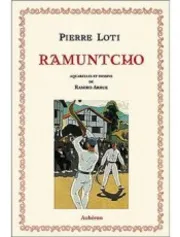
📄Ramuntcho (1897) is a novel by French author Pierre Loti, set in the Basque region of the Pyrenees. The story follows Ramuntcho, a handsome young smuggler who lives with his mother Franchita in the mountains near the Spanish border. He falls deeply in love with Gracieuse, a beautiful Basque girl, but her devout mother opposes their union and sends her to a convent. Heartbroken, Ramuntcho escapes his sorrows by joining the colonial army and departing for Indochina. The novel vividly portrays Basque customs, traditional pelota games, and the mystical beauty of mountain landscapes, blending romance with melancholy and exotic adventure.
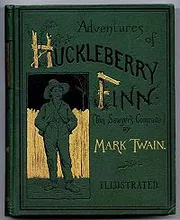
📄The Adventures of Huckleberry Finn, written by Mark Twain and published in 1884, is considered one of the greatest American novels. The story follows Huck Finn, a young boy who escapes from his abusive father and fakes his own death. He journeys down the Mississippi River on a raft with Jim, a runaway slave seeking freedom. Along the way, they encounter con artists, feuding families, and various adventures. Through Huck's eyes, Twain satirizes Southern society and confronts issues of racism and morality. The novel is celebrated for its vivid depiction of life along the Mississippi and its powerful critique of slavery.
📄Stage-Land (1889) by Jerome K. Jerome is a witty satirical sketch that lovingly lampoons the theatrical conventions of the Victorian stage. With characteristic humor, Jerome dissects the stock characters and absurd situations that populate popular melodramas: the impossibly noble hero, the pale heroine with a heartbreaking past, the sneering villain, and the comic lover. He exposes the ridiculous logic of drama—where heroes live in garrets yet dress impeccably, honest poverty is always rewarded, and virtue inevitably triumphs. Charming and sharp, Stage-Land remains a delightful parody that celebrates while mocking the charming absurdities of the nineteenth-century theatre world.
📄In the turbulent decades of a changing China, three generations of the Chen family are scattered like leaves before an unforgiving wind. When young Meilin flees her village after a family scandal, she believes she is escaping her past—only to discover that history always finds a way home. Spanning from the war-torn countryside of the 1940s to the glittering skyline of modern Shanghai, Leaves in the Wind is a sweeping tale of love, loss, and resilience. As long-buried secrets come to light, Meilin's granddaughter must confront the choices that shaped her family's fate—and decide what to hold onto, and what to release.
📄When historian Elena Marsh discovers an ancient letter sealed with a mysterious red wax stamp in her grandmother's attic, she unwittingly unlocks a secret buried for centuries. The seal bears the crest of a forgotten royal bloodline—and a warning that whoever breaks it will be hunted. As Elena follows the trail from fog-covered English manors to hidden archives in Prague, she realizes she is not the only one seeking the seal. A shadowy brotherhood will stop at nothing to reclaim it. In a race against time, Elena must decode the past before her future is erased.
📄"Madame de Mauves" is an early novella by Henry James, published in 1874. It tells the story of Euphemia, a wealthy American heiress who marries the Comte de Mauves, captivated by the romance of a European aristocratic title. The marriage proves bitterly disappointing: her husband is cold, cynical, and unfaithful, having wed her chiefly for her fortune. Longmore, an admiring American traveler, falls in love with Euphemia and urges her to leave her loveless marriage, yet she stubbornly clings to ideals of duty and fidelity. The novella explores James's enduring themes—the clash between American idealism and European moral decay, the sacredness of marriage vows, and the tragic cost of unwavering principle.
📄Jean-Christophe (1904–1912) is a monumental ten-volume novel by French writer Romain Rolland, which earned him the Nobel Prize in Literature in 1915. The story chronicles the life of Jean-Christophe Krafft, a German-born musical genius, from his impoverished childhood in the Rhineland through his passionate struggles as a composer in Paris, to his eventual spiritual fulfillment in Italy. Through the protagonist's artistic journey and moral quest, Rolland explores themes of genius, individualism, and the artist's responsibility to humanity. Regarded as one of the earliest examples of the roman-fleuve genre, the novel celebrates the heroic spirit of creative individuals confronting a materialistic and indifferent society.
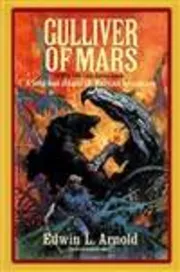
📄When disgraced naval officer Gulliver Jones receives a mysterious flying carpet from a dying stranger, he never expects it to carry him across the void to Mars. Stranded on the dying red planet, he discovers warring civilizations: the beautiful, ethereal Hither people and the brutal, tusked Thither folk. Falling in love with the princess Heru, Gulliver must survive treacherous deserts, savage armies, and ancient prophecies to rescue her from a dark fate. A sweeping adventure of sword, sand, and starlight, this pioneering tale helped launch the planetary romance genre and remains a remarkable early vision of life on Mars.
📄In the fading seaside town of Halloway, an abandoned carousel holds the memories of three childhood friends whose lives diverged one fateful summer thirty years ago. When Clara returns to settle her grandmother's estate, she discovers the old merry-go-round still turns at midnight—as if waiting. Alternating between past and present, the story unravels the secrets binding Clara, Marcus, and the mysterious Evelyn, whose disappearance haunts them all. As each ride reveals another truth, they must decide whether to keep circling old wounds or finally step off. A haunting tale of love, loss, and the circular nature of memory.
📄The Voyage of the Beagle (1839) is Charles Darwin's captivating journal of his five-year scientific expedition aboard HMS Beagle (1831–1836). Chronicling his travels through South America, the Galápagos Islands, Australia, and beyond, Darwin records vivid observations of geology, flora, fauna, and indigenous peoples. His meticulous notes on fossils, wildlife, and island ecosystems—particularly the Galápagos finches—planted the seeds of his revolutionary theory of evolution by natural selection. Blending adventure, scientific inquiry, and philosophical reflection, the book captures Darwin's intellectual awakening as a young naturalist and remains a foundational, enduring classic of natural history and travel literature.
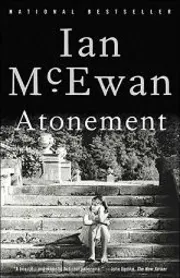
📄Atonement by Ian McEwan is a haunting novel about guilt, imagination, and the consequences of a child's lie. In 1935 England, thirteen-year-old Briony Tallis falsely accuses Robbie Turner, the housekeeper's son, of a crime he did not commit, shattering his romance with her older sister Cecilia. As war approaches, the devastating fallout of Briony's accusation unfolds across decades. Years later, seeking forgiveness, Briony confronts the irreparable harm she caused. In a poignant metafictional twist, the elderly Briony, now a novelist, reveals how fiction becomes her final attempt at atonement. A masterpiece exploring memory, class, and storytelling's power.
📄In the misty highlands of post-war Scotland, Elspeth McDonald—known to all as "Miss McDonald"—has spent thirty years tending the village library of Glen Argyll. When a mysterious letter arrives claiming inheritance of a farm in County Cork, Ireland, her carefully ordered life unravels. Armed with little but a satchel of borrowed books and her grandmother's unanswered questions, Elspeth journeys across the sea, uncovering family secrets, a wartime betrayal, and an unexpected romance. "Miss McDonald" is a tender tale of belonging, reminding us that home is not where we are born, but where we finally choose to stay.
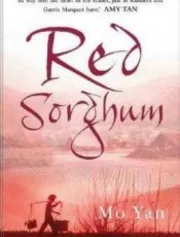
📄Red Sorghum is a landmark novel by Chinese Nobel laureate Mo Yan, published in 1986. Set in Northeast Gaomi Township, Shandong Province, the story unfolds across the turbulent decades from the 1920s to the 1940s. Narrated by an unnamed grandson, it chronicles the passionate and violent lives of his grandmother, forced into an arranged marriage with a leprous wine distillery owner, and his grandfather, a bandit who becomes a folk hero. Amid vast sorghum fields, the couple leads villagers in fierce resistance against Japanese invaders. Blending brutal realism with vivid mystical imagery, the novel celebrates raw vitality, wild love, and the unyielding spirit of the Chinese peasantry.
📄"Eight Hundred Leagues on the Amazon" is an adventure novel by Jules Verne, published in 1881. The story follows Joam Garral, a prosperous rancher living on the Peruvian banks of the Amazon. To attend his daughter Minha's wedding in Belém, Brazil, he journeys down the great river aboard a massive timber raft. But Joam carries a dark secret: decades ago, he was falsely sentenced to death for a crime he did not commit. When a villainous stranger attempts blackmail, Joam must fight to clear his name. Combining adventure, mystery, and romance, the novel vividly depicts the majestic Amazon and its peoples.
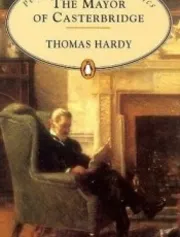
📄The Mayor of Casterbridge (1886) by Thomas Hardy tells the tragic story of Michael Henchard, a poor hay-trusser who, in a drunken fit, sells his wife and baby daughter to a sailor at a country fair. Ashamed, he swears off alcohol and rises to become the wealthy mayor of Casterbridge. Years later, his wife returns, and his past resurfaces. Through rivalry with the capable Scotsman Donald Farfrae, bad business decisions, and his own impulsive pride, Henchard loses everything—wealth, reputation, and love. Exploring fate, guilt, and character as destiny in rural Victorian England, the novel ends with Henchard's lonely death.
📄The Souls of Black Folk (1903) by W.E.B. Du Bois is a landmark collection of fourteen essays that transformed American thought on race. Blending history, sociology, autobiography, and music, Du Bois examines the lives of African Americans in the post-emancipation era, famously declaring that "the problem of the Twentieth Century is the problem of the color-line." He introduces the influential concept of "double consciousness"—the sense of always viewing oneself through the eyes of others—and critiques Booker T. Washington's accommodationist philosophy. Combining lyrical prose with rigorous scholarship, this enduring work remains foundational to sociology, African American literature, and the ongoing struggle for civil rights.
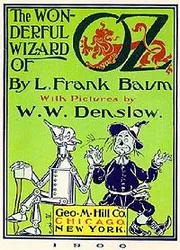
📄The Wonderful Wizard of Oz, written by L. Frank Baum in 1900, follows Dorothy, a young girl from Kansas who is swept away by a cyclone to the magical Land of Oz along with her dog Toto. Hoping to return home, she travels the Yellow Brick Road to the Emerald City, where the Wizard promises help if she defeats the Wicked Witch of the West. Along the way, Dorothy befriends the Scarecrow, the Tin Woodman, and the Cowardly Lion, who seek a brain, a heart, and courage respectively. Ultimately, they discover the qualities they desired were within themselves all along, celebrating friendship, courage, and the meaning of home.
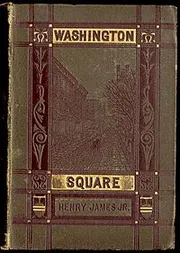
📄Washington Square (1880) by Henry James is a poignant tale of love, betrayal, and quiet resilience set in nineteenth-century New York. Catherine Sloper, the plain but sweet-natured daughter of the wealthy and domineering Dr. Austin Sloper, falls in love with Morris Townsend, a charming but penniless suitor. Convinced that Morris is merely a fortune hunter, Dr. Sloper opposes their engagement and threatens to disinherit his daughter. Torn between her cold father and devoted lover, Catherine endures abandonment when Morris, denied her fortune, deserts her. Years later, he returns seeking reconciliation, but Catherine, now independent and self-possessed, calmly refuses him.
📄When wildfire engulfs the ancient forest bordering Millbrook, seventeen-year-old Sarah Chen discovers something impossible within the flames: trees that burn without dying, and whispers calling her name. As firefighters battle the inferno, Sarah realizes the fire is not destroying the forest—it is awakening it. Guided by a mysterious ranger who knows the woods' deepest secrets, she must uncover why the flames have chosen this moment to rise. But a shadowy corporation harvesting the forest's hidden power will stop at nothing to control the blaze. Sarah holds the key to saving both the forest and her town—if she dares to walk through fire.