classic novels
📄The Hound of the Baskervilles, written by Sir Arthur Conan Doyle, is one of the most celebrated detective novels featuring Sherlock Holmes. Set on the gloomy moors of Dartmoor, England, the story begins with the mysterious death of Sir Charles Baskerville, seemingly linked to an ancient family legend about a monstrous supernatural hound. When the heir, Sir Henry Baskerville, arrives, Dr. Mortimer seeks Holmes's help. Accompanied by Dr. Watson, Holmes investigates the case, uncovering greed, deception, and murder hidden behind the terrifying legend. Blending gothic atmosphere with brilliant deduction, the novel remains a timeless masterpiece of detective fiction.
📄When journalist Clara Wen returns to her hometown after a decade away, she finds the quiet coastal town of Merrow Point at sixes and sevens—old grudges resurfacing, families divided over a controversial development project, and her own estranged relatives at the heart of the storm. Assigned to cover the conflict, Clara digs into the town's fractured past and uncovers secrets that force her to question everything she believed about loyalty, love, and belonging. As tensions reach a breaking point, she must decide whether to expose the truth or protect the people she once called home. A moving story about community, forgiveness, and second chances.
📄David Elginbrod (1863) is a novel by Scottish author George MacDonald. Set in rural Aberdeenshire, it follows Hugh Sutherland, a young student who becomes tutor at a nearby estate and befriends David Elginbrod, a humble cottager whose simple yet profound Christian faith transforms everyone around him. Alongside his devoted daughter Margaret, David embodies MacDonald's ideal of authentic spirituality. The narrative later shifts to England, where themes of mesmerism, spiritualism, and moral redemption emerge through the troubled Euphra. Blending realism, Scots dialect, and theological reflection, the novel celebrates quiet sanctity over worldly ambition, as Margaret's spiritual growth continues her father's legacy after his death.
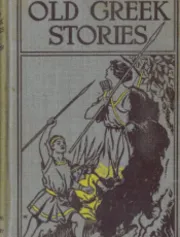
📄Old Greek Stories, retold by James Baldwin, is a timeless collection of classic Greek myths brought to life for readers of all ages. From the stirring tale of Prometheus, who defied the gods to give fire to humanity, to the cautionary legends of Pandora and her fateful box, and King Midas with his golden touch, these stories capture the wonder and wisdom of ancient mythology. Each narrative explores timeless themes of pride, curiosity, courage, and consequence, while revealing how the ancient Greeks explained the mysteries of the natural world. Simple yet powerful, this beloved volume preserves the magic of Greek legend for generations.
📄Chronicles of Avonlea is a 1912 collection of interconnected short stories by Canadian author L.M. Montgomery, set in the charming Prince Edward Island village made famous by Anne of Green Gables. While Anne Shirley makes occasional appearances, the spotlight shines on Avonlea's memorable residents—eccentric spinsters, stubborn bachelors, meddling matchmakers, and dreamy children. Through tales of romance, rivalry, hidden secrets, and second chances, Montgomery weaves gentle humor and tender wisdom into ordinary small-town life. Each story celebrates community, resilience, and the quiet magic found in everyday moments, capturing the warmth, wit, and nostalgia of a vanished rural world.
📄Business Adventures by John Brooks is a celebrated collection of twelve essays, first published in The New Yorker, chronicling the triumphs and disasters of American corporate life. Through vivid storytelling, Brooks examines iconic events such as the 1962 stock market flash crash, the spectacular failure of Ford's Edsel, the insider trading scandal at Texas Gulf Sulphur, and General Electric's price-fixing conspiracy. Blending meticulous journalism with sharp wit and human insight, the book reveals that the fundamentals of Wall Street—greed, ambition, fear, and folly—remain timeless. Famously hailed by Bill Gates and Warren Buffett as the best business book ever written, it endures as essential reading on the psychology of commerce.
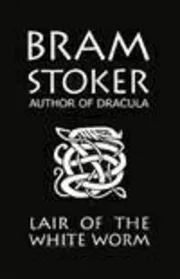
📄The Lair of the White Worm (1911) is a horror novel by Bram Stoker, the author of Dracula. Set in rural Derbyshire, England, the story follows Adam Salton, a young Australian who arrives to reconnect with his great-uncle and becomes entangled in sinister mysteries. Lady Arabella March, an alluring widow living at Diana's Grove, is secretly a monstrous creature—the white worm—a giant, venomous serpent capable of taking human form. With the help of Sir Nathaniel de Salis, Adam uncovers her terrifying nature as she schemes to marry Edgar Caswall, a hypnotic aristocrat. A tale of ancient evil, mesmerism, and primal terror, the novel builds toward a climactic, explosive confrontation.
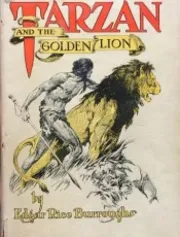
📄Tarzan and the Golden Lion is an adventure novel by Edgar Rice Burroughs, first published in 1922. The story begins when Tarzan rescues survivors of a crashed airplane deep in the African jungle. Meanwhile, a treacherous impostor, Esteban Miranda, impersonates Tarzan to deceive others, while La, the high priestess of Opar, plots revenge against the ape-man. Tarzan raises Jad-bal-ja, a magnificent golden lion, who becomes his loyal companion. Filled with kidnappings, treasure hunts, slave raids, and lost cities, the novel follows Tarzan through countless perils, ultimately celebrating his courage, wisdom, and his extraordinary bond with the golden lion.
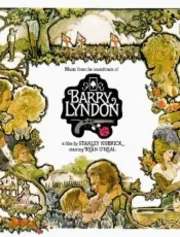
📄The Luck of Barry Lyndon, published in 1844 by William Makepeace Thackeray, chronicles the rise and fall of Redmond Barry, a charming Irish rogue in eighteenth-century Europe. Born to modest gentry, Barry flees Ireland after a duel, experiencing war, gambling, espionage, and romance across the continent. Through a calculated marriage to the wealthy Countess of Lyndon, he adopts her name and squanders her fortune in pursuit of aristocratic status. Told as an unreliable memoir, the novel satirizes social ambition, vanity, and moral corruption. Ultimately, Barry's schemes collapse: he loses his title, wealth, and family, dying in obscurity and disgrace.
📄"Secret Window, Secret Garden" is a psychological thriller novella by Stephen King. Mort Rainey, a successful writer, is going through a bitter divorce after catching his wife Amy in an affair. His fragile peace is shattered when a sinister stranger named John Shooter appears at his door, accusing Mort of plagiarizing his story. Mort insists on his innocence but cannot find proof. As Shooter's demands turn increasingly violent—burning evidence and leaving death in his wake—a horrifying truth emerges: Shooter does not exist. He is a murderous split personality born from Mort's fractured mind, embodying the darkness that demands a deadly "ending."
📄Hiram the Young Farmer, written by Bosworth L. Castleman, is an inspiring juvenile novel set in rural America. The story follows Hiram Strong, a determined young city man who decides to pursue farming as his life's calling. Facing skepticism from neighbors and numerous obstacles, including skeptical townsfolk, unscrupulous rivals, and the unpredictable challenges of nature, Hiram applies modern scientific methods to agriculture. Through perseverance, intelligence, and honest hard work, he transforms a neglected farm into a thriving enterprise. Along the way, he earns the respect of his community and discovers that success comes from dedication and innovation. This classic tale celebrates rural virtues and the promise of agricultural life.
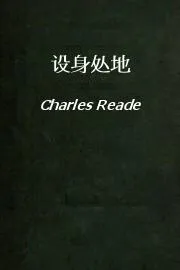
📄Set in the industrial town of Hillsborough, Charles Reade's 1870 novel explores the bitter conflict between trade unions and skilled workers in Victorian England. Henry Little, a talented young cutler, invents a labor-saving tool that provokes violent hostility from union men who fear losing their livelihoods. As he endures intimidation, sabotage, and betrayal, Henry's romance with the wealthy Grace Carden deepens despite social barriers and ruthless enemies. Interwoven with a gripping subplot of crime and blackmail, the story examines justice, loyalty, and human nature, urging readers to "put themselves in his place"—to understand others' circumstances before passing judgment on them.
📄In the quiet village of Ashcombe, an ancient holly tree stands at the heart of the Hartwell estate—planted, legend says, to protect against evil. When Eliza Hartwell returns after her grandmother's mysterious death, she discovers a hidden diary tucked into the tree's hollow, revealing generations of secrets: forbidden love, a vanished sister, and a promise made during wartime. As winter deepens, Eliza unravels the truth about her family's past—and the curse the holly was meant to ward off. A haunting tale of memory, forgiveness, and the roots that bind us, The Holly Tree explores how the past never truly dies.
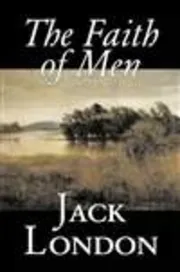
📄In the war-torn villages of a divided nation, Father Elias Morton has spent decades ministering to the faithful—until a devastating revelation shakes the foundations of his belief. When a mysterious stranger arrives bearing secrets about the church's buried past, Elias must confront the lies upon which his entire life was built. As his congregation fractures and old friends become adversaries, he embarks on a desperate journey for truth, discovering that faith is not the absence of doubt, but the courage to persist through it. THE FAITH OF MEN is a profound meditation on belief, betrayal, and redemption.
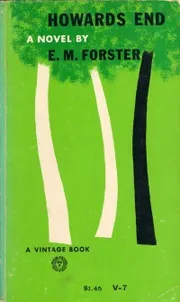
📄Howards End (1910), E.M. Forster's masterpiece, explores class conflict and human connection in Edwardian England through three families: the cultured, idealistic Schlegel sisters; the pragmatic, wealthy Wilcoxes; and the impoverished Basts. When Ruth Wilcox bequeaths her beloved country house, Howards End, to Margaret Schlegel, the Wilcoxes conceal the will. Margaret's marriage to Henry Wilcox and her sister Helen's compassionate involvement with Leonard Bast lead to tragedy. The novel's famous motto, "Only connect," champions sympathy and understanding across social divides. Ultimately, Margaret inherits Howards End, symbolizing hope for reconciliation between imagination and practicality in a rapidly changing England.
📄Octopussy is a James Bond short story by Ian Fleming, set in Jamaica. The tale centers on Major Dexter Smythe, a decorated British war hero enjoying a leisurely retirement, who keeps a pet octopus he affectionately named Octopussy. James Bond arrives to investigate Smythe's dark past: at the end of World War II, Smythe murdered a German mountaineer and stole a fortune in Nazi gold from an Alpine bank. As his crimes come to light and he faces disgrace, the guilt-ridden Smythe attempts a dangerous stunt—feeding a venomous scorpion fish to his beloved octopus. The gamble proves fatal, and Smythe dies at the water's edge, his secrets buried with him.
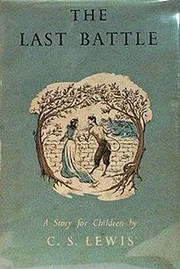
📄The Last Battle is the final installment of C.S. Lewis's beloved Chronicles of Narnia series. In this apocalyptic tale, a cunning ape named Shift deceives the Narnians by dressing a donkey, Puzzle, as the great lion Aslan. King Tirian, the last king of Narnia, fights desperately to expose the fraud and save his kingdom from invaders and false prophets. As chaos spreads, Eustace and Jill arrive from Earth to aid him. When darkness seems to triumph, the real Aslan appears, ending the old Narnia and welcoming the faithful into a glorious new world—a profound allegory of faith, judgment, and eternal hope.
📄Burning Daylight is a novel by Jack London, published in 1910. It follows Elam Harnish, nicknamed "Burning Daylight," a rugged Klondike gold prospector who amasses an enormous fortune through hard work and shrewd business ventures. After striking it rich in Alaska, he moves to San Francisco and becomes a ruthless capitalist, dominating financial markets while gradually losing his humanity. Despite his immense wealth, he finds no happiness. Eventually, disillusioned by greed and corruption, he retreats to the California countryside, where he purchases a ranch and discovers redemption through love with Dede Mason. The novel critiques capitalism and celebrates a simpler, nature-connected life.
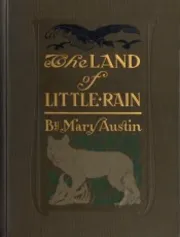
📄The Land of Little Rain (1903) is a collection of fourteen interconnected sketches by American writer Mary Hunter Austin, portraying the harsh yet beautiful desert country of the American Southwest, particularly California's Owens Valley. Austin vividly depicts the region's scarce rainfall, rugged landscapes, and resilient inhabitants—Paiute Indians, prospectors, animals, and desert plants—each struggling to survive in an unforgiving environment. Blending keen natural observation with folklore and lyrical prose, the book celebrates the delicate balance between humans and nature. Regarded as a pioneering masterpiece of American environmental literature, it captures the spiritual essence of the desert and established Austin as a distinctive voice in Western writing.