classic novels
📄The Murder of Roger Ackroyd (1926) is one of Agatha Christie's most celebrated novels, featuring the Belgian detective Hercule Poirot. In the quiet village of King's Abbot, wealthy widower Roger Ackroyd is found stabbed to death shortly after revealing that his fiancée, Mrs. Ferrars, had poisoned her first husband and was being blackmailed. The prime suspect is Ackroyd's stepson, Ralph Paton, who is heavily in debt and has mysteriously disappeared. Poirot, newly retired to the village, is persuaded to investigate. Narrated by Dr. James Sheppard, Poirot's neighbor, the novel is renowned for its shocking twist ending, widely regarded as one of the most ingenious in detective fiction.
📄Daniel Deronda, George Eliot's final novel (1876), follows the dual storylines of its title character and Gwendolen Harleth. Daniel, a refined young man raised by a wealthy guardian, remains uncertain of his birth origins. His life intertwines with Gwendolen, a spirited but selfish beauty whose disastrous marriage to the cruel Grandcourt leads to tragedy and moral awakening. Meanwhile, Daniel rescues Mirah Lapidoth, a Jewish singer, and becomes drawn into Jewish culture and the dream of national restoration. Upon discovering he is himself Jewish, Daniel embraces his heritage, marries Mirah, and departs for the East, while Gwendolen achieves genuine moral growth.
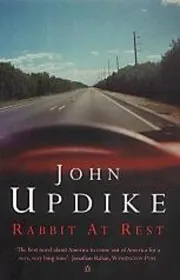
📄Rabbit at Rest, John Updike's Pulitzer Prize-winning conclusion to the Rabbit tetralogy, chronicles the final months of Harry "Rabbit" Angstrom's life. Now in his mid-fifties, retired, and living half the year in Florida, the former high school basketball star confronts obesity, heart disease, and the collapse of his family. His son Nelson spirals into cocaine addiction while driving the family Toyota dealership toward bankruptcy, pulling Rabbit back to Pennsylvania. Amid marital strains, old infidelities, and fleeting affairs, Rabbit drifts passively toward death. Set against Reagan-era America, the novel offers a moving meditation on mortality, decline, and the fading American Dream.
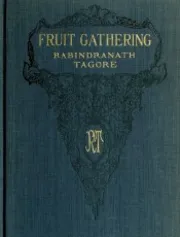
📄"Fruit-Gathering" is a lyrical collection by Rabindranath Tagore that portrays life as a harvest of spiritual fruits. In flowing poetic prose, Tagore meditates on love, devotion, mortality, and humanity's relationship with the divine. The poet depicts existence as a pilgrimage where every joy and sorrow ripens into wisdom, urging readers to gather experiences like ripe fruit before the season passes. Drawing imagery from nature—flowers, rivers, birds, and light—the work blends Eastern mysticism with universal human longing. Both a prayer and a celebration, it invites us to embrace life's fleeting beauty with gratitude, humility, and an open, seeking heart.
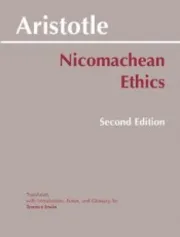
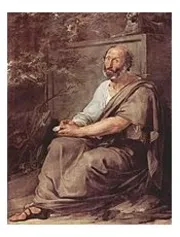
📄Nicomachean Ethics, composed by the ancient Greek philosopher Aristotle around 340 BCE, stands as one of the most influential works in Western moral philosophy. Named after his son Nicomachus, this treatise explores the fundamental question of how humans can achieve eudaimonia—a life of flourishing and genuine happiness. Aristotle argues that virtue is cultivated through habit and resides in the golden mean between excess and deficiency. Divided into ten books, the work examines courage, temperance, justice, friendship, and contemplation, presenting ethics as a practical science rather than abstract theory. Its enduring insights continue to shape modern discussions on character, morality, and the good life.
📄The Wings of the Dove (1902), Henry James's masterpiece, centers on Milly Theale, a wealthy young American suffering from a terminal illness, who travels to Europe in search of life and love. In London, she encounters Kate Croy, a beautiful but penniless woman secretly engaged to journalist Merton Densher. Seeing Milly's fortune as their only path to marriage, Kate encourages Densher to court the dying heiress. As genuine affection complicates the scheme, Milly discovers the deception yet dies, bequeathing her wealth to Densher in a final act of grace. A profound meditation on love, betrayal, money, and mortality, the novel explores the devastating cost of moral compromise.
📄In the Carquinez Woods (1883) is a novella by Bret Harte set among the towering redwoods of California. The story opens with a dramatic fire at Yuba Dam, where a mysterious half-Indian youth, Low, rescues an infant. Fleeing after her lover's death in a gunfight, the Spanish dancer Teresa takes refuge in the forest with Low, a recluse deeply attuned to nature. When Nellie Wynn, a beautiful young heiress engaged to the sheriff's son, encounters Low, an improbable romantic attraction develops, stirring jealousy and leading to tragedy. Blending frontier adventure, forbidden love, and vivid local color, Harte explores themes of race, class, and nature's redemptive power.
📄"The Return of Sherlock Holmes" is a collection of thirteen detective stories by Sir Arthur Conan Doyle, first published in 1905. The collection marks the legendary detective's dramatic comeback after his presumed death at the Reichenbach Falls. In the opening story, "The Empty House," Holmes astonishes Dr. Watson by revealing he survived his deadly struggle with Professor Moriarty. Together, the famous duo resumes their crime-solving partnership in Victorian London. Each tale showcases Holmes's brilliant deductive reasoning as they tackle baffling mysteries involving blackmail, murder, and kidnapping. This collection revitalized the Holmes phenomenon and cemented the detective's enduring place in literary history.
📄Set in Restoration-era France, Stendhal's masterpiece follows Julien Sorel, an ambitious young man from a provincial carpenter's family who dreams of rising above his humble origins. Armed with intelligence, ambition, and a talent for hypocrisy, Julien becomes a tutor in the wealthy de Rênal household, where he begins an affair with his employer's wife. He later serves as secretary to the aristocratic Marquis de la Mole in Paris, seducing the marquis's daughter Mathilde. When scandal threatens his prospects, Julien's impulsive act leads to tragedy. A penetrating study of ambition, passion, and social hypocrisy, this novel remains a cornerstone of realist literature.
📄In a remote mountain observatory, astronomer Elena Voss discovers a signal hidden within cosmic radiation—a message that predicts events before they occur. As governments and corporations race to seize her findings, Elena confronts a haunting question: if the heavens can foresee our fates, do we truly possess free will? Her search for answers leads her from academia's ivory towers to ancient star temples, where she uncovers a forgotten civilization that once decoded the sky's secrets. Blending hard science with philosophical mystery, On the Heavens is a luminous meditation on destiny, ambition, and humanity's eternal gaze upward—reminding us that the stars may be waiting for us to finally listen.
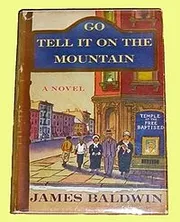
📄Go Tell It on the Mountain is James Baldwin's semi-autobiographical debut novel (1953), set in 1930s Harlem. It follows fourteen-year-old John Grimes on his birthday as he struggles with his identity, his resentment toward his stepfather Gabriel—a stern Pentecostal preacher—and his spiritual awakening. Through flashbacks revealing the sins and sorrows of Gabriel, his mother Elizabeth, and his aunt Florence, the novel paints a powerful portrait of an African American family shaped by racism, religion, and buried guilt. Culminating in John's dramatic conversion during a night of prayer, the book explores salvation, oppression, and self-discovery with lyrical intensity.
📄Wessex Tales (1888) is Thomas Hardy's first collection of short stories, set in his semi-fictional region of Wessex, modeled on rural southwest England. The volume gathers five tales—including "The Three Strangers," "The Withered Arm," and "The Distracted Preacher"—that vividly portray nineteenth-century country life. Hardy explores themes of fate, superstition, social class, and the struggles of ordinary rural people, often blighted by tragic irony. Blending realism with hints of the supernatural and dark humor, these stories capture a vanishing pastoral world on the edge of modernity. The collection established Hardy's mastery of the short story form and cemented his enduring literary vision of Wessex.
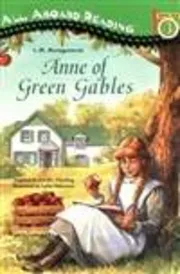
📄Anne of Green Gables (1908), by Canadian author Lucy Maud Montgomery, tells the story of Anne Shirley, an imaginative and talkative eleven-year-old orphan who is mistakenly sent to live with elderly siblings Matthew and Marilla Cuthbert at Green Gables, their farm on Prince Edward Island. Having expected a boy to help with farm work, they initially intend to return her, but Anne's charm, intelligence, and irrepressible spirit quickly win their hearts. The novel follows Anne's adventures in the village of Avonlea—her friendships, school rivalries, and occasional mishaps—as she grows up, celebrating themes of imagination, belonging, and the beauty found in everyday life.
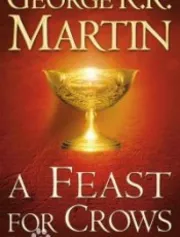
📄A Feast for Crows, the fourth novel in George R.R. Martin's epic series A Song of Ice and Fire, chronicles the turbulent aftermath of war across the Seven Kingdoms. With the War of the Five Kings winding down, Cersei Lannister rules as regent in King's Landing, where her paranoia and scheming threaten her family's grip on power. Meanwhile, Brienne of Tarth searches desperately for Sansa Stark, the Iron Islands choose a new king through a kingsmoot, and dark machinations unfold in Dorne. A tale of ambition, vengeance, and the scavengers who feast upon the wreckage of war.
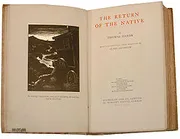
📄Thomas Hardy's The Return of the Native (1878) unfolds on the brooding Egdon Heath, a wild landscape that shapes the destinies of its inhabitants. Clym Yeobright, the native son, returns from Paris to pursue an idealistic life of education, and marries the passionate Eustacia Vye, who despises rural existence and longs for glamorous escape. Their marriage collapses amid misunderstanding after Clym's mother dies outside their locked door. Desperate, Eustacia attempts to flee with her former lover Damon Wildeve, but both drown in a stormy reservoir. A tragedy of desire, chance, and nature, the novel explores fate's relentless power over human dreams.
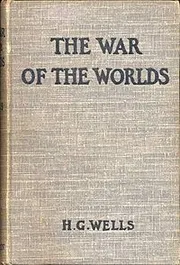
📄The War of the Worlds by H.G. Wells (1898) is a pioneering science fiction novel depicting a Martian invasion of Victorian England. When mysterious cylinders crash into the Surrey countryside, tentacled Martians emerge, unleashing devastating heat-rays and colossal tripod war machines. The unnamed narrator chronicles humanity's desperate struggle as civilization collapses—armies are annihilated, London evacuates, and society crumbles into chaos. Despite humanity's technological inferiority, the invaders are ultimately defeated not by weapons, but by Earth's microscopic bacteria, against which the Martians possess no immunity. The novel explores themes of imperialism, evolution, survival, and the fragility of human civilization.
📄Ian Fleming's tenth James Bond novel is unique in the series: it is narrated not by 007 himself but by Vivienne Michel, a young French-Canadian woman. Fleeing a failed romance, Vivienne takes a job at an isolated motel in the Adirondacks. Her quiet night turns into a nightmare when two murderous gangsters arrive, intending to burn down the property for insurance money—and kill her as a witness. By chance, James Bond appears and becomes her only protector. As violence erupts, the spy must fight to save her life, in a tale blending noir suspense with Fleming's signature glamour.
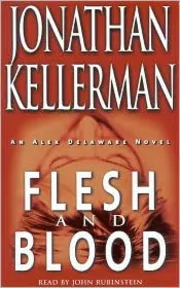
📄Flesh and Blood by Michael Cunningham traces three generations of the Stassos family across four turbulent decades in twentieth-century America. Constantine, an ambitious Greek-American contractor, marries the young Italian-American Mary, and together they raise three children whose lives unfold in unexpected directions. As betrayals and secret desires surface, Susan pursues conventional happiness, Billy confronts his sexuality, and Zoe descends into destructive passion. Spanning the 1930s to the 1990s, the novel examines how family members wound and heal one another, revealing that the deepest pain and the greatest love come from the same source: the unbreakable ties of flesh and blood.
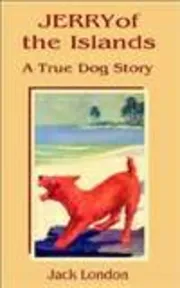
📄Jerry of the Islands is an adventure novel by Jack London, published posthumously in 1917. The story follows Jerry, a spirited Irish terrier born on a coconut plantation in the Solomon Islands. After his beloved master is killed, Jerry embarks on a perilous journey across the South Pacific, passing through the hands of various owners—some kind, others cruel. Through the dog's loyal and intelligent eyes, London examines themes of loyalty, survival, and human nature amid the colonial violence and racial complexities of the Pacific islands. The novel serves as a companion piece to London's related work, Michael, Brother of Jerry.