classic novels
📄Captain Paul is a gripping maritime adventure novel. Captain Paul Evans, a seasoned sailor haunted by a shipwreck that claimed his crew five years ago, accepts one final mission: to chart the unexplored waters of the South Pacific. Aboard his weathered vessel, the Meridian, he gathers a crew of misfits—a navigator with a mysterious past, a young stowaway seeking adventure, and an old friend carrying unfinished business. As storms, mutiny, and a legendary sea creature test their resolve, Paul must confront his deepest guilt and learn that true leadership means risking everything for those who trust you. A tale of redemption, courage, and the boundless sea.
📄One Hundred Years of Solitude (1967) by Colombian author Gabriel García Márquez chronicles seven generations of the Buendía family in the mythical town of Macondo. Founded by patriarch José Arcadio Buendía, the town witnesses his descendants' repeated names, passions, wars, and tragedies across a century. The novel mirrors Latin America's history—colonization, civil wars, and foreign exploitation—through the family's rise and fall. A masterpiece of magical realism, it blends the fantastical with the ordinary: flying carpets, ascensions to heaven, and rains of yellow flowers. A profound meditation on solitude, time, and fate, it earned García Márquez the 1982 Nobel Prize in Literature.
📄The Hound of the Baskervilles is a detective novel by Sir Arthur Conan Doyle, first published in 1902. Set on the gloomy Dartmoor moors in Devonshire, the story begins with the mysterious death of Sir Charles Baskerville, apparently caused by a legendary supernatural hound that has haunted his family for generations. Sherlock Holmes and Dr. Watson investigate to protect the new heir, Sir Henry Baskerville. While Watson gathers clues at Baskerville Hall, Holmes secretly works nearby, uncovering a cunning plot. Masterfully blending Gothic horror atmosphere with brilliant deductive reasoning, the novel is widely regarded as one of the greatest Sherlock Holmes adventures ever written.
📄The Conquest of Plassans (1874), the fourth novel in Émile Zola's Rougon-Macquart series, is set in the fictional Provençal town of Plassans during the early Second Empire. The peaceful life of François Mouret and his wife Marthe is disrupted when the enigmatic Abbé Faujas becomes their lodger. Through cunning and religious manipulation, the priest gradually dominates the household and secretly works to deliver the town's politics to the Bonapartist regime and the Church. While Marthe falls increasingly under his influence, François descends into paranoia and is confined to an asylum. The novel culminates tragically when the escaped François returns, setting the house ablaze and killing himself, Marthe, and Faujas.
📄Justine is a haunting tale of resilience and moral ambiguity. Orphaned and cast into a world of cruelty, Justine clings to her virtue even as fate subjects her to betrayal, exploitation, and relentless misfortune. Her journey through society's shadowed underbelly introduces a gallery of manipulators, hypocrites, and false friends—each testing her belief that goodness will ultimately triumph. Yet as suffering compounds, her unwavering innocence becomes both her shield and her curse. A provocative meditation on virtue, vice, and the indifference of the universe, this novel challenges readers to question whether morality is true strength, or merely a beautifully tragic delusion.
📄Mrs Craddock (1902), W. Somerset Maugham's second novel, portrays a doomed marriage in Victorian England. Bertha Ley, a beautiful and passionate young heiress living in Kent, defies family and convention by marrying Edward Craddock, a handsome but socially inferior farmer. What begins as intense physical attraction gradually curdles: Eddie proves stolid, conventional, and emotionally unimaginative, devoted to crops, hunting, and county politics rather than to his fiery, intelligent wife. Pregnant and disillusioned, Bertha contemplates escape. Only Eddie's horrific death from rabies liberates her, leaving a wealthy, independent woman free at last to pursue a fuller life on her own terms.
📄Anna Karenina, Leo Tolstoy's masterpiece published in 1877, tells the tragic story of a beautiful aristocratic woman in imperial Russia. Trapped in a loveless marriage to the government official Karenin, Anna falls passionately in love with the dashing officer Count Vronsky, defying society's rigid conventions. Her pursuit of happiness brings social ostracism, emotional torment, and ultimate tragedy. Interwoven is the parallel story of Konstantin Levin, a thoughtful landowner seeking life's meaning through his love for Kitty. A profound exploration of love, family, hypocrisy, and human nature, the novel is widely regarded as one of the greatest works in world literature.
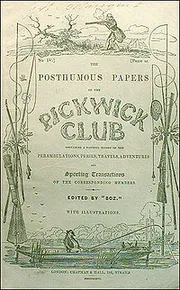
📄The Pickwick Papers, Charles Dickens's first novel (serialized 1836–1837), follows the amiable Mr. Samuel Pickwick and his fellow Pickwick Club members—Tupman, Snodgrass, and Winkle—as they journey through the English countryside, recording their comic misadventures. Accompanied by his witty cockney servant Sam Weller, Pickwick encounters eccentrics such as the roguish Mr. Jingle, faces a breach-of-promise lawsuit brought by his landlady Mrs. Bardell, and endures imprisonment in the Fleet Prison. Episodic and humorous, the novel gradually gains emotional depth, celebrating kindness, friendship, and human benevolence while gently satirizing Victorian society, and it established Dickens's reputation as a major comic writer.
📄I Promessi Sposi (The Betrothed) is Alessandro Manzoni's masterpiece, first published in 1827 and revised in 1840–42. Set in Lombardy under Spanish rule between 1628 and 1631, the novel follows Renzo and Lucia, a humble young couple whose wedding is thwarted by Don Rodrigo, a tyrannical nobleman obsessed with Lucia. Separated by force, the lovers endure kidnappings, famine, war, and the devastating plague of 1630 before divine providence reunites them. Weaving vivid historical detail with moral and spiritual themes, the work is celebrated as the cornerstone of Italian literature and a foundational text of the modern Italian language.
📄Ray Atlee, a law professor, receives a summons from his ailing father, a once-powerful judge in Clanton, Mississippi, ordering him home to settle the family estate. When Ray arrives, he finds his father dead—and discovers a shocking secret: more than three million dollars in cash hidden in the old family house. The money appears nowhere in the judge's will. Where did it come from? Who else knows about it? As Ray races to uncover the truth, he realizes he is being watched, and someone dangerous will stop at nothing to claim the fortune.
📄Under the Greenwood Tree (1872) is Thomas Hardy's idyllic pastoral novel set in the fictional village of Mellstock in rural Wessex. The story follows Dick Dewy, a cheerful tranter's son, who falls in love with Fancy Day, the village's pretty new schoolmistress. Their courtship faces obstacles from Fancy's other suitors—including the wealthy Farmer Shiner and the vicar, Reverend Maybold—as well as her father's initial disapproval. Interwoven with this romance is the tale of the traditional Mellstock church choir, which is replaced by a modern organ. A gentle comedy of Victorian village life, the novel celebrates community, music, and love, ending happily with Dick and Fancy's marriage.
📄Midnight Sun by Stephenie Meyer retells the beloved story of Twilight through the eyes of Edward Cullen. When Isabella Swan moves to the rainy town of Forks, Washington, Edward is immediately captivated—and terrified. To his vampire senses, Bella's blood is irresistibly alluring, unlike anyone he has encountered in nearly a century of existence. As he struggles to control his predatory instincts, Edward falls deeply in love while simultaneously endangering her life. This companion novel unveils Edward's painful past, his family's hidden secrets, and the agonizing internal battle between desire, restraint, and forbidden love.
📄The Idle Thoughts of An Idle Fellow (1886) is Jerome K. Jerome's debut work, a witty collection of humorous essays rather than a conventional novel. Through a series of anecdotal musings, Jerome reflects on everyday subjects including idleness, love, being "hard up," vanity, and the burdens of modern life. Written in a conversational, self-deprecating style, the book captures the narrator's comically rambling thoughts from his bed, where he claims most thinking is best done. Blending satire, charm, and gentle philosophy, it established Jerome's reputation as a master of English humor and foreshadowed his later classic, Three Men in a Boat.
📄Life's Little Ironies (1894) is a collection of short stories by Thomas Hardy that masterfully explores the cruel twists of fate governing ordinary lives. Set in the fictional region of Wessex, tales such as "The Son's Veto," "To Please His Wife," and "The Fiddler of the Reels" expose tragic ironies embedded in Victorian society: ambitions that destroy, love that misleads, and social conventions that crush the human spirit. With characteristic compassion and pessimism, Hardy depicts characters whose small decisions lead to devastating consequences, revealing how destiny and circumstance conspire against human happiness, making everyday life a stage for quiet, inescapable tragedy.
📄The Black Tulip by Alexandre Dumas is a historical romance set in seventeenth-century Holland. Cornelius van Baerle, a passionate tulip grower, competes to cultivate the first black tulip and claim a 100,000-guilder prize. His jealous neighbor, Isaac Boxtel, falsely accuses him of treason, and Cornelius is sentenced to life imprisonment. In prison, he falls in love with Rosa, the jailer's daughter, who helps him secretly grow the precious bulb. Despite theft and betrayal, their love and determination endure. After Cornelius is finally exonerated, the black tulip blooms, earning them honor, fortune, and lasting happiness together.
📄Twelve-year-old Jack Sawyer embarks on a desperate quest to save his dying mother. Guided by a mysterious force, he discovers he can "flip" between our world and the Territories—a parallel universe where his mother's twinner, the Queen, also lies dying. Jack must journey across America, facing monsters, treachery, and unspeakable evil, to reach the Talisman, the only power capable of healing both worlds. Along the way, he finds loyal friends and ruthless enemies, including the sinister Sunlight Gardener and the depraved Morgan of Orris. A breathtaking blend of fantasy and horror, The Talisman is an epic tale of courage, love, and destiny.
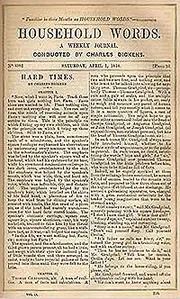
📄Hard Times, by Charles Dickens, is set in Coketown, a grim industrial city. Thomas Gradgrind, a strict utilitarian, raises his children Louisa and Tom on facts alone, rejecting imagination and feeling. Louisa enters a loveless marriage with the wealthy, boastful factory owner Josiah Bounderby, while Tom, corrupted by his joyless upbringing, robs Bounderby's bank and frames Stephen Blackpool, an honest, persecuted mill worker. As hypocrisy and misery unfold, Gradgrind's philosophy collapses under the weight of its consequences. A powerful critique of industrialization, utilitarian education, and social injustice, the novel ultimately champions compassion, imagination, and the warmth of the human heart.
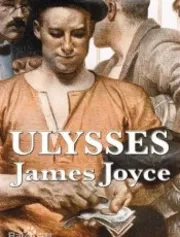
📄Ulysses (1922) by James Joyce is a landmark of modernist literature. Set in Dublin on June 16, 1904, the novel chronicles a single ordinary day in the lives of three characters: Leopold Bloom, a Jewish advertising canvasser; his wife Molly; and the young artist Stephen Dedalus. Loosely paralleling Homer's Odyssey, it maps the epic journey of ancient Greece onto the mundane details of urban life. Joyce pioneered the stream-of-consciousness technique, with each chapter experimenting with radically different prose styles. Though initially banned for obscenity, Ulysses is now widely regarded as one of the greatest and most influential novels ever written.
📄In "The Adventure of the Copper Beeches" by Arthur Conan Doyle, governess Violet Hunter seeks Sherlock Holmes's advice about a peculiar job offer from Mr. Rucastle, who demands that she live at his Hampshire estate, cut her hair short, wear designated dresses, and sit by a particular window for hours—all paired with an unusually generous salary. When strange occurrences mount, including a locked wing and a mysterious watcher, Holmes investigates and uncovers Rucastle's scheme: using Violet to impersonate his imprisoned daughter Alice, deceiving her fiancé to secure her inheritance. Justice prevails when Rucastle is mauled by his own starved mastiff, and Alice escapes to marry her love.