classic novels
📄The Innocents Abroad (1869) is Mark Twain's celebrated travel narrative chronicling his five-month voyage aboard the steamship Quaker City through Europe and the Holy Land. Combining sharp wit with keen observation, Twain satirizes both the tourism industry and the gullible American travelers—his "innocents"—who encounter famous landmarks with irreverent curiosity. Through humorous anecdotes, he punctures romantic legends, mocks pretentious guides and inflated relics, and contrasts Old World grandeur with New World pragmatism. This lively travelogue became Twain's best-selling work during his lifetime, establishing his reputation as a master humorist while offering an enduring, entertaining critique of cultural tourism.
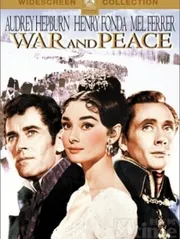
📄Leo Tolstoy's War and Peace is a sweeping epic set in Russia during the Napoleonic Wars of 1805–1812. The novel follows three aristocratic protagonists: Pierre Bezukhov, an awkward heir searching for meaning; Prince Andrei Bolkonsky, a disillusioned nobleman seeking glory; and Natasha Rostova, a spirited young countess. As their lives intertwine through love, loss, and betrayal, Napoleon's invasion of France threatens their world. Blending intimate domestic drama with grand historical events, including the Battle of Borodino, Tolstoy explores profound themes of fate, free will, and the nature of history. Widely considered one of the greatest novels ever written, it remains a monumental achievement in world literature.
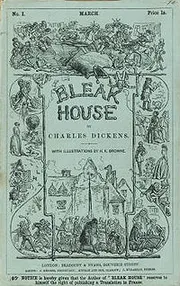
📄Bleak House, published serially in 1852–53, is one of Charles Dickens's greatest novels. Told through alternating narrators—an unnamed omniscient voice and the orphaned Esther Summerson—the story revolves around Jarndyce and Jarndyce, a Chancery lawsuit that has consumed generations of litigants. As Esther discovers secrets about her own birth, other plots unfold: Lady Dedlock's hidden past, the tragedy of young lovers Richard and Ada, and Inspector Bucket's pioneering detective work. Through fog, disease, and decay, Dickens delivers a devastating critique of the English legal system, urban slums, and social hypocrisy, while affirming the redemptive power of love and duty.
📄The Phantom of the Opera, by Gaston Leroux, is a Gothic novel set in the Paris Opera House. A mysterious figure known as the Phantom haunts the building's underground depths. He becomes obsessed with Christine Daaé, a beautiful young soprano, and secretly trains her voice while posing as her "Angel of Music." When Christine falls in love with the Viscount Raoul de Chagny, the Phantom's jealousy turns dangerous. He kidnaps Christine and drags her to his lair beneath the opera house. A tale of love, obsession, and tragedy unfolds as Raoul races to save her from the Phantom's tortured soul.
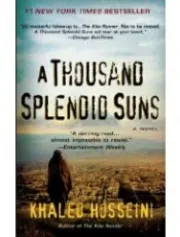
📄"A Thousand Splendid Suns" by Khaled Hosseini tells the story of two Afghan women, Mariam and Laila, whose lives intertwine amid decades of war and turmoil. Mariam, an illegitimate child forced into marriage with the abusive Rasheed, initially resents young Laila, who becomes Rasheed's second wife after losing her family in conflict. Despite their differences, the two women forge an unbreakable bond of sisterhood while enduring domestic violence, Taliban oppression, and heartbreaking loss. Set against Afghanistan's turbulent history, from Soviet invasion to Taliban tyranny, this moving novel is a powerful celebration of female resilience, sacrifice, and the enduring strength of love and hope.
📄Trumble is a quiet, minimum-security federal prison in Florida, home to three disgraced former judges who call themselves "the Brethren." From behind bars, they run a lucrative mail scam, extorting closeted gay men with carefully crafted blackmail letters. But their scheme takes a dangerous turn when one of their targets proves to be no ordinary victim—he is a presidential candidate secretly groomed by the CIA. Director Teddy Maynard, determined to engineer the election's outcome, will stop at nothing to silence them. As the Brethren dig deeper, they find themselves entangled in a deadly conspiracy against the world's most powerful intelligence agency.
📄In the kingdom of Ravenmere, laughter is a weapon sharper than any sword. When a nameless jester stumbles into the royal court, his wit wins the king's favor—and conceals a deadly secret: he has come to avenge his family, destroyed by the crown years ago. But as he dances between truth and deception, he discovers the palace harbors conspiracies darker than his own. Every joke conceals a blade; every performance is a gamble. In a game where the king holds all the pieces, the jester must decide how far he will go for vengeance—and what he will sacrifice when the final mask falls.
📄In the remote village of Glen Ardan, nestled amid the high hills where mist embraces ancient peaks, young shepherd Elias discovers a mysterious map hidden in his late grandfather's cabin. The map promises answers to his family's generations-old secret—a treasure lost during the great storm decades ago. As Elias ventures deeper into the treacherous wilderness, he encounters a reclusive herbalist guarding the mountains' secrets, braves avalanches and fierce storms, and unearths truths of betrayal, love, and sacrifice. Amid the High Hills is a sweeping tale of adventure and redemption, where mountains hold both peril and the key to one man's destiny.
📄The Light That Failed (1891) by Rudyard Kipling follows Dick Heldar, a war correspondent turned painter who rises to fame after covering the Sudan campaign. As he completes his masterpiece, a portrait of a dying comrade, he gradually loses his sight due to an old war injury. Concealing his blindness from Maisie, the woman he loves, he faces rejection and mounting despair. Rather than live in darkness and dependence, Dick returns to the Sudanese battlefield, choosing a soldier's death. A tragic tale of art, love, and pride, the novel explores the devastating conflict between creative vision and physical destruction.
📄Lady Susan, Jane Austen's short epistolary novella, follows a beautiful and cunning widow seeking her fortune. Recently evicted amid scandal, Lady Susan descends upon Churchill, her brother-in-law's estate, seeking refuge and new prospects. Through exchanged letters, she schemes to secure advantageous marriages—pursuing the young, wealthy Reginald De Courcy for herself while attempting to force her timid daughter Frederica into a loveless union. Charming yet utterly self-serving, Lady Susan manipulates everyone around her. Unlike typical heroines, she faces no real punishment and ultimately achieves her aims. Written around 1794, this satirical work showcases Austen's early wit and mastery of irony.
📄"Night and Day" (1919), Virginia Woolf's second novel, follows Katharine Hilbery, granddaughter of a celebrated Victorian poet, torn between duty and desire. Engaged to the poetry-obsessed William Rodney, Katharine finds herself increasingly drawn to Ralph Denham, an idealistic young barrister. Meanwhile, their friend Mary Datchet, devoted to the women's suffrage movement, secretly loves Ralph. Set against Edwardian London, the novel contrasts the "day" of social convention and rational work with the "night" of passion and dreams. Through its delicate exploration of love, marriage, and self-discovery, Woolf questions whether romantic passion can truly coexist with an authentic, independent life.
📄Great Expectations by Charles Dickens follows Pip, an orphan raised by his harsh sister and her kind blacksmith husband, Joe. After aiding an escaped convict, Magwitch, and meeting the eccentric Miss Havisham and the beautiful Estella, Pip's life transforms when an anonymous benefactor grants him "great expectations" of wealth and gentlemanly status in London. Assuming Miss Havisham is his patron, Pip pursues Estella and abandons his humble roots, only to discover his benefactor is actually Magwitch, the convict. Through disappointment and loss, Pip learns the true worth of loyalty, humility, and love, ultimately achieving moral redemption and reconciliation with Joe.
📄In the heart of London, investigative journalist Sarah Chen discovers an ancient golden ring bearing a cryptic emblem—the mark of The Golden Circle, a secret society that has quietly shaped world events for centuries. As she delves deeper, Sarah uncovers a conspiracy linking political assassinations, financial collapses, and mysterious disappearances across generations. But the Circle is watching. Hunted by relentless assassins and betrayed by those she trusts, Sarah must decipher the ring's hidden code before she becomes the next name on their list. A gripping thriller where history's darkest secrets collide with one woman's fight for truth—and survival.
📄Robert Falconer is a novel by George MacDonald, published in 1868. The story follows Robert Falconer, a young man raised by his strict, Calvinist grandmother in the Scottish town of Rothieden. Believing himself fatherless, Robert discovers his father is still alive and sets out on a quest to find him. Along the way, he befriends a poor fiddler's grandson, Shargar, and encounters characters who shape his spiritual awakening. Through his journey to London, Robert questions rigid religious doctrines and comes to know a God of love rather than fear. The novel explores themes of faith, redemption, and the eternal search for a loving father, both earthly and divine.
📄In the remote mountain village of Elmwood stands an ancient stone watchtower, tended for generations by a single guardian. When young Mara inherits the duty from her ailing grandfather, she discovers a hidden journal revealing the tower's true purpose—it does not watch for storms or invaders, but for something far older stirring in the surrounding forest. As strange lights appear at night and villagers begin to vanish, Mara must unravel centuries of buried secrets, confront the elders' lies, and decide whether to protect her people from the truth—or from what the truth has awakened.
📄"Miss Billy Married" (1914) by Eleanor H. Porter is the final installment of the beloved Miss Billy trilogy. It follows newlywed Billy Neilson Henshaw as she adjusts to married life with her artist husband, Bertram. Their domestic happiness faces challenges when Billy discovers their conflicting views on children—Bertram prefers none, while Billy yearns for a family. Complications arise when Billy extends her generous heart to underprivileged children in the neighborhood, bringing a sick little girl into their care. Through warmth, humor, and gentle conflict, this charming novel explores love, marriage, and the transformative power of compassion in early twentieth-century America.
📄Rabbit, Run (1960), John Updike's acclaimed novel, follows Harry "Rabbit" Angstrom, a 26-year-old former high school basketball star trapped in a stifling suburban life. Feeling suffocated by his pregnant, alcoholic wife Janice and dead-end job selling kitchen gadgets, Rabbit impulsively flees his home in Mt. Judge, Pennsylvania. He falls into an affair with Ruth Leonard, a part-time prostitute, while the town's young minister, Jack Eccles, tries to guide him back to his family. Torn between freedom and responsibility, Rabbit's flight ultimately leads to tragedy. The novel boldly explores American middle-class disillusionment, faith, and the desperate human urge to escape.
📄The Story of a Bad Boy (1869), by Thomas Bailey Aldrich, is a classic of American children's literature. This semiautobiographical novel follows young Tom Bailey, a spirited prankster sent from New Orleans to live with his grandfather in the quiet town of Rivermouth, New Hampshire. Through humorous episodes—mischievous pranks, sledding disasters, schoolroom escapades, and loyal friendships—Tom navigates the joys and troubles of growing up. Praised for its realistic and affectionate portrayal of boyhood, the novel broke from moralistic conventions and influenced later works such as Mark Twain's The Adventures of Tom Sawyer, remaining a beloved celebration of youth and small-town American life.
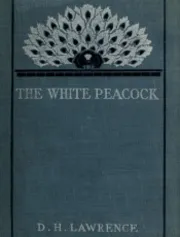
📄In the quiet English countryside, young Lettie discovers a rare white peacock roaming her family's estate—a creature locals consider a mysterious omen. As she befriends George, the gardener's son who first spotted the bird, their friendship deepens into love, threatened by class divisions and family expectations. When a wealthy suitor arrives seeking her hand, Lettie must choose between duty and her heart's desire. The white peacock appears at pivotal moments, a silent witness to joy and heartbreak. A haunting tale of love, loss, and longing for freedom, The White Peacock explores whether beauty can survive in a world bound by convention.
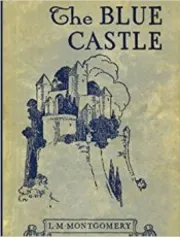
📄The Blue Castle (1926) by L.M. Montgomery tells the story of Valancy Stirling, a timid twenty-nine-year-old woman suffocating under her controlling family in the small town of Deerwood, Ontario. Dreaming of freedom in her secret fantasy world, the "Blue Castle," Valancy's life changes when a doctor mistakenly diagnoses her with a fatal heart condition. Believing she has only a year to live, she defies her relatives, abandons social conventions, and marries the mysterious, ostracized Barney Snaith, finding unexpected love and happiness in the wilderness. When the diagnosis proves false, Valancy must fight to keep her newfound freedom and love.