classic novels
📄Arnold Bennett's The Old Wives' Tale (1908) chronicles the lives of two sisters, Constance and Sophia Baines, from their youth in a provincial English town in the 1860s to their old age in the early twentieth century. While Constance remains in Bursley, marrying a draper and leading a stable, conventional life, Sophia elopes to Paris, experiencing romance, abandonment, and eventual independence. Spanning several decades, the novel contrasts their divergent paths while revealing how time, aging, and mortality shape all human lives. Celebrated for its realism and psychological depth, it stands as one of the finest English novels of the twentieth century.
📄"The Travels of Sir John Mandeville" is a celebrated medieval travel narrative, first circulated in the mid-14th century. Purporting to recount the journeys of an English knight through the Holy Land, Egypt, Ethiopia, Persia, India, and China, the book captivated European readers with vivid descriptions of exotic lands, marvelous creatures, and strange customs—dog-headed men, giants, and gems of wondrous power. Though its authorship remains uncertain and its accounts blend fact with fantasy, the work profoundly influenced geographic imagination, reportedly inspiring Columbus and generations of explorers. Translated into numerous languages, it remains a fascinating testament to medieval Europe's fascination with the unknown East.
📄Life on the Mississippi (1883) is Mark Twain's memoir chronicling his years as a steamboat pilot on the great river before the American Civil War. Blending autobiography, history, and humor, Twain recounts his apprenticeship under the seasoned pilot Horace Bixby, describing the demanding art of memorizing the river's shifting channels, landmarks, and currents. He vividly portrays steamboat culture, bustling river towns, and colorful characters along the waterway. Decades later, Twain returns to travel the river again, observing how railroads and industrialization have transformed it. The book remains a nostalgic, insightful tribute to the Mississippi and a vanished era of American life.
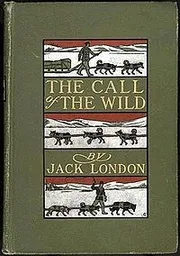
📄Jack London's The Call of the Wild (1903) follows Buck, a pampered St. Bernard-Scotch Collie mix stolen from his comfortable California home and sold as a sled dog during the Klondike Gold Rush. Thrust into the brutal wilderness of the Yukon, Buck learns the harsh law of club and fang, fighting for survival against cruel masters, rival dogs, and the unforgiving environment. Through hardship, he sheds his domesticated ways and awakens to primal instincts inherited from his ancestors. After the tragic death of his beloved master, John Thornton, Buck finally answers the mysterious call of the wild, joining a wolf pack and embracing his true nature as a free creature of the wilderness.
📄In the dusty town of Marlowe, fourteen-year-old Eliza discovers an old map hidden in her grandmother's attic—a map leading to the Golden Road, a legendary path said to grant travelers their heart's deepest wish. With her ailing brother and two unlikely friends, Eliza embarks on a journey across mountains, rivers, and forgotten villages. But the Golden Road demands a price for every miracle. As dangers mount and family secrets unravel, Eliza learns that the true treasure lies not at the road's end, but in the courage found along the way. A sweeping tale of hope, sacrifice, and love.
📄A Clash of Kings, the second installment of George R.R. Martin's epic fantasy series A Song of Ice and Fire, chronicles the devastating War of the Five Kings. Following King Robert Baratheon's mysterious death, the Seven Kingdoms descend into chaos as rival claimants—Joffrey, Stannis, and Renly Baratheon, Robb Stark, and Balon Greyjoy—vie for the Iron Throne. While Tyrion Lannister struggles to defend King's Landing as acting Hand, Jon Snow ventures beyond the Wall with the Night's Watch, and Daenerys Targaryen seeks power in the East with her young dragons. Betrayal, bloodshed, and dark magic culminate in the epic Battle of the Blackwater.
📄In Ian Fleming's third James Bond novel, Moonraker (1955), the legendary spy is tasked with investigating Sir Hugo Drax, a multimillionaire industrialist and national hero developing Britain's top-secret ballistic missile. When Bond discovers Drax cheating at cards at M's gentleman's club, suspicion grows into something far darker. Teaming up with Special Branch officer Gala Brand, Bond uncovers a chilling conspiracy: Drax, secretly a German Nazi, plans to redirect the nuclear-armed Moonraker to obliterate London. Set against Cold War paranoia, this fast-paced thriller combines high-stakes gambling, sabotage, and betrayal, showcasing Fleming's signature blend of tension, glamour, and ruthless villainy.
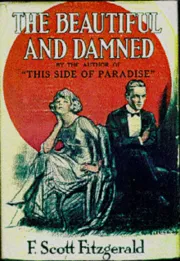
📄The Beautiful and Damned (1922), F. Scott Fitzgerald's second novel, chronicles the downward spiral of Anthony Patch, a handsome Harvard graduate and presumptive heir to his grandfather's fortune, and his beautiful wife Gloria. Living lavishly in New York City during the Jazz Age, the couple awaits an inheritance while squandering their youth in parties, excess, and idleness. When the anticipated wealth is threatened, their marriage deteriorates into bitterness and alcoholism. A vivid portrait of the era's moral decay, the novel explores themes of greed, entitlement, and the corrosive effects of wealth, foreshadowing Fitzgerald's later masterpiece, The Great Gatsby.
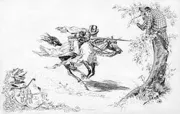
📄The Prisoner of Zenda, written by Anthony Hope in 1894, is a classic adventure and romance novel set in the fictional kingdom of Ruritania. English gentleman Rudolf Rassendyll, who bears an uncanny resemblance to the newly crowned King Rudolf V, becomes entangled in royal intrigue when the King is drugged and kidnapped by his treacherous half-brother, Black Michael, on the eve of his coronation. To prevent the villain from seizing the throne, Rassendyll must impersonate the King while plotting his rescue from the Castle of Zenda. Along the way, he falls in love with the beautiful Princess Flavia, forcing him to choose between love and honor.
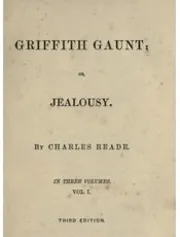
📄"Griffith Gaunt; or, Jealousy" (1865–66) is a Victorian novel by Charles Reade. Set in Cumberland's Lake District, it follows Griffith Gaunt, an Anglican gentleman who marries Mercy Vint, a devout Catholic woman. Their initially loving marriage is poisoned by Griffith's pathological jealousy, especially toward Father George Neville, a Catholic priest and Mercy's old friend. Swept along by misunderstanding and irrational suspicion, Griffith abandons his wife and marries Kate Peyton, unknowingly committing bigamy. When Mercy falls gravely ill, Griffith returns to nurse her selflessly until her death, after which he lawfully weds Kate. The novel vividly examines jealousy, religious conflict, remorse, and redemption.
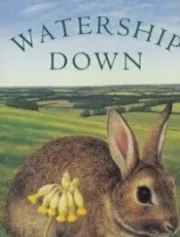
📄Watership Down, Richard Adams's beloved 1972 novel, follows a small band of rabbits fleeing the destruction of their home warren. Guided by Fiver's prophetic visions and led by his brave brother Hazel, they embark on a perilous journey across the English countryside in search of a new home. After overcoming countless dangers, they settle on the high downs of Watership Down. But their struggles continue—they must confront the tyrannical General Woundwort of Efrafa to secure their future. Rich with invented rabbit mythology and memorable characters, this epic adventure explores courage, leadership, freedom, and the timeless will to survive.
📄Further Chronicles of Avonlea is a collection of short stories by Canadian author L.M. Montgomery, published in 1920. As a sequel to Chronicles of Avonlea, this volume returns readers to the charming Prince Edward Island village made famous by the beloved Anne of Green Gables series. Its fifteen tales explore the lives, loves, and rivalries of Avonlea's inhabitants—quirky, warm-hearted characters navigating romance, family secrets, community gossip, and unexpected fortunes. Though Anne Shirley appears only briefly, her spirit lingers throughout. With Montgomery's signature humor, tenderness, and insight into human nature, the collection beautifully captures the timeless charm of small-town life.
📄When Emma Chen inherits her grandmother's antique shop, she discovers a hidden diary revealing a forbidden love story from the 1940s. As she unravels the mystery of her grandmother's lost romance with a soldier who never returned, Emma confronts her own struggles between ambition and devotion. Torn between her thriving career in Shanghai and caring for her ailing mother, she must decide what she is truly willing to sacrifice. Spanning two generations, this poignant tale explores how the heart's deepest choices echo through time, revealing that every act of love—no matter how pure—demands its price.
📄In this heartfelt romance, Ethan marries Claire out of practicality—a union arranged to save his family's failing business. Determined to keep their marriage a cold contract, he builds walls between them, treating his gentle wife as little more than a stranger sharing his home. But as seasons pass, Claire's quiet strength, kindness, and unwavering devotion slowly unravel his defenses. When tragedy strikes and Claire's life hangs in the balance, Ethan finally confronts the truth he has long denied: somewhere along the way, he fell in love with his own wife. Now he must fight to win the heart he once ignored.
📄The French Lieutenant's Woman, written by John Fowles and published in 1969, is a postmodern novel set in Victorian England. The story follows Charles Smithson, an engaged Victorian gentleman, who becomes captivated by Sarah Woodruff, a mysterious woman ostracized by society for allegedly having a scandalous affair with a French sailor. As Charles pursues Sarah, he finds himself torn between Victorian conventions and personal freedom. The novel is renowned for its experimental narrative techniques, including an intrusive narrator and multiple alternative endings. Blending historical fiction with metafiction, it explores themes of love, social class, existential choice, and individual liberation.
📄All the Sad Young Men is F. Scott Fitzgerald's celebrated 1926 short story collection capturing the glamour and disillusionment of the Jazz Age. Drawing its title from an epigraph to his debut novel, the book gathers some of Fitzgerald's finest work, including "The Rich Boy," "Winter Dreams," and "Absolution." Through tales of privileged youth, doomed romance, and shattered dreams, Fitzgerald portrays a generation intoxicated by wealth yet haunted by inner emptiness. With his signature lyrical prose and sharp social insight, the collection explores ambition, love, and moral decay—offering a poignant portrait of young men chasing the American Dream only to find it hollow.
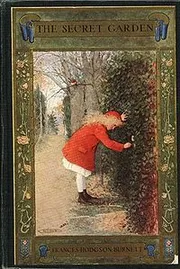
📄Mary Lennox, a spoiled and lonely girl, is orphaned in India and sent to live with her reclusive uncle at Misselthwaite Manor in Yorkshire. Neglected and curious, she explores the estate and discovers a hidden garden locked away for ten years after her aunt's death. With the help of her friend Dickon, a boy with a magical bond with nature, Mary secretly restores the garden to life. She also befriends her sickly, spoiled cousin Colin, who believes he will never walk. Through the garden's healing power, the children blossom physically and emotionally, while Mary's uncle finds redemption and renewed hope.
📄Mary Barton (1848), Elizabeth Gaskell's debut novel, is set in Manchester during the industrial depression of the late 1830s. It follows Mary Barton, daughter of John Barton, a disillusioned mill worker consumed by class hatred. Torn between her love for Jem Wilson, a working-class engineer, and Harry Carson, the son of a wealthy mill owner, Mary's life becomes entangled in tragedy when Harry is murdered. Jem is wrongfully accused, and Mary races to prove his innocence, ultimately uncovering her own father's guilt. The novel powerfully depicts the suffering of Victorian factory workers, offering a compassionate plea for reconciliation between social classes.
📄Set during the American Revolution in New York's Mohawk Valley, The Little Red Foot follows John Drogue, a young colonial officer torn between love and duty. As Tory raiders and Iroquois warriors ravage the frontier, Drogue battles to protect his homeland while caught between two women: the spirited Penelope Grant and the mysterious Lois de Contrecoeur. Amid ambushes, massacres, and wilderness campaigns—including the historic Sullivan Expedition—Drogue must confront treachery and his own divided heart. Weaving romance, adventure, and vivid historical detail, the novel portrays loyalty, courage, and passion on the bloody colonial frontier.
📄A Connecticut Yankee in King Arthur's Court is a satirical novel by Mark Twain published in 1889. The story follows Hank Morgan, a skilled nineteenth-century mechanic from Connecticut who, after a blow to the head, awakens in sixth-century England during King Arthur's reign. Using his modern knowledge of science and technology, Hank astonishes the people of Camelot and earns the title "The Boss." He attempts to reform medieval society by introducing industrialization, education, and democracy. However, his ambitions lead to tragic consequences. Blending humor, fantasy, and sharp social criticism, the novel satirizes romanticized chivalry while exploring themes of progress, power, and human nature.