classic novels
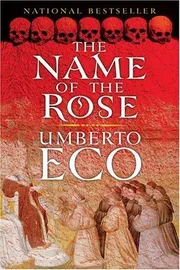
📄The Name of the Rose, written by Italian author Umberto Eco, is a historical murder mystery set in an Italian monastery in 1327. Franciscan friar William of Baskerville and his novice Adso of Melk arrive at a wealthy Benedictine abbey to attend a theological disputation. When a series of bizarre deaths occurs among the monks, William uses logic, philosophy, and keen observation to investigate. The mystery leads them to a hidden labyrinth library and a forbidden book by Aristotle. Blending medieval history, theology, and detective fiction, the novel explores themes of knowledge, censorship, and the dangerous power of ideas.
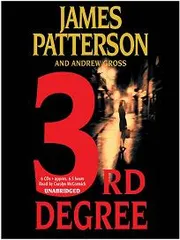
📄In 3rd Degree, homicide detective Sarah Chen faces the most disturbing case of her career: a serial arsonist whose fires kill only those who escaped justice through legal loopholes. Each crime scene contains a cryptic clue pointing to a twenty-year-old cold case—the unsolved death of Sarah's mentor. As she investigates, Sarah uncovers corruption buried deep within her own department and realizes the killer knows her darkest secret. When the next target becomes someone she loves, Sarah must choose between trusting the flawed system she swore to protect and risking everything to stop a murderer who believes true justice burns.
📄When Emma adopted three-year-old Lucas from a rural orphanage, she believed love alone could heal his silent wounds. But Lucas rarely speaks, and his eyes hold secrets no child should carry. Through scraped knees, first days of school, and long nights of fever, Emma learns that motherhood is not about fixing a child—it is about standing beside him as he finds his own way home. Spanning fifteen years of laughter, setbacks, and quiet triumphs, My Little Boy is a tender, unforgettable portrait of the fierce, fragile bond between a mother and the son who taught her what love truly means.
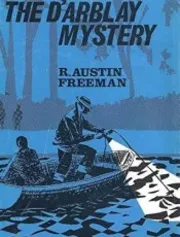
📄"The D'Arblay Mystery" by R. Austin Freeman follows Dr. Thorndyke as he investigates the disappearance of Philip D'Arblay, father of Marjorie, to whom Robert Calder is engaged. Mysterious events unfold—including sightings of strange lights and the discovery of a corpse in a cinder heap—drawing suspicion toward Marjorie and her fiancé. Using his scientific methods, Thorndyke unravels the truth, revealing thallium poisoning and an elaborate scheme of deception. The novel showcases Freeman's signature forensic detective techniques, blending romance, suspense, and meticulous investigation as the lovers' fate hangs upon the brilliant sleuth's ability to expose a cunning criminal plot.
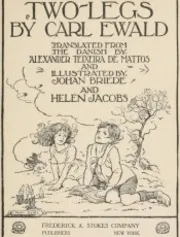
📄Two Legs is the name a crippled stray dog gives to the kind stranger who feeds her outside a subway station. Told through alternating voices—dog and man—the novel follows their unlikely bond through one unforgiving winter. The man, a former surgeon struck off the register after a devastating mistake, is fighting his own quiet battle to stand upright again. When the dog suddenly goes missing, his desperate search through the city's underbelly becomes a journey toward redemption. A tender, haunting tale about broken creatures teaching each other to walk again, Two Legs asks what it truly means to stand on our own.
📄Poor Folk (1846), Fyodor Dostoevsky's debut novel, is an epistolary work told through letters exchanged between Makar Devushkin, a struggling middle-aged government clerk, and Varvara Dobroselova, a poor young seamstress and his distant relative. Living in the slums of St. Petersburg, the two protagonists find solace in their correspondence, sharing daily hardships, humiliations, and small comforts. Makar's devotion to Varvara deepens as his own poverty worsens, leading to a heartbreaking conclusion. A poignant exploration of poverty, human dignity, and unrequited love, the novel pioneered Russian "humane realism" and earned Dostoevsky instant acclaim as a rising literary talent.
📄"An Old Town By the Sea" by Thomas Bailey Aldrich is a nostalgic memoir that paints a vivid portrait of Portsmouth, New Hampshire, during the nineteenth century. Through a series of charming sketches, Aldrich recalls his boyhood in this historic seaport, blending personal memories with the town's rich colonial and Revolutionary heritage. He describes weathered mansions, cobbled streets, and eccentric townsfolk, while paying tribute to notable figures and events that shaped the community. Elegantly written with warmth and wit, the book stands as a loving elegy to a vanished era of New England coastal life, preserving the enduring charm of the old town.
📄Wayside School Gets a Little Stranger by Louis Sachar is the third book in the beloved Wayside School series. After being closed for 242 days to remove unwanted cows, the peculiar thirty-story school finally reopens. While Mrs. Jewls is on maternity leave, her class on the thirtieth floor endures a series of bizarre substitute teachers. First comes Mr. Gorf, who steals children's voices; then Mrs. Drazil, who torments students with homework and makes Louis shave his mustache; and finally Miss Nogard, whose magical third ear allows her to read minds and spread misery. Only Mrs. Jewls's return can restore happiness.
📄Kilmeny of the Orchard by L.M. Montgomery tells the story of Eric Marshall, a handsome and ambitious young man from Toronto who takes a temporary teaching position in the rural village of Lindsay on Prince Edward Island. There, in an abandoned orchard, he discovers Kilmeny Gordon, a beautiful but mute young woman living with her elderly aunt and uncle. Despite her inability to speak, Kilmeny possesses extraordinary loveliness and musical talent. Eric falls deeply in love, but her affliction seems an insurmountable barrier to marriage. Through devoted love and a moment of crisis, Kilmeny is finally freed from her silence, leading to a joyful union.
📄A Country Doctor (1884) by Sarah Orne Jewett is a semi-autobiographical novel set in rural Maine. It follows Nan Prince, an orphaned girl raised by her grandmother and aunt. Inspired by an elderly physician and family friend, Nan develops a deep passion for medicine. Despite societal expectations that women should marry and devote themselves to domestic life, she chooses to pursue a medical career, ultimately rejecting a marriage proposal to become a country doctor. The novel explores themes of female independence, professional ambition, and self-determination, offering a pioneering portrayal of a woman following her vocation in nineteenth-century New England.
📄The Meditations follows Elena Voss, a grieving neuroscientist who inherits her late father's journal—a collection of philosophical reflections written during his decades as a prisoner of conscience. As she deciphers his handwritten pages, Elena embarks on a journey across Europe, retracing his footsteps and confronting the questions that haunted him: Can the mind find freedom within confinement? Does suffering refine or destroy the soul? Interweaving past and present, the novel explores memory, forgiveness, and the quiet power of introspection. When Elena uncovers a hidden truth about her father's imprisonment, she must decide whether vengeance or understanding will complete his final meditation.
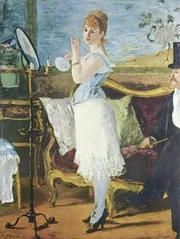
📄Nana by Émile Zola follows Nana Coupeau, a stunningly beautiful young woman who rises from Paris's streets to become the most celebrated courtesan of the Second Empire. Through her irresistible charm, she ensnares and destroys a succession of wealthy, powerful men—ruining their fortunes, shattering their families, and driving several to despair and suicide. Zola presents Nana as a "golden fly," born from the working class yet poisoning the entire aristocracy with her corruption. As her decadent reign reaches its height, her fall comes swiftly: she dies horribly of smallpox just as war engulfs France, symbolizing the moral rot and imminent collapse of the empire itself.
📄"Eve's Diary" (1906), a short story by Mark Twain, is a humorous yet tender retelling of the Garden of Eden, written entirely as diary entries by Eve, the first woman. Through her witty, curious voice, Eve chronicles her discoveries of the world—the stars, animals, and her own existence—alongside her patient pursuit of Adam, who is often indifferent and bewildered by her. The narrative traces their growing companionship, the Fall, and life afterward. The story concludes with Adam's moving reflection at Eve's grave: "Wherever she was, there was Eden." Written after Twain's wife's death, it serves as a loving tribute.
📄Things Fall Apart, written by Nigerian author Chinua Achebe and published in 1958, is a landmark of African literature. Set in the Igbo village of Umuofia in pre-colonial Nigeria, the novel follows Okonkwo, a proud and ambitious warrior determined to overcome the shame of his father's weakness. His rigid pursuit of masculinity and status ultimately leads to his downfall. When British missionaries and colonial forces arrive, they dismantle traditional Igbo culture and social structures. Okonkwo's tragic resistance to these changes mirrors the broader collapse of his world. The novel powerfully portrays the destructive impact of colonialism on African societies and identities.
📄Robinson Crusoe, written by Daniel Defoe in 1719, tells the story of a young Englishman who defies his father's wishes and goes to sea. After a shipwreck, he becomes the sole survivor stranded on a remote tropical island, where he remains for twenty-eight years. Using salvaged tools and supplies, he builds shelter, farms crops, and tames animals, gradually transforming despair into self-reliance. Years later, he rescues a native man from cannibals, naming him Friday, who becomes his loyal companion. Eventually, an English ship arrives, and Crusoe returns home, discovering that his Brazilian plantation has made him wealthy.
📄In the turbulent years before the Civil War, one man dared to challenge slavery with fire and steel. John Brown follows a fervent abolitionist haunted by visions of divine justice, who embarks on a relentless crusade against America's greatest sin. From the bloody plains of "Bleeding Kansas" to the dramatic raid on Harpers Ferry, this novel chronicles Brown's radicalization, his fierce devotion to freedom, and his ultimate sacrifice on the gallows. Through vivid historical detail and intimate character study, the story explores the conscience of a divided nation, the price of unshakable conviction, and how one man's defiant stand ignited a war that would forever change America.
📄Moby-Dick, written by Herman Melville and published in 1851, is considered one of the greatest American novels. The story follows Ishmael, a young sailor who joins the whaling ship Pequod, commanded by the monomaniacal Captain Ahab. Consumed by an obsessive desire for revenge, Ahab hunts Moby Dick, the giant white whale that severed his leg during a previous voyage. As the crew pursues the whale across the oceans, the novel explores profound themes of obsession, fate, good and evil, and humanity's struggle against nature. The tragic final confrontation destroys the ship, leaving Ishmael as the sole survivor to tell the tale.
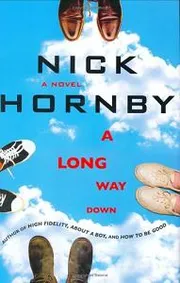
📄Nick Hornby's A Long Way Down follows four strangers—Martin, a disgraced television personality; Maureen, a single mother caring for her disabled son; Jess, a volatile teenager; and JJ, a failed American musician—who meet on a London rooftop on New Year's Eve, each intending to end their lives. Unable to jump in front of witnesses, they form an unlikely pact to stay alive and support one another. Through dark humor and compassion, the novel explores depression, guilt, and redemption as these broken individuals navigate their despair together, ultimately discovering that human connection and shared purpose might offer reasons to keep living.
📄The Odyssey, the ancient Greek epic attributed to Homer, chronicles the perilous ten-year journey of Odysseus, king of Ithaca, as he struggles to return home after the Trojan War. Blessed with cunning but cursed by the sea god Poseidon, he encounters the one-eyed Cyclops Polyphemus, the enchantress Circe, the deadly Sirens, and the nymph Calypso, who detains him for seven years. Meanwhile, his faithful wife Penelope fends off aggressive suitors, while his son Telemachus searches for news of him. Finally, disguised as a beggar, Odysseus returns, wins the great bow contest, slaughters the suitors, and reunites with Penelope—a timeless tale of loyalty, perseverance, and homecoming.
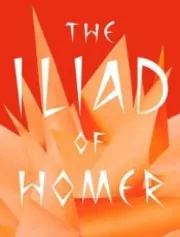
📄The Iliad, attributed to the ancient Greek poet Homer, is one of the greatest epics in Western literature. Set during the final year of the Trojan War, it centers on the rage of Achilles, the mightiest Greek warrior, after a quarrel with King Agamemnon. As Achilles withdraws from battle, the Trojans, led by the noble Hector, gain the upper hand. The poem culminates in Achilles's return to combat, his slaying of Hector, and the moving funeral of the Trojan prince. Composed around the eighth century BCE, The Iliad explores timeless themes of honor, fate, glory, mortality, and the human cost of war.