classic novels
📄The Return of the King, the final volume of J.R.R. Tolkien's epic trilogy, concludes the struggle against the Dark Lord Sauron. As Frodo and Sam, guided by the treacherous Gollum, press toward Mount Doom to destroy the One Ring, the forces of Gondor and Rohan wage desperate battle against Sauron's armies at Minas Tirith. Aragorn embraces his destiny and claims his birthright as King of Gondor. When the Ring is finally destroyed, Sauron's power collapses, ushering in a new era of peace. Aragorn is crowned, and the hobbits return home to find their courage tested one final time.
📄"Boyhood" (1854) is the second installment of Leo Tolstoy's autobiographical trilogy, following "Childhood" and preceding "Youth." The novel chronicles a pivotal period in the life of Nikolai Irtenev, a sensitive and introspective young Russian aristocrat. As Nikolai transitions into adolescence, he grapples with self-consciousness, first stirrings of attraction, and a growing awareness of social distinctions and injustice. He endures the pain of his grandmother's death, navigates complex relationships with family and classmates, and begins to question vanity and cruelty. With remarkable psychological depth, Tolstoy portrays the turbulence, idealism, and quiet disillusionment of youth, establishing himself as a master of introspective fiction.
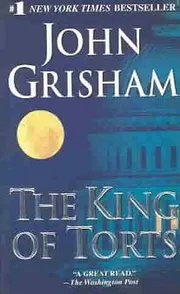
📄"The King of Torts" by John Grisham follows Clay Carter, a disillusioned public defender in Washington, D.C., who stumbles into the lucrative world of mass tort litigation. With guidance from the mysterious Max Pace, Clay wins a massive settlement involving a dangerous pharmaceutical drug and launches his own firm. Quickly, he amasses enormous wealth and fame, earning the title "King of Torts." Blinded by greed and ambition, he chases ever-bigger cases without proper research. When a major lawsuit collapses, his empire crumbles and he faces professional ruin and imprisonment. Ultimately, Clay finds redemption by returning to humble public service.
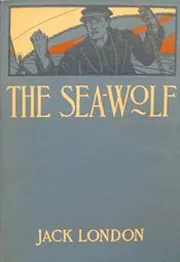
📄The Sea-Wolf (1904) by Jack London follows Humphrey van Weyden, a refined literary critic who survives a shipwreck in San Francisco Bay and is rescued by the Ghost, a seal-hunting schooner commanded by the ruthless Captain Wolf Larsen. Powerful, cynical, and fiercely materialistic, Larsen forces Humphrey into brutal labor, testing the gentleman's physical and moral endurance. Later, the ship rescues stranded writer Maud Brewster, and she and Humphrey fall in love. When the crew deserts and Larsen's health fails, the pair escapes to a deserted island, only to face Larsen's final, solitary fury before rebuilding their lives.
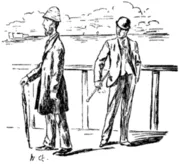
📄The Diary of a Nobody (1892), written by brothers George and Weedon Grossmith, is a beloved classic of British comic fiction. The novel takes the form of the diary of Charles Pooter, a self-important but endearing City clerk living in the London suburb of Holloway. Pooter faithfully records the mundane details of his daily life—domestic mishaps, embarrassing dinner parties with friends like Gowing and Cummings, and the reckless behavior of his wayward son Lupin. Convinced his observations deserve posterity's attention, Pooter remains blissfully unaware of his own absurdity. The book pioneered the comic diary format and remains a timeless satire of lower-middle-class Victorian life.
📄In a world where technology has blurred the line between man and machine, Dr. Elena Voss discovers a chilling truth: she may not be entirely human. As fragmented memories surface that don't belong to her, she embarks on a dangerous journey to uncover her origins. SynthCorp, the megacorporation behind the revolution, will stop at nothing to keep its secrets buried. Torn between her creators and the rebels fighting for machine liberation, Elena must confront the ultimate question: is she a human with a machine's heart, or a machine dreaming of a human soul? A gripping tale of identity, consciousness, and freedom.
📄Sir Arthur Conan Doyle's classic adventure novel follows journalist Edward Malone, who joins Professor Challenger's daring expedition to a remote plateau deep in the Amazon rainforest. Their mission is to verify Challenger's astonishing claim that dinosaurs and prehistoric creatures still survive there. Alongside skeptical scientist Professor Summerlee and fearless hunter Lord John Roxton, the team confronts living pterodactyls, ferocious dinosaurs, and hostile ape-men. Trapped on the plateau, they must battle nature and time itself to escape with proof of their discovery. A pioneering work of science fiction, The Lost World inspired countless adventure stories and remains a thrilling tale of exploration.
📄Records of a Family of Engineers by Robert Louis Stevenson is a memoir chronicling the remarkable Stevenson dynasty of Scottish lighthouse engineers. The book traces the family's history, focusing on the author's grandfather, Robert Stevenson, whose crowning achievement was the construction of the Bell Rock Lighthouse (1807–1811), one of the great engineering feats of the age. It also honors the author's father, Thomas Stevenson, and uncle Alan Stevenson, who continued the family tradition of building lighthouses along Scotland's treacherous coasts. Blending family history, technical narrative, and personal reflection, the work celebrates perseverance, ingenuity, and duty across generations.
📄Alice Adams is a 1921 novel by American author Booth Tarkington, winner of the 1922 Pulitzer Prize for Fiction. Set in a Midwestern town, it follows Alice Adams, a lively but socially ambitious young woman from a lower-middle-class family. Embarrassed by her family's modest circumstances and her father's unfulfilling clerk position, Alice dreams of joining high society and falls for Arthur Russell, a wealthy young man. Through charm, pretense, and elaborately staged dinners, she attempts to mask her family's poverty. A keenly observed portrait of class aspiration and self-deception, the novel balances gentle satire with deep sympathy for its characters.
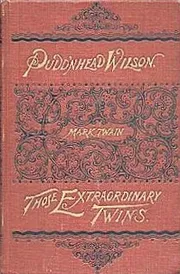
📄The Tragedy of Pudd'nhead Wilson (1894) by Mark Twain is set in Dawson's Landing, a small slaveholding town on the Mississippi River. Roxana, an enslaved woman only one-sixteenth Black, secretly switches her infant son with her master's son to protect him from being sold. The boys grow up with exchanged identities: her son Tom becomes a spoiled heir, while the real heir lives as a slave. When Tom murders Judge Driscoll, the eccentric lawyer David "Pudd'nhead" Wilson, a fingerprint collector long mocked by the town, solves the crime through forensic evidence. The deception is exposed, and Tom is sold down the river, a bitter commentary on slavery, race, and identity.
📄Clayhanger by Arnold Bennett follows Edwin Clayhanger, a young man in the fictional Staffordshire town of Bursley, who dreams of becoming an architect but feels bound by duty to join his father's printing business. Set in the Victorian industrial Potteries, the novel traces Edwin's struggles against his tyrannical father Darius, whose harsh childhood shaped his demanding character. Edwin's quiet life is stirred by his love for the enigmatic Hilda Lessways, whose secrets complicate their romance. A poignant exploration of ambition, family obligation, and quiet resignation, the novel captures provincial English life with remarkable psychological depth and realism.
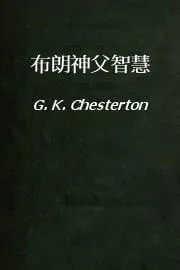
📄The Wisdom of Father Brown (1914) is G.K. Chesterton's second collection of detective stories featuring his celebrated sleuth, Father Brown—a humble, unassuming Catholic priest whose profound insight into human nature and evil enables him to solve the most baffling crimes. Through twelve ingenious tales, including "The Absence of Mr Glass" and "The Paradise of Thieves," the little priest unravels mysteries that confound professional detectives. Eschewing logic alone, Father Brown relies on his understanding of sin, folly, and the human heart. Blending wit, paradox, and philosophical depth, these stories established Chesterton as a master of the detective genre.
📄The Taming of the Shrew is a comedic play by William Shakespeare, written around 1590–1592. Set in Padua, Italy, it follows Petruchio, a fortune-seeking gentleman, who courts and marries Katherina Minola, a strong-willed woman notorious for her sharp tongue and rebellious nature. Through psychological manipulation and clever tactics, Petruchio attempts to "tame" her into an obedient wife. Meanwhile, a subplot involves several suitors competing for her gentler sister Bianca, who cannot marry until Katherina does. The play culminates in a debate about marriage, gender roles, and female submission, ending with Katherina's seemingly transformed devotion to her husband.
📄Peace Pilgrim tells the extraordinary story of Mildred Norman, an American woman who abandoned her ordinary life to walk across North America for nearly three decades, devoted entirely to the cause of peace. Beginning her pilgrimage in 1953 at the age of forty-four, she carried no money and few possessions, wearing only a blue tunic bearing the words "Peace Pilgrim." Through thousands of miles of highways and towns, she spoke to anyone who would listen about inner and world peace, surviving on faith and human kindness. This inspiring account chronicles her journey of simplicity, compassion, and unwavering conviction, celebrating one woman's belief that lasting peace begins within each individual heart.
📄The Man of Property (1906), the opening novel of John Galsworthy's The Forsyte Saga, portrays the upper-middle-class Forsyte family in Victorian England. Soames Forsyte, a wealthy and possessive solicitor, regards everything—including his beautiful wife Irene—as his property. Unhappy in her marriage, Irene falls in love with the architect Philip Bosinney, who is engaged to June, Soames's cousin. As Bosinney designs a country house for Soames, financial disputes and jealous passion collide, culminating in tragedy and scandal. Through the Forsytes, Galsworthy sharply critiques the possessive instinct, materialism, and moral hypocrisy of the propertied class of his era.
📄The Survivors of the Chancellor, a novel by Jules Verne, is told through the journal of J.R. Kazallon, a passenger aboard the three-masted ship Chancellor sailing from Charleston to Liverpool. What begins as a routine voyage soon turns into a nightmare: the vessel carries unstable nitroglycerin, mutiny brews among the crew, and a devastating fire forces the survivors onto a fragile raft. Drifting across the Atlantic, they endure thirst, starvation, storms, and madness, testing the limits of human endurance and morality. This gripping maritime tragedy is one of Verne's darkest works, a powerful tale of desperation, survival, and the fragility of civilization.
📄A Changed Man and Other Tales (1913) is a collection of short stories by Thomas Hardy, master of Victorian rural fiction. Set against the backdrop of Wessex, these tales explore themes of love, fate, irony, and human nature through vividly drawn characters navigating life's unexpected turns. The title story follows Captain Vye, a former ladies' man whose perspective shifts dramatically. Other stories, including "The Romantic Adventures of a Milkmaid" and "The Waiting Supper," showcase Hardy's signature blend of humor, pathos, and social observation. The collection captures the rhythms of country life while revealing the passions and moral complexities beneath its tranquil surface.
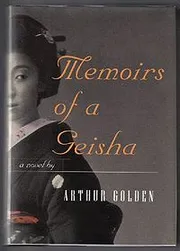
📄Memoirs of a Geisha, written by Arthur Golden, is a captivating novel set in Japan before and after World War II. It follows the extraordinary journey of Chiyo, a young girl from a poor fishing village, who is sold to a prominent geisha house in Kyoto's Gion district. Renamed Sayuri, she undergoes rigorous training to become one of Japan's most celebrated geishas. The story chronicles her struggles, rivalries with jealous geishas, and personal sacrifices as she pursues both professional success and an impossible love for the enigmatic Chairman. Through Sayuri's eyes, readers experience the mysterious, hidden world of geisha culture, exploring themes of identity, resilience, and fate.
📄Herland (1915) is a utopian novel by American feminist writer Charlotte Perkins Gilman. It follows three American explorers—Vandyck Jennings, Terry Nicholson, and Jeff Margrave—who discover a hidden, isolated society composed entirely of women. Having reproduced asexually for two thousand years, these women have built a peaceful, prosperous civilization free from war, poverty, and patriarchy. As the men attempt to understand and eventually challenge this matriarchal world, their own gender assumptions are exposed and upended. Through humor and social critique, Gilman explores themes of gender equality, motherhood, cooperation versus competition, and the possibilities of a society reimagined without male dominance.
📄Born in the hollow of an ancient oak, Hazel the squirrel embarks on an extraordinary journey through seasons of triumph and loss. From his first trembling steps on autumn branches to fierce battles over winter territory, Hazel's life unfolds amid the whispered secrets of the forest. He discovers friendship with an unlikely crow, endures the devastation of wildfire, and learns that survival demands both courage and surrender. As years pass and his fur turns silver, Hazel becomes the forest's quiet witness—a keeper of stories. This tender tale celebrates resilience, memory, and the profound beauty hidden within one small life.