classic novels
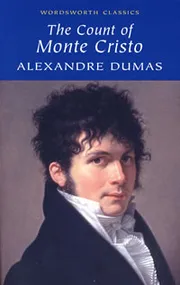
📄The Count of Monte Cristo, written by Alexandre Dumas, is a classic tale of betrayal, adventure, and revenge. Set in early nineteenth-century France, the story follows Edmond Dantès, a young sailor falsely accused of treason by jealous rivals and imprisoned in the grim Château d'If. After fourteen years, he escapes, discovers a vast treasure on the island of Monte Cristo, and reinvents himself as a mysterious and wealthy Count. Returning to Parisian society, he methodically rewards loyalty and punishes those who destroyed his life. This sweeping masterpiece explores themes of justice, vengeance, forgiveness, and the enduring power of hope.
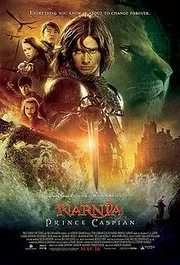
📄Prince Caspian: The Return to Narnia, the fourth book in C.S. Lewis's beloved Chronicles of Narnia, follows Peter, Susan, Edmund, and Lucy Pevensie, who are magically summoned back to Narnia after a year in their own world—only to discover that centuries have passed. Narnia is now ruled by the tyrannical King Miraz, whose nephew, the rightful heir Prince Caspian, has fled for his life. Joining forces with Caspian and the Old Narnians—talking beasts, dwarfs, and the great lion Aslan—the children embark on a perilous quest to reclaim the throne and restore freedom to the enchanted land.
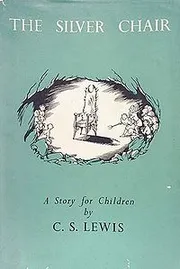
📄The Silver Chair, the sixth book in C.S. Lewis's Chronicles of Narnia, follows Eustace Scrubb and his schoolmate Jill Pole as they are summoned to Narnia by Aslan. Tasked with rescuing Prince Rilian—King Caspian's lost son—they must follow four signs given by Aslan. Accompanied by the gloomy yet loyal Marsh-wiggle Puddleglum, the children brave harsh wastelands, encounter treacherous giants, and descend into the underworld ruled by the enchantress, the Lady of the Green Kirtle. There they find Rilian bound to a silver chair under a wicked spell. Through courage and faith, they break the enchantment, defeat the witch, and restore the rightful heir.
📄Tono-Bungay (1909) by H.G. Wells is a satirical novel critiquing capitalism and the decline of the British Empire. Narrated by George Ponderevo, it follows his uncle Edward, a chemist's assistant who builds a vast fortune selling Tono-Bungay, a useless patent medicine, through dazzling advertising. The family rises into high society, but their commercial empire eventually collapses into financial ruin. Woven into this rise-and-fall story are George's failed marriage, his enduring love for Beatrice, and his passion for science and aeronautics. Blending realism, satire, and adventure, the novel portrays England as a decaying system sustained by illusions.
📄"The Heritage of Dedlow Marsh" by Bret Harte is a short story set against the desolate tidal marshes of California. The unnamed narrator, while exploring the flat expanse at low tide, becomes trapped by the rapidly rising waters and takes refuge in a lonely cabin, where he encounters a mysterious young woman living with her dissolute, drunken father. Struck by her beauty and her dreams of a grand inheritance, he later uncovers the truth of her hidden identity and her ironic "heritage"—the bleak marsh itself. Blending local color, suspense, and gentle irony, Harte explores illusion versus reality, inherited fate, and the enduring power of hope.
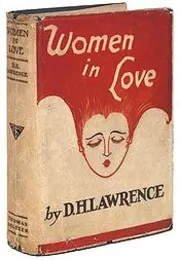
📄Women in Love (1920) by D.H. Lawrence follows the Brangwen sisters, Ursula and Gudrun, as they navigate love and relationships in industrial England. Ursula develops a profound bond with Rupert Birkin, an idealistic school inspector, while Gudrun becomes entangled with Gerald Crich, heir to a coal-mining empire. The novel contrasts these two relationships: Birkin and Ursula's tender, evolving connection versus Gerald and Gudrun's passionate but destructive union. Through vivid, poetic prose, Lawrence explores themes of sexuality, industrialization, class, and the pursuit of authentic intimacy in modern life. The story culminates tragically in the snowbound Alps, probing love's transformative and destructive powers.
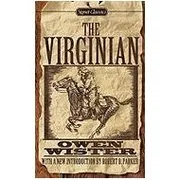
📄The Virginian: A Horseman of the Plains, written by Owen Wister and published in 1902, is a pioneering work of Western American fiction. Set in Wyoming Territory, the novel follows an unnamed cowboy foreman known only as "the Virginian" as he navigates life on the rugged frontier. The story centers on his romance with Molly Stark Wood, a refined schoolteacher from Vermont, and his escalating conflict with the villainous Trampas. Blending adventure, romance, and moral drama, the novel established many conventions of the Western genre, including the archetypal stoic cowboy hero, and remains a lasting classic of American literature.
📄Mother is a poignant literary novel following Elena Vasquez, a woman who has spent thirty years perfecting the art of motherhood while quietly erasing herself. When her youngest child leaves for college, Elena discovers a box of letters revealing her own mother's secret life—a career abandoned, a love relinquished, a self deliberately buried. As Elena pieces together the woman her mother once was, she begins questioning the woman she has become. Spanning three generations in a small coastal town, this deeply moving novel explores the sacrifices we make for family, the identities we lose along the way, and the courage required to finally reclaim ourselves.
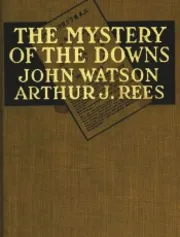
📄When a body is discovered beneath the ancient yew trees on the South Downs, the quiet village of Millbrook is shattered. Detective Eleanor Hayes arrives to find a community steeped in secrets—smugglers' tunnels, bitter feuds, and a vanished family heirloom. As fog rolls across the chalk hills, Eleanor uncovers cryptic clues hidden in a dead man's diary. Every villager harbors something to hide, and someone is watching her every move. Racing against time before another victim falls, Eleanor must untangle decades of deception to reveal a truth buried deeper than the ancient barrows themselves.
📄Middlemarch (1871–1872), George Eliot's masterpiece, is set in the fictional provincial town of Middlemarch in the English Midlands during the early 1830s. The novel interweaves several stories, centering on Dorothea Brooke, an idealistic young woman whose marriage to the aging scholar Casaubon ends in disillusionment, and Tertius Lydgate, an ambitious doctor whose career is undermined by his marriage to the vain Rosamond Vincy. Exploring themes of idealism, marriage, ambition, and social constraint, Eliot portrays provincial life with remarkable psychological depth. Widely regarded as one of the greatest English novels, it offers a profound study of human nature and moral growth.
📄Atlas Shrugged (1957) by Ayn Rand is a philosophical novel set in a dystopian America struggling under collectivist policies and economic collapse. The story follows Dagny Taggart, a determined railroad executive, as she battles government interference to keep her family's business alive. Meanwhile, society's most brilliant innovators and industrialists mysteriously vanish, led by the enigmatic John Galt. As civilization crumbles, Dagny discovers the "strikers of the mind" have withdrawn their talents in protest against exploitation and control. The novel champions Rand's philosophy of Objectivism, celebrating individualism, rational self-interest, and free-market capitalism, while asking its central question: "Who is John Galt?"
📄Ramona by Helen Hunt Jackson is a sweeping romantic novel set in Southern California after the Mexican-American War. Ramona, an orphan of Scottish and Native American heritage, is raised by the proud Spanish Californian Señora Moreno, who conceals the girl's true origins. When Ramona falls in love with Alessandro, a devoted Native American shepherd, she abandons her privileged life to marry him. Together they endure poverty, displacement, and injustice as American settlers seize Native lands. After tragedy strikes, Ramona must find a new beginning. A poignant tale of love, prejudice, and loss, the novel became a landmark protest against the mistreatment of Native Americans.
📄The Lion, the Witch and the Wardrobe by C.S. Lewis follows four siblings—Peter, Susan, Edmund, and Lucy Pevensie—evacuated from London during World War II. While exploring their professor's countryside mansion, Lucy discovers a magical wardrobe leading to Narnia, a land frozen in eternal winter by the White Witch's curse. When Edmund betrays his siblings to the Witch, the children join forces with Aslan, the noble lion, to save him. Through sacrifice, forgiveness, and a great battle, they break the Witch's power, restore spring to Narnia, and are crowned kings and queens, learning timeless lessons of courage, loyalty, and redemption.
📄"Daddy-Long-Legs" (1912) by Jean Webster is an epistolary novel told entirely through letters. Jerusha "Judy" Abbott, an orphan raised in a dreary asylum, unexpectedly receives a college education funded by a mysterious trustee. In return, she must write him monthly letters, though he never replies. She nicknames him "Daddy-Long-Legs" after glimpsing his tall, lanky shadow. Through her witty, humorous, and hopeful letters, Judy blossoms from a sheltered girl into an independent, educated young woman and aspiring writer. The story culminates in a heartwarming revelation: her anonymous benefactor is Jervis Pendleton, the charming young man she has fallen in love with.
📄The Country of the Pointed Firs (1896), by Sarah Orne Jewett, is a classic of American literary regionalism. The novel follows an unnamed woman writer who spends a summer in the quiet coastal village of Dunnet Landing, Maine, lodging with Mrs. Almira Todd, a kind herbalist widow. Through gentle, episodic encounters, the narrator observes the lives of the town's aging inhabitants—fishermen, widows, and recluses—whose stories evoke themes of isolation, memory, community, and a fading maritime past. Written in lyrical, understated prose, the book affectionately portrays a vanishing way of life, capturing the rhythms of the sea and the enduring bonds of small-town New England.
📄Foundation, the first novel in Isaac Asimov's legendary series, chronicles the decline and fall of the Galactic Empire. Mathematician Hari Seldon develops psychohistory, a science capable of predicting the future of mass populations. He foresees the Empire's imminent collapse, followed by thirty thousand years of barbarism. To shorten this dark age to a single millennium, Seldon establishes the Foundation—a sanctuary of knowledge on the remote planet Terminus. Through generations of crises, political intrigue, and remarkable leaders, the Foundation evolves from a humble encyclopedia project into a rising power, guided by the invisible hand of its long-dead creator's genius.
📄The Rosie Project by Graeme Simsion follows Don Tillman, a brilliant but socially awkward genetics professor who has never been on a second date. Armed with a scientifically designed questionnaire, he launches "The Wife Project" to find his perfect partner. Then he meets Rosie Jarman, a spontaneous bartender who fails every criterion on his list. When Rosie seeks Don's help in discovering her biological father's identity, their unlikely partnership leads to hilarious adventures that disrupt his rigidly ordered life. Along the way, Don discovers that love cannot be calculated—and that the most unsuitable candidate might just be the perfect match.
📄Eugénie Grandet (1833), a masterpiece by Honoré de Balzac, forms part of his vast series La Comédie humaine. Set in the provincial town of Saumur, the novel centers on Félix Grandet, a former cooper whose shrewd speculation has made him the richest man in town, though he lives in miserly squalor. His gentle daughter Eugénie falls in love with her cousin Charles, ruined by his father's bankruptcy. Sacrificing her gold to save him, she endures her father's tyrannical wrath and lifelong repression. Through the Grandet household, Balzac vividly exposes the corrosive power of greed, showing how money destroys family bonds and crushes human tenderness.
📄Lady Chatterley's Lover is a novel by D.H. Lawrence, privately published in 1928 and famously banned for obscenity until 1960 in Britain. The story follows Constance Chatterley, a young upper-class woman married to Sir Clifford, a wealthy mine owner paralyzed during World War I. Emotionally and physically unfulfilled in her sterile marriage, Constance begins a passionate affair with Oliver Mellors, the estate's gamekeeper. The novel explores themes of class division, the dehumanizing effects of industrialization, and the redemptive power of physical intimacy. Its explicit depictions of sexuality sparked landmark censorship trials, ultimately making the book a celebrated symbol of literary freedom.
📄In the shadow of World War II, Evelyn Marsh's life shatters when German bombs destroy her London home and claim her husband. Left alone with her young daughter, she refuses to surrender to grief. Joining a covert resistance network as a codebreaker, Evelyn risks everything—her safety, her reputation, her life. But when a mysterious stranger arrives bearing secrets about her husband's death, she uncovers a conspiracy reaching the highest corridors of power. A Woman's War is a gripping tale of courage, sacrifice, and one woman's fight against tyranny—and the haunting demons of her own past.