classic novels
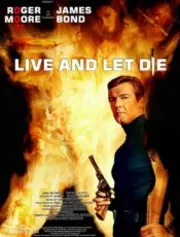
📄Live and Let Die by Ian Fleming follows British agent James Bond as he pursues Mr. Big, a ruthless crime lord and alleged SMERSH operative controlling a vast criminal empire in Harlem. Suspected of smuggling seventeenth-century pirate treasure from Jamaica to fund Soviet espionage in America, Mr. Big proves a formidable adversary. Bond enlists the help of Solitaire, Mr. Big's beautiful psychic accomplice who reads tarot cards, and she becomes both a crucial ally and his love interest. As Bond navigates voodoo rituals, shark-infested waters, and deadly betrayals, he races to dismantle Mr. Big's empire before becoming its latest victim.
📄Bosambo of the River (the American title of Edgar Wallace's Sanders of the River, 1911) is a collection of adventure stories set in British West Africa. The tales follow Commissioner Sanders, a shrewd colonial administrator tasked with keeping peace among the diverse tribes along the great river. At the heart of the narrative is Bosambo, a cunning fugitive who reinvents himself as chief of the Ochori people and becomes Sanders's most trusted ally. Through tribal intrigue, slave raids, and rebellions, the stories blend humor, action, and vivid portraits of river life, while reflecting the colonial attitudes of the early twentieth century.
📄When Nora Hale returns to her childhood home in the Appalachian hills after her mother's death, she expects only to settle the estate and leave. Instead, she finds her mother's unfinished manuscript—a memoir hidden among pressed wildflowers—and a community still whispering about the spring her father vanished. As trilliums, the wake robins, bloom across the forest floor, Nora uncovers old letters, buried wounds, and a truth her family has kept silent for thirty years. Wake Robin is a haunting story about the seasons of grief, the roots that bind us, and the fragile courage it takes to let something long dormant bloom again.
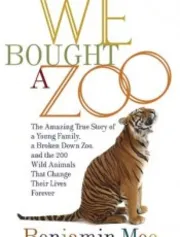
📄We Bought a Zoo tells the true story of Benjamin Mee, a widowed father who makes an extraordinary decision to purchase a dilapidated zoo in the English countryside. Struggling with grief after his wife's death while raising two young children, Benjamin invests the family's remaining savings into Dartmoor Wildlife Park, home to hundreds of exotic animals. Alongside his mother, brother, children, and a dedicated but eccentric staff, he confronts countless challenges—financial struggles, animal welfare crises, and emotional turmoil. This heartwarming memoir chronicles a family's journey of healing, resilience, and unexpected joy, revealing how saving a broken zoo ultimately helped mend a broken family.
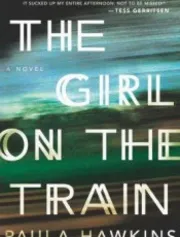
📄The Girl on the Train by Paula Hawkins is a gripping psychological thriller centered on Rachel Watson, a divorced alcoholic who takes the same commuter train every day. From her window, she obsessively watches a seemingly perfect couple, Scott and Megan Hipwell, imagining their ideal life. When Megan mysteriously disappears, Rachel becomes entangled in the investigation, convinced she holds vital clues—yet her memory of that night is clouded by alcohol. Told through alternating perspectives of three women, the novel explores themes of addiction, memory, and deception, building toward a chilling revelation about the dark secrets hidden behind domestic facades.
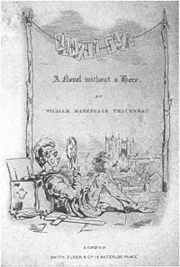
📄"Vanity Fair: A Novel without a Hero" by William Makepeace Thackeray (1848) is a satirical masterpiece set against the backdrop of the Napoleonic Wars. The novel follows the fortunes of two contrasting women: the clever, ambitious, and manipulative Becky Sharp, who claws her way up the social ladder through charm and cunning, and the gentle, naive Amelia Sedley. Through their intertwined lives, Thackeray exposes the greed, hypocrisy, snobbery, and moral emptiness of early nineteenth-century English high society. With biting wit and irony, the novel portrays a world where everyone pursues wealth and status, offering an enduring critique of human vanity.
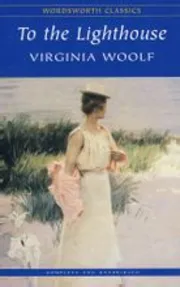
📄To the Lighthouse (1927) by Virginia Woolf is a landmark modernist novel following the Ramsay family during their holidays on the Isle of Skye in Scotland. Divided into three sections—"The Window," "Time Passes," and "The Lighthouse"—the story centers on young James's desire to visit a nearby lighthouse, his mother's promise, and his father's dismissiveness. Through stream-of-consciousness narration, Woolf explores her characters' inner lives, capturing the passage of time, loss, and the fragility of human relationships. A decade later, the family finally sails to the lighthouse, symbolizing reconciliation, memory, and the enduring power of art.
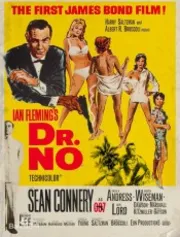
📄In Ian Fleming's sixth James Bond novel (1958), Agent 007 is sent to Jamaica to investigate the mysterious disappearance of a British intelligence officer. Clues point to Crab Key, a forbidden island owned by Dr. Julius No, a reclusive Chinese-German scientist with articulated steel hands. Exploring the island with the fisherman Quarrel, Bond meets the beautiful shell-diver Honeychile Rider before all three are captured. Dr. No reveals his scheme: sabotaging American missile tests from his fortified guano-mining base. After enduring a sadistic obstacle course, Bond turns the tables, crushing No beneath a guano crane, and escapes by boat with Honey to safety.
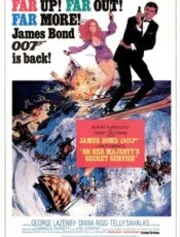
📄In Ian Fleming's tenth James Bond novel, 007 pursues Ernst Stavro Blofeld, the head of SPECTRE, on a deeply personal mission. His trail leads to Piz Gloria, an alpine allergy clinic in Switzerland where Blofeld, hidden under a new identity, is brainwashing young women to spread a biological agent that would devastate Britain's agriculture. Disguised as genealogist Sir Hilary Bray, Bond infiltrates the fortress-like facility, but his cover is blown, triggering a deadly ski chase and avalanche. Amid the danger, Bond falls in love with Teresa "Tracy" di Vicenzo and marries her—only for tragedy to strike moments after the wedding.
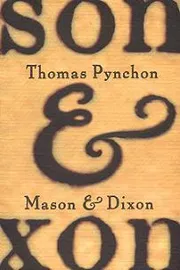
📄Mason & Dixon is a 1997 postmodern historical novel by Thomas Pynchon. It chronicles the unlikely partnership between English astronomer Charles Mason and surveyor Jeremiah Dixon, who journey from the Cape of Good Hope to the American frontier to draw the famous boundary dividing Pennsylvania and Maryland—the Mason-Dixon Line. Narrated as a memoir by the Reverend Wicks Cherrycoke in sprawling eighteenth-century prose, the novel blends history with fantasy: talking dogs, mechanical ducks, and Chinese geomancers populate its pages. Beneath the comedy lies a profound meditation on science, empire, slavery, and humanity's obsession with drawing lines across the world.
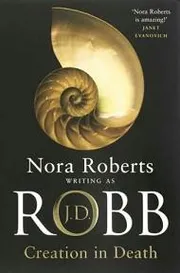
📄In J.D. Robb's "Creation in Death," Lieutenant Eve Dallas confronts one of her most chilling cases when a serial killer leaves tortured women's bodies across New York City in 2060. Each victim is found carefully positioned, with the exact time of death displayed—a signature of the killer's meticulous planning. As the body count rises, Eve and her partner Delia Peabody race against the clock to profile a murderer who seems to anticipate every police move. The investigation uncovers disturbing secrets and tests Eve's resolve, culminating in a confrontation that threatens everything she holds dear. This gripping thriller blends suspense with human resilience.
📄The Old Curiosity Shop (1840–1841) is a novel by Charles Dickens. It follows Little Nell Trent, a virtuous young girl who lives with her grandfather in his London curiosity shop. Obsessed with securing Nell's future, her grandfather gambles away their savings and falls into the clutches of the villainous dwarf Quilp. Forced to flee London, Nell and her grandfather wander the countryside as beggars, pursued by Quilp's menace. Though kind strangers eventually offer shelter, Nell's frail health steadily declines, leading to her tragic death. The ending devastated Victorian readers, cementing the novel's place as one of Dickens's most emotionally powerful works.
📄White Noise (1985), Don DeLillo's National Book Award-winning novel, follows Jack Gladney, a professor of Hitler Studies at a small college, and his eccentric blended family. Their suburban lives spiral into chaos when an industrial accident releases a toxic cloud—the "Airborne Toxic Event"—forcing evacuation and exposing Jack to a potentially lethal chemical. Through dark humor and sharp satire, DeLillo explores consumerism, media saturation, and humanity's pervasive fear of death. As Jack and his wife Babette secretly grapple with mortality—she through an experimental drug called Dylar—the novel reveals how technology, commerce, and information shape modern anxiety.
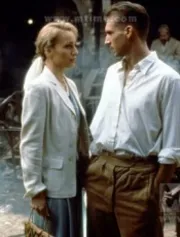
📄Set in an abandoned Italian villa at the close of World War II, Michael Ondaatje's The English Patient follows four damaged souls brought together by fate. A critically burned man, unable to remember his name, is tended by Hana, a grieving young nurse. They are joined by Caravaggio, a thief-turned-spy, and Kip, a Sikh bomb-disposal expert. Through fragmented memories, the patient gradually reveals himself as Almásy, a desert explorer destroyed by a forbidden love affair with Katharine Clifton in North Africa. A lyrical meditation on love, betrayal, identity, and the arbitrary borders—geographic and emotional—that define and divide us.
📄The Voyages and Adventures of Captain Hatteras, written by Jules Verne, follows the obsessive quest of British explorer Captain John Hatteras to reach the North Pole. Aboard the brig Forward, Hatteras and his loyal crew—including the resourceful Dr. Clawbonny—brave brutal Arctic conditions, mutiny, starvation, and betrayal. As ice and despair threaten to destroy the expedition, Hatteras's unshakable ambition drives him ever northward, even at the cost of his sanity. Blending thrilling adventure with scientific curiosity, this pioneering tale of polar exploration launched Verne's celebrated Voyages Extraordinaires series, celebrating human courage while questioning the dangers of unchecked obsession.
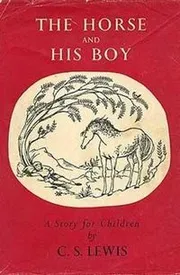
📄The Horse and His Boy follows Shasta, a young boy raised by a cruel fisherman in Calormen. Upon discovering he is not the fisherman's son, he escapes with Bree, a proud talking horse from Narnia. On their journey north, they join Aravis, a runaway noblewoman fleeing an arranged marriage, and her horse Hwin. Pursued by enemies and mysteriously guided by the great lion Aslan, the travelers cross deserts and treacherous cities, ultimately warning Archenland of a surprise invasion. Along the way, Shasta uncovers his true identity as a long-lost prince, discovering courage, friendship, and destiny.
📄Nestled between mist-covered mountains, Green Valley appears to be the perfect small town—until newcomer Sarah Chen discovers an abandoned farmhouse hiding a decades-old secret. As she digs deeper into the valley's past, she uncovers a web of buried truths involving the town's founding families, a vanished girl from 1987, and land dealings that cost lives. With help from reclusive historian Marcus Webb, Sarah races against time as powerful residents try to silence her. Green Valley is a haunting tale of small-town secrets, showing how the past never truly stays buried, and how one woman's search for truth changes everything.
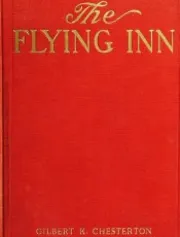
📄The Flying Inn (1914) is a satirical novel by G.K. Chesterton set in a future England where temperance forces have banned alcohol. When prohibition is imposed, eccentric innkeeper Humphrey Pump and the swashbuckling Captain Patrick Dalroy defy the law by taking to the road with a cask of rum and a portable pub sign. Roaming the countryside, they establish impromptu taverns in absurd locations, evading capture while gathering colorful allies. Blending rollicking adventure, songs, and sharp wit, Chesterton's comic tale celebrates liberty, tradition, and merriment while satirizing prohibition, imperialism, and misguided progressivism, remaining one of his liveliest and most exuberant works.
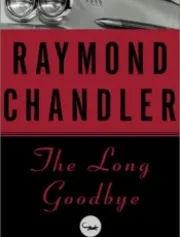
📄In Raymond Chandler's classic noir novel, world-weary private detective Philip Marlowe befriends Terry Lennox, a charming drunk with a mysterious past. When Lennox's wife is found brutally murdered and Lennox flees to Mexico, Marlowe is jailed for refusing to betray his friend. After news of Lennox's apparent suicide, Marlowe takes a job helping Roger Wade, an alcoholic novelist, and becomes entangled with Wade's seductive wife, Eileen. As bodies pile up and lies unravel, Marlowe pursues the truth through a maze of wealth, corruption, and betrayal—culminating in the bitter realization that friendship, like loyalty, can be the longest goodbye of all.
📄Sister Carrie (1900), Theodore Dreiser's debut novel, is a landmark of American naturalism. It follows Caroline Meeber, an eighteen-year-old small-town girl who travels to Chicago seeking a better life. Swept into the city's seductive world of consumerism, she drifts through relationships with the charming salesman Charles Drouet and the prosperous married manager George Hurstwood. After fleeing with Hurstwood to New York, Carrie discovers her talent for acting and rises to Broadway stardom, while Hurstwood spirals into poverty and despair. Unflinching in its portrayal of desire, materialism, and urban ambition, the novel boldly challenged the moral conventions of its era.